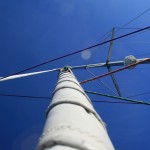
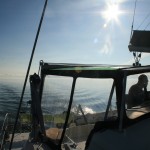
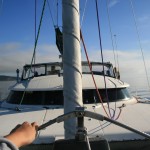
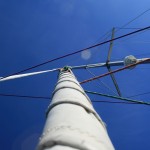
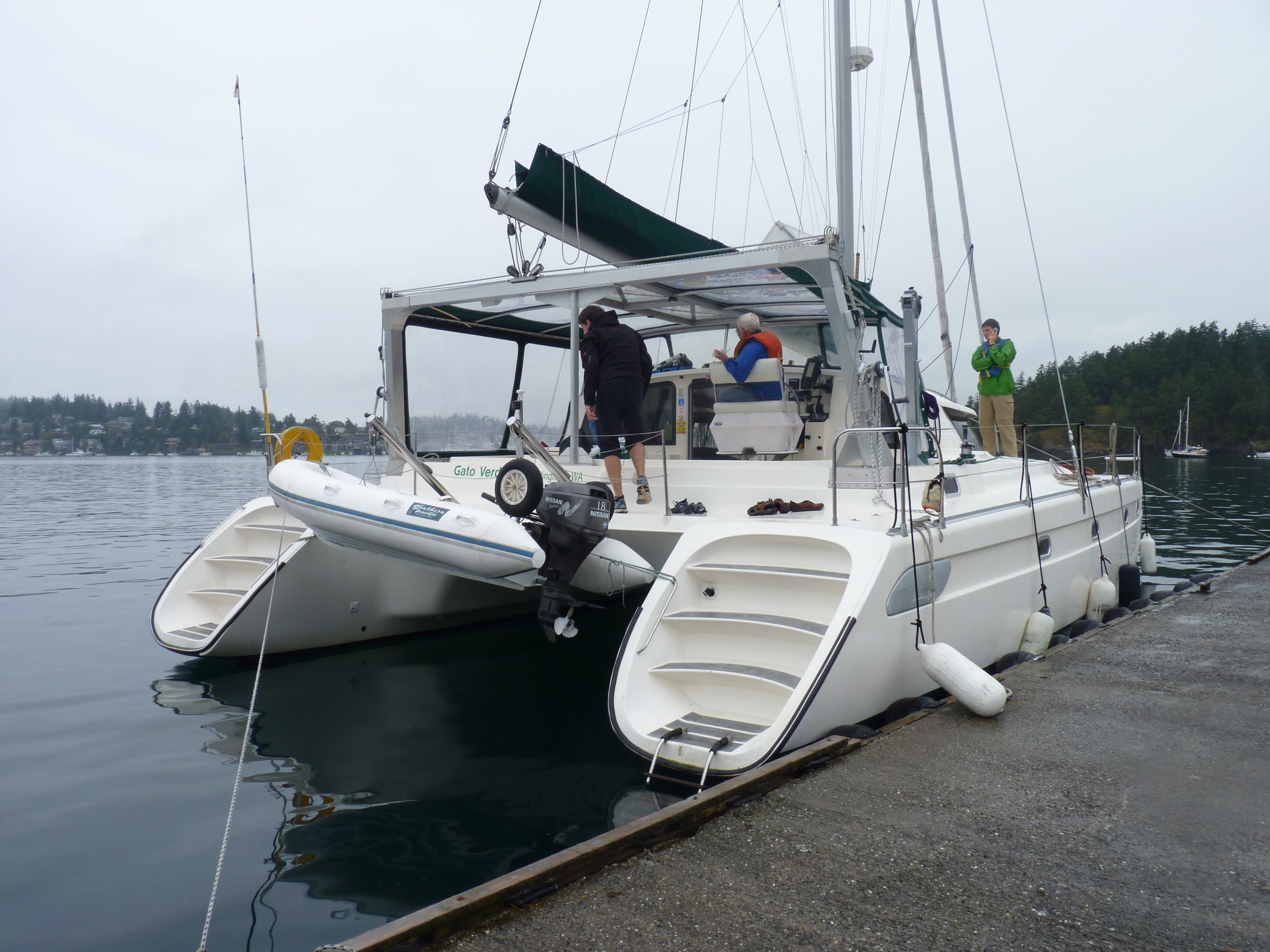
After 3 weeks of intense studies on bioacoustics, the ecology and conservation of the southern resident killer whales of the Salish Sea and their prey of choice, Chinook salmon, among many other fascinating aspects of the San Juan ecosystem, the Beam Reach crew for this fall: Dr. Scott Veirs, Dr. Jason Wood, Dr. Val Veirs, Hana, Cat, Garrett, Dave, Meagan and myself, were ready to meet Captain Todd and his great Cat (short for catamaran) the “Gato Verde.”  The ship which will sail us through this great “blue orca domain†is really magnificent and upgraded as an eco-boat with a “silent†biodiesel engine and propellers that harvest energy as they spin. El “ Gato Verde”, a 42′ state of the art catamaran, was named by Captain Todd Shuster as a Spanish equivalent of “green cat”, green (verde) as the boat is run as an eco-ship and seeks sustainability in all aspects, and cat (gato) after the common abbreviation used for catamarans. And so, with a 23′ beam (boat width), a mast 63’ tall (off the water), a large fully-battened mainsail, a jib and a screecher (foremost sail), this great cat can top to speeds of 12 knots under sail (at 50% of wind speed) under ideal wind conditions, reaches 7.2 knots top speed under biodiesel-power and averages a cruising speed of 6.5 knots.
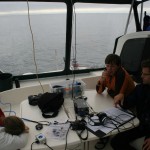
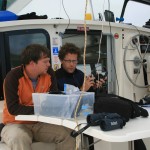
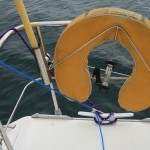
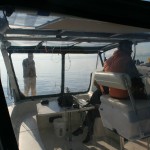
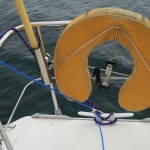
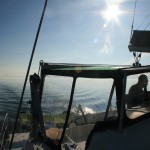
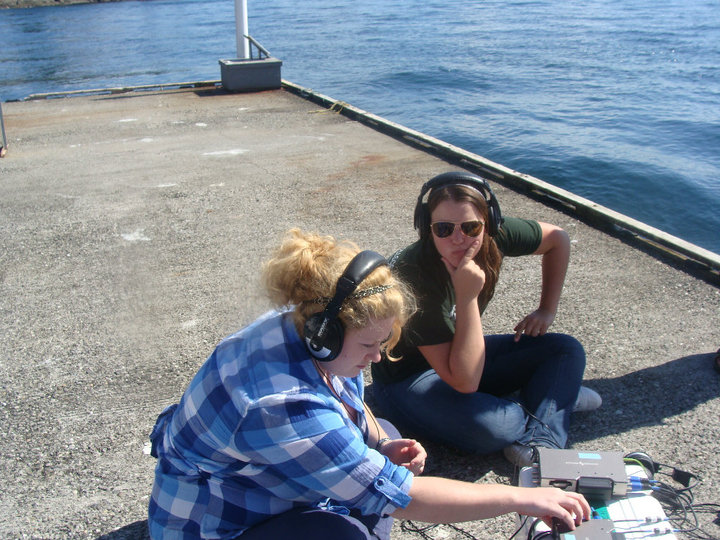
Our main work/research area will be the cockpit where all of our acoustic REC-equipment will be placed during the recordings. During this season will be using a total of 6 hydrophones: 4 on a linear array that trolls behind us attached to the cleat under the stern pulpit on the port side (aft-left), a High Frequency Hyd., also known as the CRT, trolling behind from the starboard pulpit. This arrangement will allow us to record the large range of the orca vocalizations, and, with detailed observations and meticulous data taking, will also let us localize the individual/s emitting the sounds.
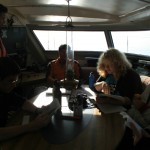
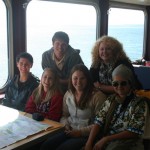
The cabin or galley holds our kitchenette, dining and navigation tables (the latter known as the “nav tableâ€), this is indeed the most crowded area of the boat by far, as all of our meals and most of our meetings and clasess, as well as after-hours studying and data-entering takes place here. Our ‘dance’ as a group will be tested by our use of this space out of all other areas.
El gato has 4 cabins accessible from the cabin, 2 inside the starboard pontoon and two in the portside one. Each holds 2 people comfortably. Additionally, there  are two  single/occupancy cabins in triangular shape at the bow end of each pontoon, this are accessible through a hatches on the deck.
As sustainability is a very important component of our course, detailed energy and water consumption as well as “black water†production will be  monitored and recorded each morning. This allows the group and each student to be aware of their impact and ‘carbon footprint’ in a daily basis.
As far as active research on this first day, we learned the general protocol to deploy our hydrophone array and our CRT (high freq. hyd) to test and learn the basics. We also distributed the general daily duties among the crew for the first week.
After this brief description of what our “floating living quarters†for the next 5 weeks will be like, I shall move onto more picturesque accounts of our adventures and research in the Salish Sea.
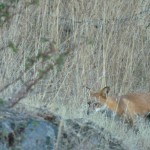
This is my first blog entry so I am going to give an overview of my experiences and feelings for the first part of the fall beam reach program. I have had limited internet access while on the boat for the last week so this is my first chance to update everyone. I started the first week by getting to know the other students in the program, as well as getting use to our living situation while we are on land at the Friday Harbor Laboratories. One of the most interesting aspects from the beginning was discovering where each person is from and hearing stories about their previous experiences. Cat is the only student from the UK and a different country, and that has led to many funny conversations and explanations about differences in our cultures and words. We started to become a proper group by taking a series of walks along the trail system near the labs which lead to the shoreline of San Juan Island. While we were out there three of the girls in our group had their first experiences with marine wildlife in Northwest Washington, and this resulted in hundreds of pictures; mostly of tiny seal heads just above the water. The wildlife in the area is not limited to the marine environment, and we see deer and hawks on a daily basis; we were even lucky enough to see a fox (see picture). All these animals are associated with a 200 acre biological reserve that is adjacent to the labs, and that has given me a great place to go for a runs and walks.
The academic side of the program has been equally stimulating, and our professors have provided us with a crash course in acoustics, which includes how to use a series of hydrophones to record sounds made by killer whales for our research. In addition to our daily classes we were lucky enough to have outside guests come give lectures to our class about their personal research and experiences. On a couple of the nights we rowed into the town of Friday Harbor and enjoyed lectures from an octopus expert from the Seattle Aquarium, and Captain Paul Watson from the Sea Shepards at the local whale museum. Overall, the first three weeks on land were a great start for getting oriented to this type of program and living arrangement. However, now that we are on the boat everything has shifted again.
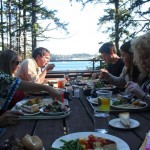
Each day on the boat has a rotation for various jobs which include cleaning up, and preparing breakfast, lunch, and dinner. I think the quality of the meals has surprised everyone, and each night has had a different delicious meal. We are lucky enough to have access to the 42 foot Gato Verde with Captain Todd Shuster. The Gato Verde is a 42 foot catamaran sail boat that is powered by a biodiesel generator, and an electric motor.  The electric motor produces extremely low levels of sound which allows us to take very accurate measurements of the whales while we are actively following them. Captain Todd has also been very helpful and effective at teaching everyone some essential knots, and techniques used for sailing, navigation, and operating the boat in a safely. As part of the course on sustainability we track our usage of electricity and water daily, and this has helped everyone realize how much each person uses in terms of resources on a daily basis. This is important information because the boat is a closed system with finite amounts of fresh water, food, fuel, and space for various forms of waste. Also we try to consume foods on lower trophic levels by staying with a vegetarian diet in order to further reduce our impact on the environment.
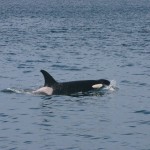
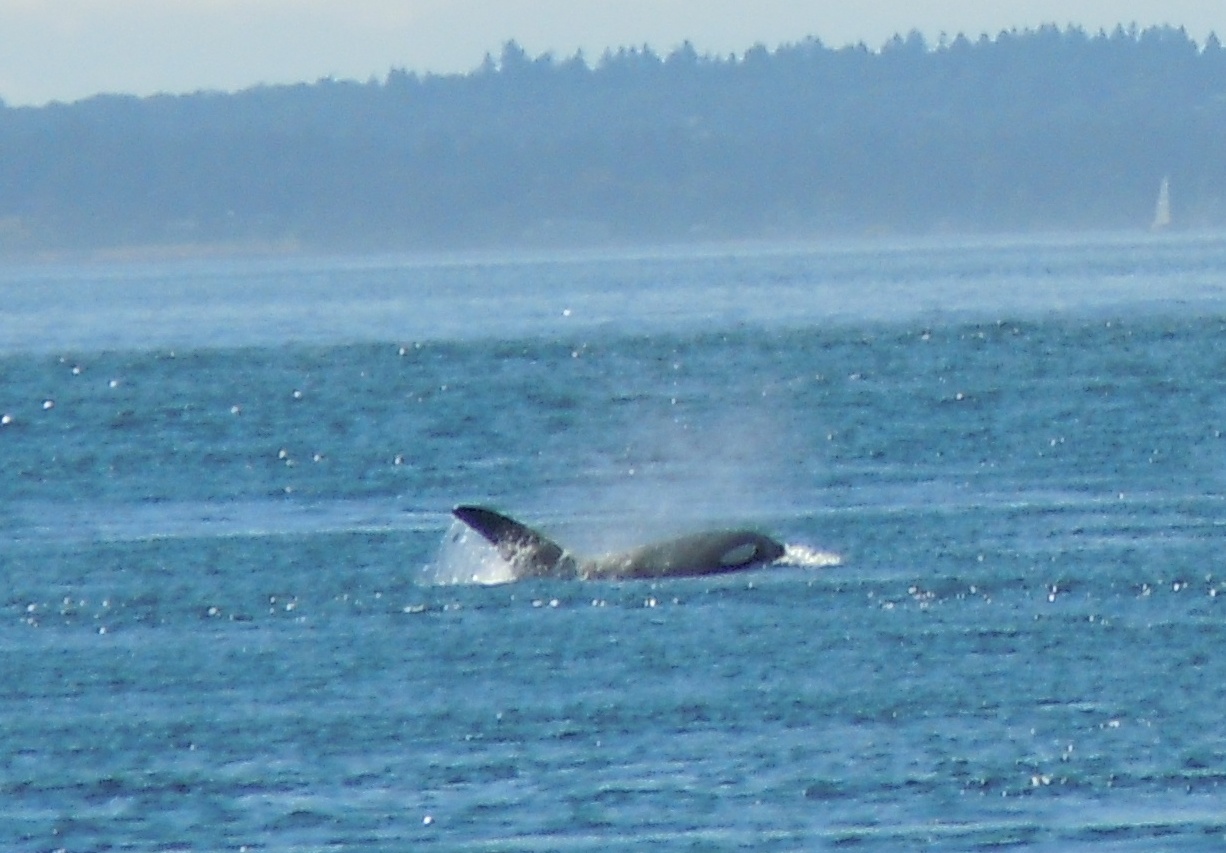
On a more exciting note we have encountered numerous marine species in our first week including Minke Whales, Harbor Seals, Stellar Sealions, River Otters, Tufted Puffins, Porpoises, and last but not least killer whales. We saw our first killer whales early in the week which resulted in a scramble to get some initial recordings which turned out to be amazing. It was a little difficult to follow them for as long as we would have liked due to heavy fog, however, we have had some very nice sunsets during dinner time for many of the days this week. On Wednesday we learned a valuable lesson when some of our batteries ran out and we lost some recordings for one of our hydrophones. Everyone on the boat has become more comfortable with equipment as the week progressed, and tonight is our first night on land in about a week. Everyone is busy taking showers and using the internet before we leave again tomorrow for another week of studying the whales. I am sure I will have many new and exciting stories by the end of next week to blog about, and I will post them as soon as I have a chance thanks for reading.
We finally get to get our feet wet (not literally we hope!). On Sunday we packed up S-1 and headed down the dock to the Gato Verde, our home for the next two weeks. Gato Verde means green cat, and the boat really optimises that name, it is a catamaran (hence the cat) and we operate on a combination of biodiesel and sail power (hence the green).
Our first steps on the boat held all the excitement you feel when you first go holiday and see your hotel for the first time – this is far cooler than a hotel though! There are 3 bed rooms in each of the two hulls. The galley has and amazing round sofa in it and an Aladdin lamp (yes we are all immediately thinking Disney!). Captain Todd is really nice and we have already learnt so much from him in just a couple of days. He also must be very trusting as he quickly let us all have a turn at the helm and decide our anchorage.
We spent the first night in Griffin bay, where we learnt how to drop the anchor. On our first full day the whales were shy so we did some hydrophone tests for ambient (background) noise and headed for Snug harbor, which was our second anchorage. On day two our luck changed and as soon as we set sail (well motor because of the lack of wind) we found the whales! It was so amazing!!!! It was really foggy in the morning so we couldn’t always see the whales but we could hear them through the hydrophone and their blows when they surface, then they would emerge from the fog. We headed back to snug harbor in the evening, and the weather was dramatically different with bright sunshine and few clouds – this called for a few hours ofreading and playing on the trampoline and soaking up the weather!
Day four at sea was the coolest day ever! We set off as normal but soon slowed down when we saw a bait ball and birds feeding on it. We were going to try and catch some fish for Russell Barsh back at the labs when a Minke whale surfaced right in the
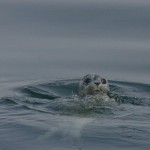
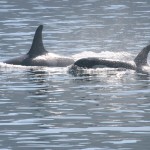
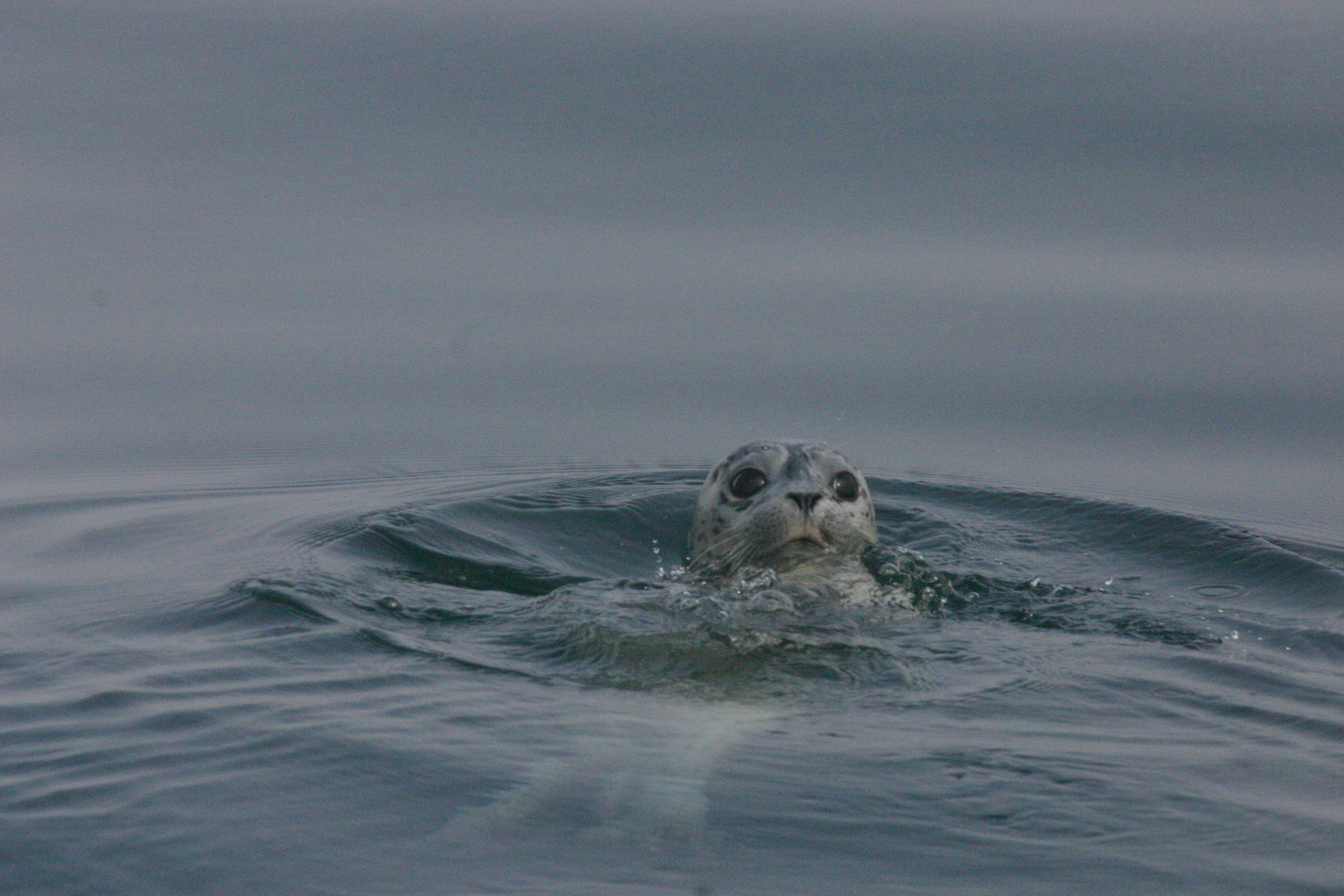
middle of the birds we were looking at! Then we saw another – it was sooooooooo cool, i even got some blow recordings. After a while the whales became less frequent and we were just chilling at the back of theboat when a seal pup came up right next to the boat (i could even see his flippers moving as he swam), i thought he would swim off but instead he swam right up to our back steps and a tried to climb on the boat!!! When that failed he swam through the middle of the hulls and under the trampoline!!!! It was very cool. We had to get moving after that and we all thought that would be the thing to write home about but it got even better! We headed out to false bay to catch up with the Orcas, and put our hydrophones in to get some recordings and i got my first successful in air recordings of the Orcas. I was merely recording after lunch when a group of females with their calves started performing some really cool behaviours. My recording was so funny it started out very sciency with me saying things like “female, j-pod, traveling, 150m” and as they got closer it changed to “oh my gosh i can’t believe what im seeing” as they started a greeting display with tail slaps, breeches, pectoral slaps, rolls and above surface calls (and i recorded it!). We were just processing what we had seen when out of the corner ouf our eyes we saw a sealion come up and joined the killer whales! Very weird – were they sharing food!!? On the way home we came across Dalls and Harbor porpoises bow riding with another boat! So our pinnipeds got larger and the day went on but our cetaceans got smaller!
After a couple of quiet days, we got the chance to see bow riding up close. We were heading back to Friday Harbor labs for an overnight stop off when 5 porpoises (4 Dalls and 1 hybrid) stared bow riding the catamaran! They were so close we could feel the splash as they surfaced.
We are now back on land,ready for showers and excited to start our second week at sea tomorrow 🙂 x x
Right now we’re currently anchored in Snug Harbor where we can borrow internet from the mainland and I couldn’t resist signing on and forwarding some pictures. I’ll have more details to come since internet access is limited and I have tons of work to do, but I had to share the potentially best day I’ve EVER had. Let me name the reasons: an incredibly gorgeous sunset last night segued into a peaceful, foggy morning today. We started our day seeing minke whales and an adorable baby harbor seal swimming around the boat, and trying to climb up our back stairs. We moved on to see orcas, lots and lots of orcas!
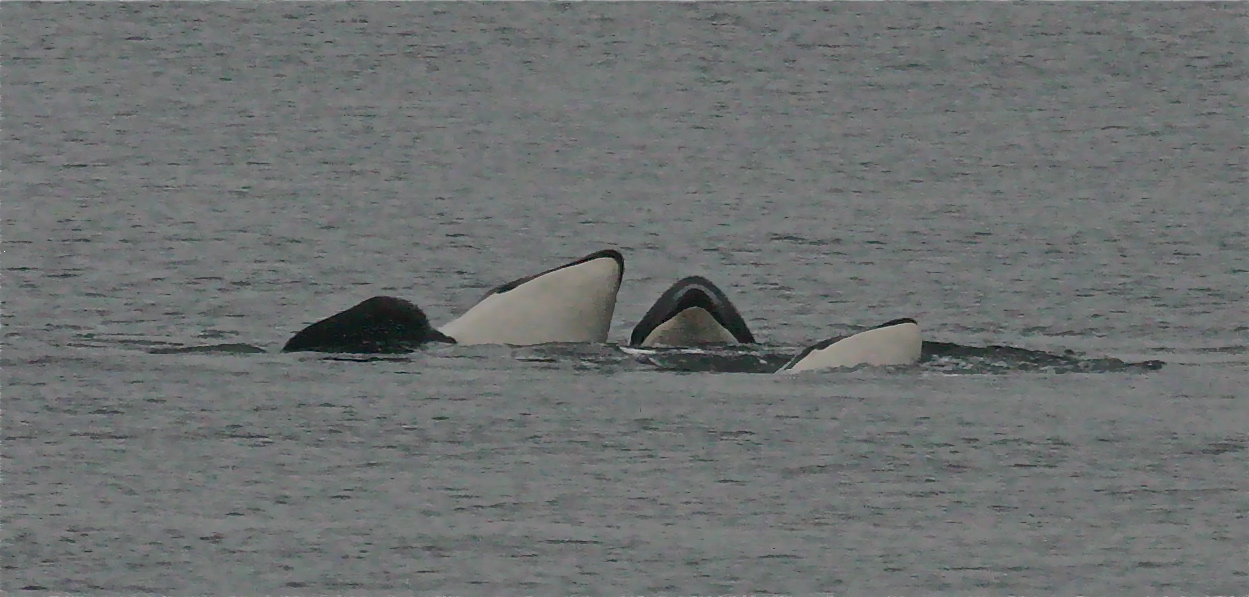
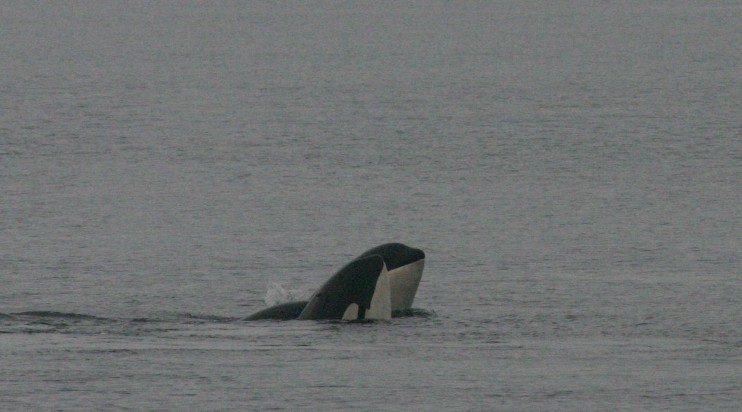
My favorite part was seeing a mom and calf interact and play around–it was amazing to see how curious and playful the calf was! Plus we heard orcas vocalizing in AND out of the water and saw so many(/much) peck flaps, tail slaps, spy hopping, breaches, playing around, nuzzling, familial bonding…The Southern residents were definitely out and about!
Our day ended with a stellar sea lion and both Harbor and Dahl’s porpoises, who were bow riding on another boat, on our way back. To top it all off? Mac and cheese and chocolate chips this evening! Seriously. You cannot top the day we had with the marine wildlife, especially the orcas. They are clearly such intelligent and playful animals, I’m continually amazed and awed and inspired by these beautiful creatures. I cannot believe this is my life right now.
Sorry I just word vomited out this amazing day. Everyone has been getting some great data for their projects, and I just couldn’t keep this day to myself!
Today was our first full day on the Gato Verde. Despite being bookended by fog (pea-soup in the morning and thin, wispy, romantic fog out of a painting in the evening) , we did find a little bit of sunshine in the middle of the day. The big benefit of fog is that it is often complemented with still water. In fact, we have yet to test the sea-worthiness of our stomachs as we had an entire day of completely smooth water (really like glass). Who knew the ocean could be like that? The disadvantage of fog is, of course, that it makes it hard to look for whales. Harbor seals, Stellar sea lions and porpoises all made appearances close to our vessel, but all reports indicated that our neighborhood orcas were off in international waters. Luckily, being bioacousticians, we were able to listen for whales as well using our hydrophone array and our fancy new high-frequency hydrophone. Alas, there was nothing but engine noise to be heard.* However, now that our equipment has been properly tested and proved itself to be up to the challenge of dealing with the rigors of the sea, we will be ready for the appearance of our lovely black and white friends on the morrow.
Of equal importance to the knowledge we gained about our hydrophones was the knowledge we gained about seamanship today. Not only did we learn about luffs and leeches (parts of a sail) but practiced our bowlines and half-hitches and sheet bends as well. We are in good spirits, well fed and learning a lot about each other, about whales, about research methods and about sailing. And, as we head to bed tonight, we are treated not only to cold, clear skies and a million lights above us, but also to cold, clear waters and a million lights (via bioluminescence) below.
Be there wind or be there whales tomorrow, we’ll be ready!
*Not our engines, however. We found out today why Captain Todd named our boat the Green Cat. It turns out that running on a combination of wind power, nearly silent electric motors and a bio-diesel generator that is not attached to the hull is not only good for avoiding disturbing the wildlife with noise, it’s also good for the environment by reducing emissions and using zero petroleum products for locomotion or cabin electricity.
Hello! I’m Megan, from Colorado, but I attend college at the University of Hawaii at Hilo.
The fall 2010 program is running full force! We are now 3 weeks into the program and setting out for our first sail today! So far this is one of the best experiences of my life. Since I have failed at keeping a daily journal I will just give you all some quick highlights.
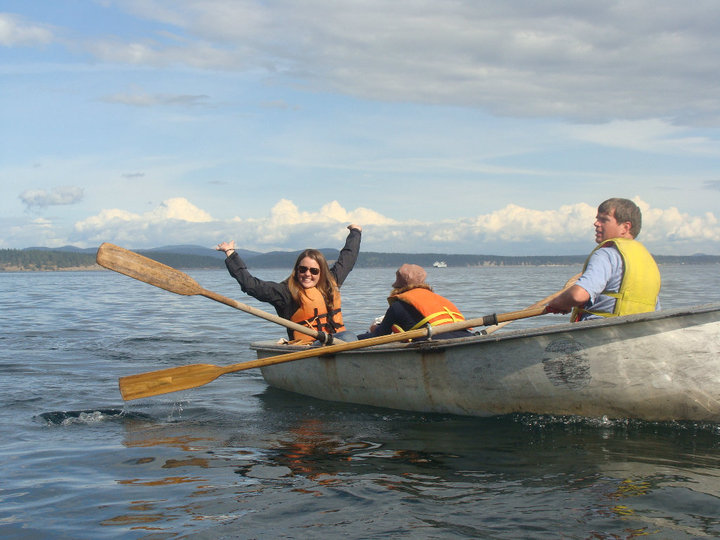
This was my first trip to Washington State, and was blown away by the beauty of the San Juan Islands, I was even amused by the ferry ride over to Friday Harbor. One of the best feelings is living next to the ocean and having hiking trails in your back yard, which I have found at the Friday Harbor Labs. Hana Cat and I took walks in the first weeks here (while it was warm) to explore these trails, and every time I was so impressed by the view of the shore trails. One of the best parts of living at the labs is the fact that we have the option to row into town. I’ll admit I’m not the best, but not the worst, at rowing. It’s so peaceful and a totally different view of the island. Typically we run across a few harbor seals on our way to town.
During our time on land we were lucky enough to be here while The Whale Museum was still doing their summer science lectures so we got to listen to talks by Roland Anderson-the octopus guru, Captain Paul Watson, and our one and only Dr. Jason Wood. We’ve also had various people come into our own classroom (which just so happens to be our living room) to tell us about their research and what they are interested in.
The best highlight from these weeks on land is of course…. WHALES! My first sighting of the whales was on the ferry back from Seattle the first weekend here. We caught a brief glimpse at them as we were coming into Friday Harbor, which is very rare. Later that week the whale phone (we get updates via text of where they are during the day) was going off all day and they were hanging out on the west side of the island, so Hana Cat and I jumped into Dave’s car to “chased” them up the coast to meet up with them at the county park. It was the first time I was able to document the whales, most exciting day of the program so far!
Of course it’s not all play, we have been doing a lot of work too! We’ve been preparing our proposals, and trying to figure out our methods before we set sail. It all feels a little rushed but we have to get it done while the whales are still here. Lots of research and reading going on.
Fall 2010 Beam Reach is going full force. Tomorrow we leave for our first adventures on the Gato Verde, and we’re all pretty excited to get out on the water and start conducting the research we’ve been so busily planning!
But before we head out, I thought I should give some highlights of our first three weeks in Friday Harbor:
1) Lime Kiln Lighthouse: We went to the lighthouse to view the setting and soak in the environment around it. We let the sights, sounds, and smells around us inspire us to write 21 question’s we’d like to answer about the orcas and the ecosystem around them. Sadly, we didn’t see any whales, but we did think of some interesting questions!
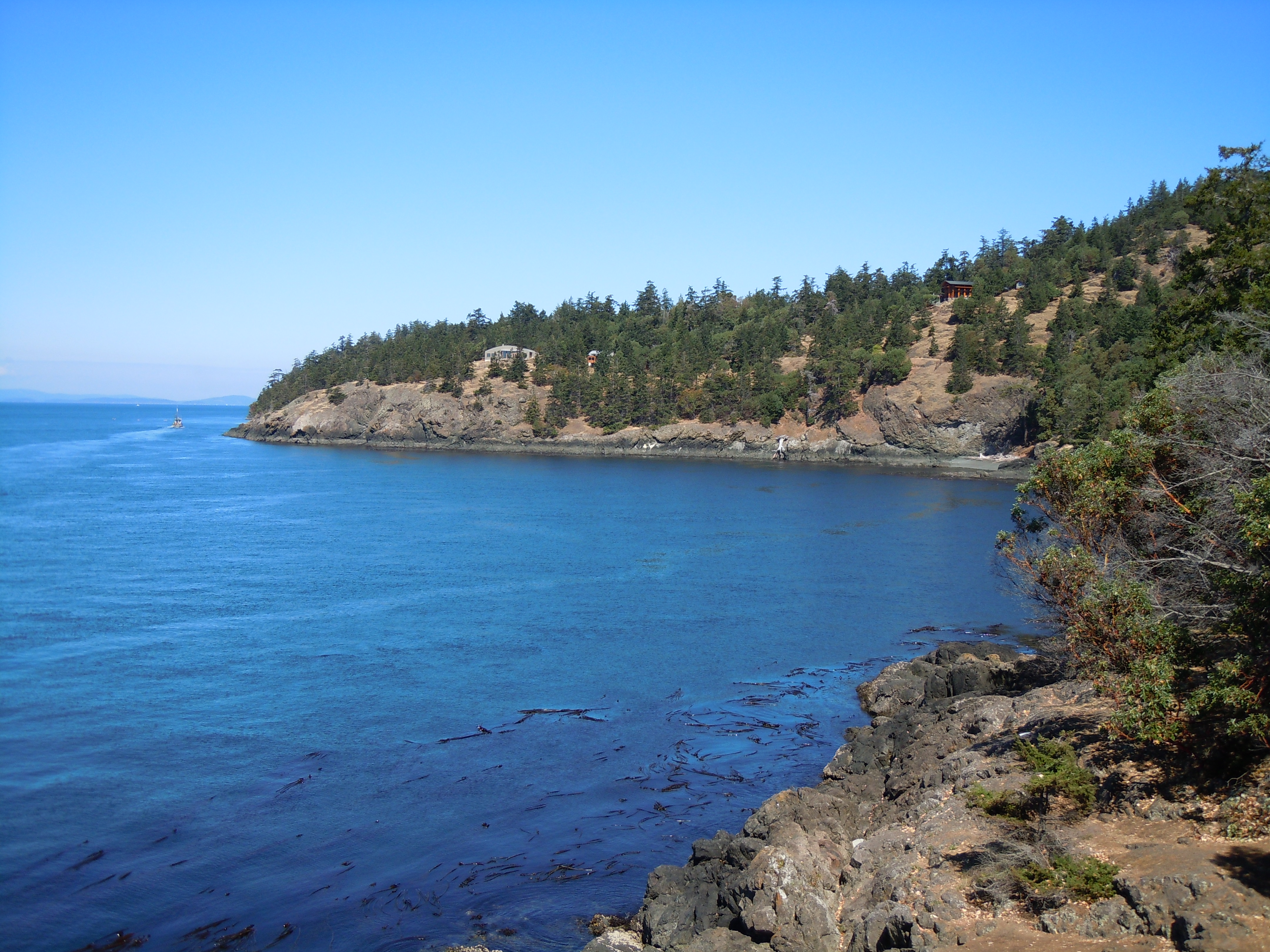
We ended up going back the next week to help clean up the area around the lighthouse, and even inside the lighthouse itself, and we got to see the amazing view from the top. Still no whales, but you can’t be too disappointed when you’re looking out at the view pictured left. It’s a pretty incredible area out here!
2) Â Hiking around Friday Harbor Labs:
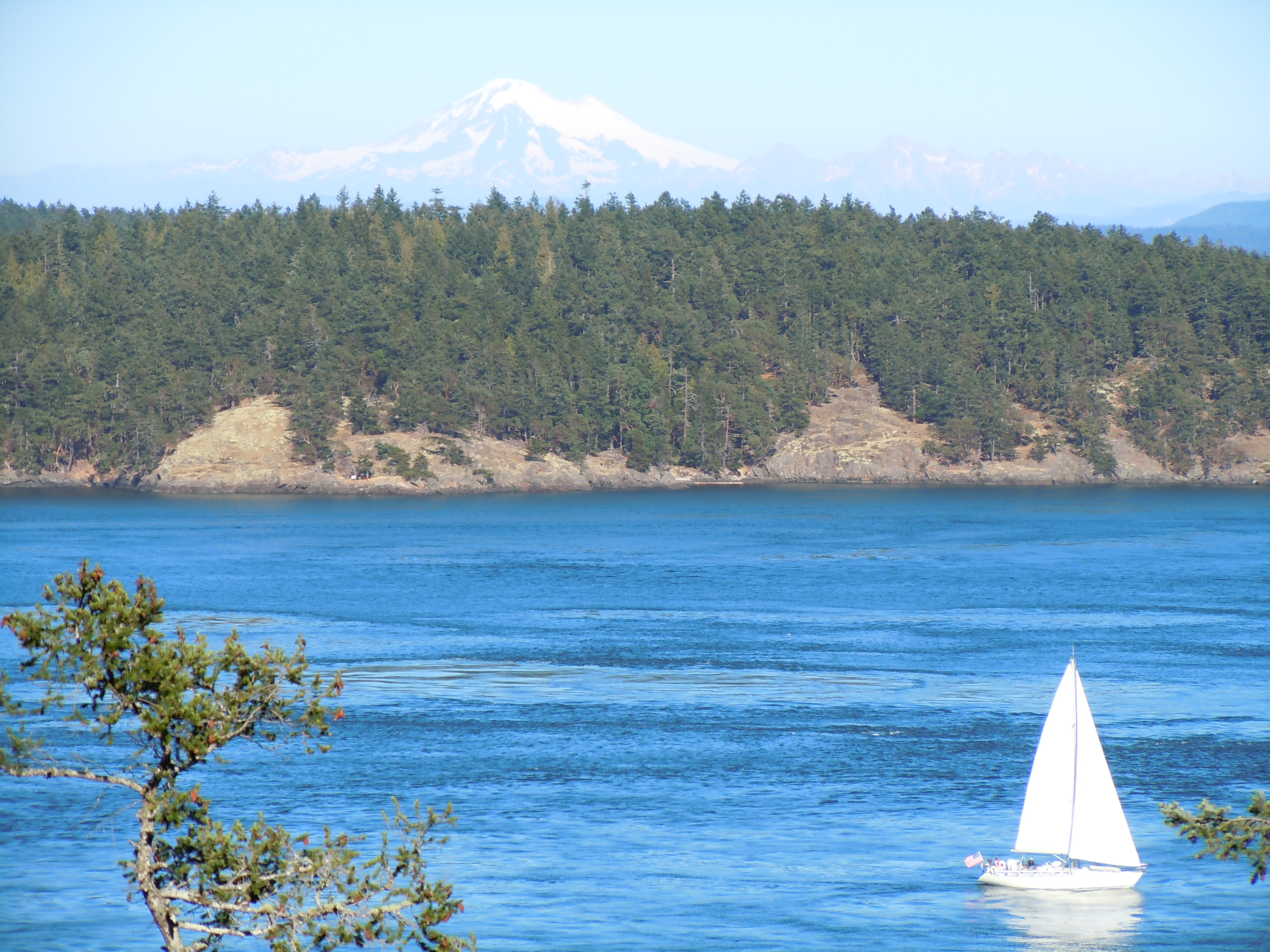
Cat, Megan and I have been enjoying the hiking around the island and exploring some of the trails that start right in the backyard of the Friday Harbor Labs. The weather has been beautiful for the most part–sunny and not too hot, the perfect hiking weather. I think my favorite moment of the hikes was coming into a clearing and seeing Mount Baker rising about the San Juan channel. This midwestern girl still isn’t used to seeing all the mountains out here!
3) Learning! Ok, this may be an extremely cheesy highlight, but this whole program is about learning, and we’ve had some great opportunities.
Our lessons range from lectures to discussions to hands on opportunities, and it’s been a fun mix of everything. One of my favorites was getting the hydrophones out and listening to what they really pick up. And my goodness, the water around the Friday Harbor Marina is LOUD, especially when ferries go by! It was a good opportunity to hear what recordings sound like, and try to figure out what sounds come from what source. That will be a needed skill when I’m trying to sort out the difference between an echolocation click vs a click train vs a noise made by a boat or other noise source. It’s harder than I expected!
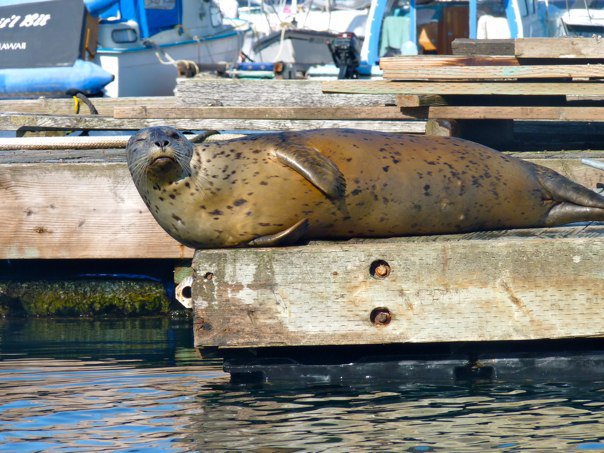
4) Rowing into town: The labs have rowboats that you can check out and row into town. Our main options of getting to town are biking, walking or rowing (with the occasional ride being offered). I’ve walked and rowed, and both are quite enjoyable, although the rowing is definitely more scenic. And I think the noise my oars  make will diminish as I learn to row more effectively–I’m a bit uncoordinated still! I’m sure all marine wildlife will appreciate when I’m a little more fluent! We’ve even seen a harbor seal in the Marina, although we’ve yet to see the resident seal who hangs out by the seafood restaurant.
5) Sailing: Although we’ve yet to see the Gato Verde, Jason took us out in a smaller sailboat so we could get our feet wet (although thankfully, not literally). I must admit, small sailboats make me a tad nervous–I just don’t appreciate how tippy they can be! But it was a beautiful day and we all had a great time. It definitely got us anxious to get on the Gato Verde and go!
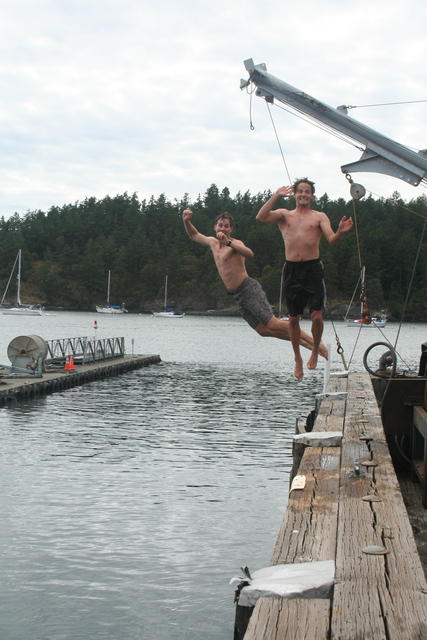
6) The Plunge: Yes, that’s right, the “fun rite of passage” all beam reachers do before they set sail. Jumping off the dock into the very chilly waters, just in case we didn’t respect how fast hypothermia could set in. Wow. That water is cold! It literally takes your breath away, and you have a pretty hard time talking, or at least I did. I wasn’t brave enough to jump off the jetty a few meters above the water, but many of the other members were. I commend their bravery, and definitely respect the waters (and sharp barnacles!) around the San Juans!
7) WHALES!!!!! Â Dave, Megan, Cat, and I all got to see whales off the coast at the State Park. I think the caption of this highlight speaks for the extreme excitement we all felt. Definitely a top moment of the term thus far 🙂
8) Soundwatch:
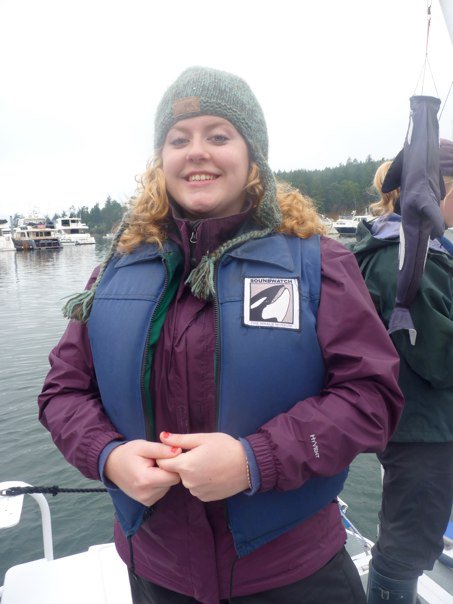
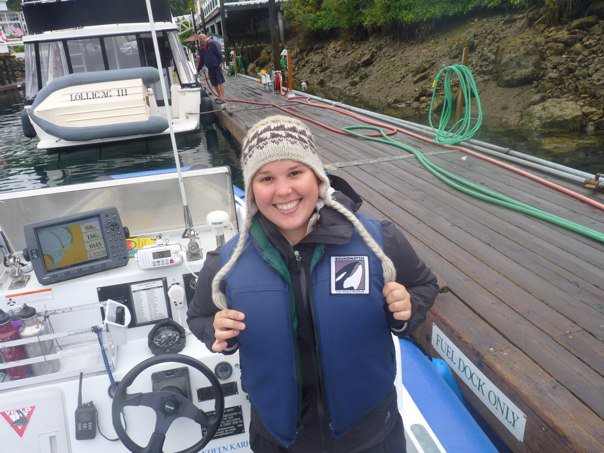
Soundwatch is an educational program that (among other things) helps inform private boaters the “be whale-wise guidelines,” which is essentially guidelines for boaters to follow (some laws, some suggestions that aren’t laws but recommended to help protect the whales). It was really amazing–Cat and I went out on the boat with Capitan John and their summer intern, Kate. It was a relatively quiet day in terms of whale-watchers, but we still approached a lot of boaters, handed out a lot of informational packets (from a moving boat–not an easy feat!), and luckily for Cat and I, saw lots of whales! It’s an amazing effort, and I’m so impressed with the dedicated staff and volunteers who are out there everyday in the summer, trying to protect the whales. If you’re ever thinking about whale watching in this area, make sure you know and follow the Be Whale Wise guidelines, which can be seen at http://www.bewhalewise.org/
Well, there have been many more good times, but it’s getting late and we’ve still got lots of packing and loading to do before we’re ready to set sail tomorrow. So for now, cheers from Friday Harbor!
Click on the photos below to see more images from the fall program which began two weeks ago. The program started with the students and Scott emerging from overcast Seattle into the sunny San Juans. We car-pooled up and felt lucky to be one of the last couple cars to be loaded aboard our planned ferry departure.
The first class session was spent at Lime Kiln lighthouse, listing and discussing each student’s questions about the endangered local killer whales and their environment. While the southern resident orcas didn’t pass by the Whale Watch State Park while we were there, we have heard them frequently on the live hydrophones of orcasound.net.
Since then, the focus has been on learning what past students and other researchers have accomplished and practicing with the bioacoustic instrumentation available through Beam Reach, our research vessel, and the University of Washington’s Friday Harbor Labs. This process has led to the formulation of a draft research proposal by each student which will be further refined in the third week on land, as well as during and after initial data collection over weeks 4-5.
You can monitor the students’ progress via their class home page: beamreach.org/102
Here is a great video put together by the spring 2010 students. It is a half-hour fantastic eye candy and an elegant visual tour of the 10-week program. Check out the still photos and video of springtime coming to the San Juan Islands, transient killer whale encounters, a sailboat race, life at sea, rope craft, the southern residents from Ken Balcomb’s boat, data collection, breaching professors, and more. Thanks to Libby, Nora, Horace, and Kathryn for putting it together!
This is the best way to summarize our 10 week adventure. Enjoy!
Still no Southern residents, but we did see an interesting wet suit and flipper-clad creature in Haro Strait today! Jason swam three miles along the West side with the goal of contextualizing NOAA’s proposed vessel regulations, which, if put into practice, will impose restrictions on boats when whales are present. As our “whale,” Jason swam to show what Haro Strait is like from an orca’s point of view. While he was in the water we took photos, videos, and sound recordings, which we will organize and display on a website in an effort to demonstrate why NOAA’s proposed regulations would be beneficial for the whales. After Jason’s exciting dip in the deep blue, we drifted down the coast for a few miles and saw a variety of marine mammals, including porpoises (harbors and Dall’s) and a Steller sea lion. We’re at anchor now, ready to get a good night’s sleep in preparation for another day of searching… maybe tomorrow will be the day!







 Twitter
 LinkedIn
 Facebook
