5/8
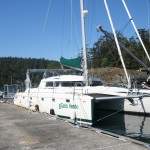 This morning Kathryn and Libby left at 6:30 to go to Sidney, a city a little further North of Victoria on the southern tip of Vancouver Island, to walk to raise awareness about the fish lice outbreak that is occurring in wild runs of salmon due to the presence of fisheries.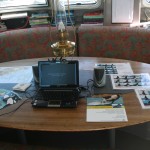
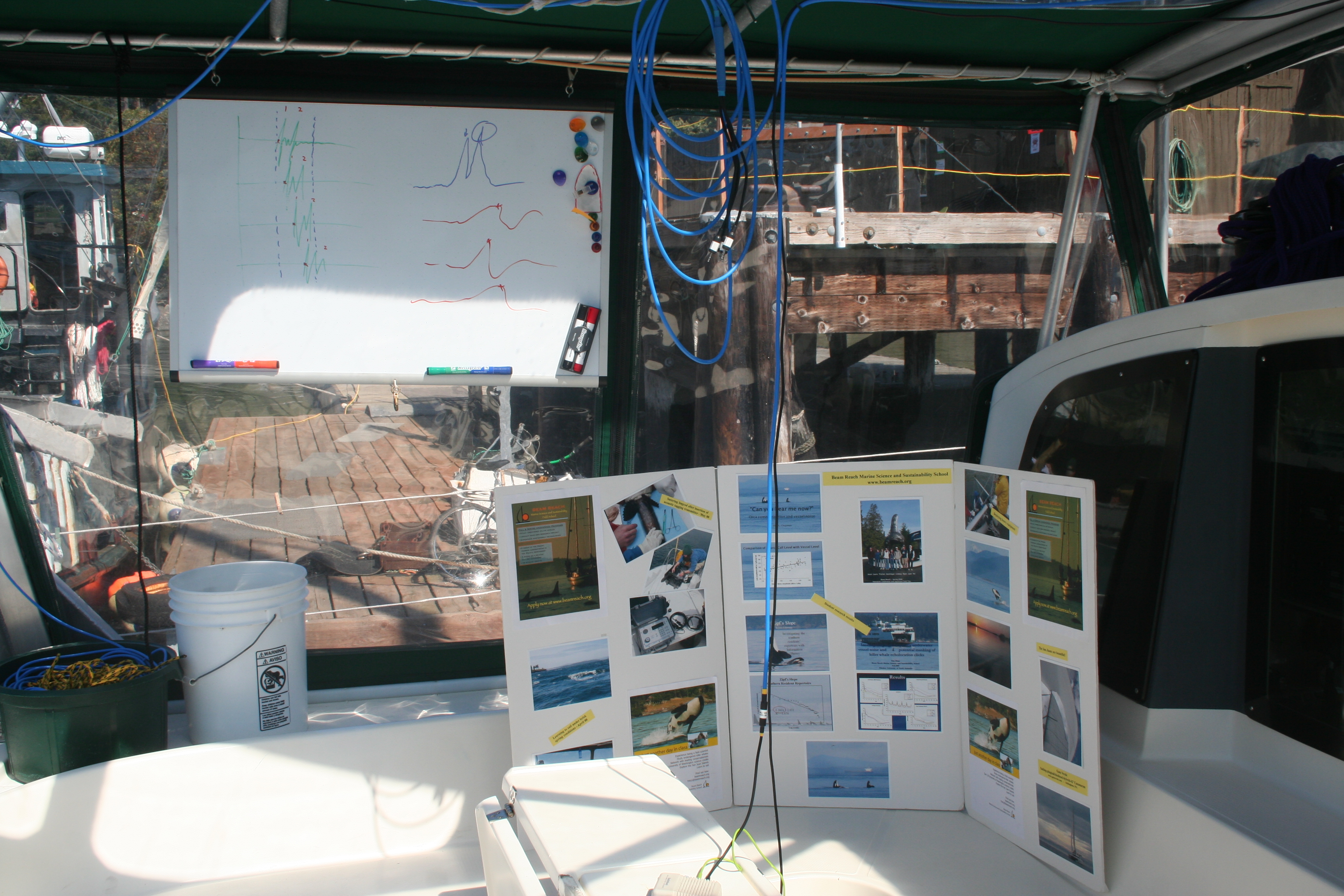
Horace and I stayed to man the boat during the open house day at FHL. It was actually quite fun, contrary to our expectations. People from the community as well as other students and researchers from FHL came aboard the boat to learn a little about what we are doing. We had a whole set-up with a poster, a video of a greeting ceremony (where all three of the Southern Resident pods come together and vocalize a lot) and us to answer questions.
Toward the end of the open house I got some time off and I went to see some of the other ‘exhibits’. I saw two of my favorite non-mammalian sea critters, a slimy sea star and a giant orange nudibranch.
After the open house was over, we decided that since it was so late we wouldn’t have time to fill the water tanks, get groceries, pump out and find a new port before dark so we would stay the night at FHL. Horace and I spent the night relaxing on the boat. He played on his computer and I caught up on my TV shows. Pathetic I know but CSI shows make me really happy.
5/9
 We left FHL this morning around 10, pumped out and headed out to sea. The weather was amazing, I only wore 3 layers instead of 4 or 5. On the way out of Friday Harbor we saw a bunch of harbor seals poking their heads out of the water and looking around. They are getting a lot easier for me to spot.
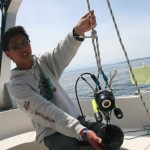
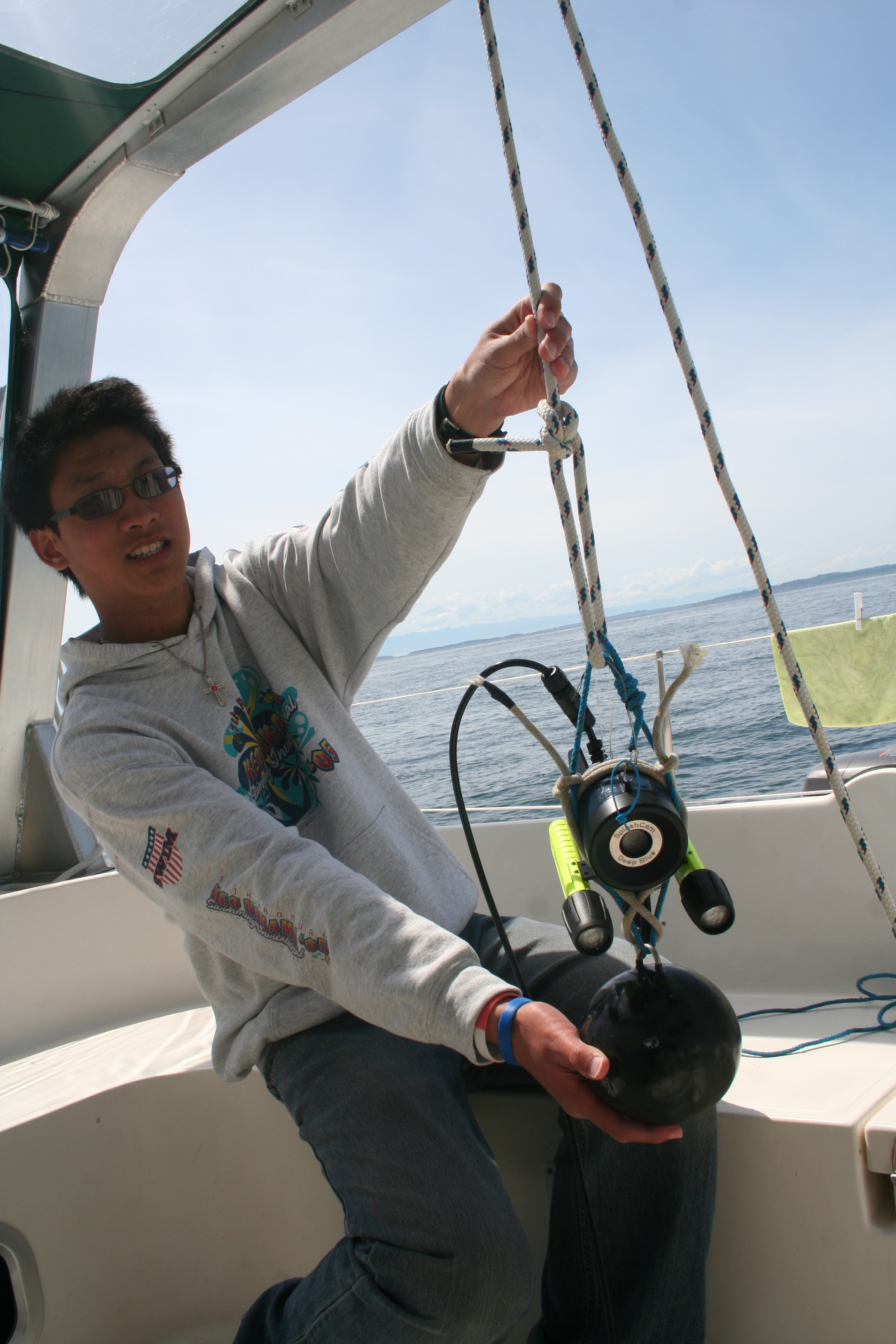
We headed around the southern top of San Juan Island and when we hit Lime Kiln we decided to drop the SplashCam down one more time to try and find the Lime Kiln hydrophone array. After about 15-20 minutes we FOUND the array!!! Finally! We took a waypoint (the GPS coordinates) so Jason and Scott could dive for it later.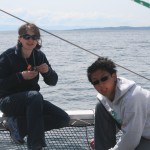
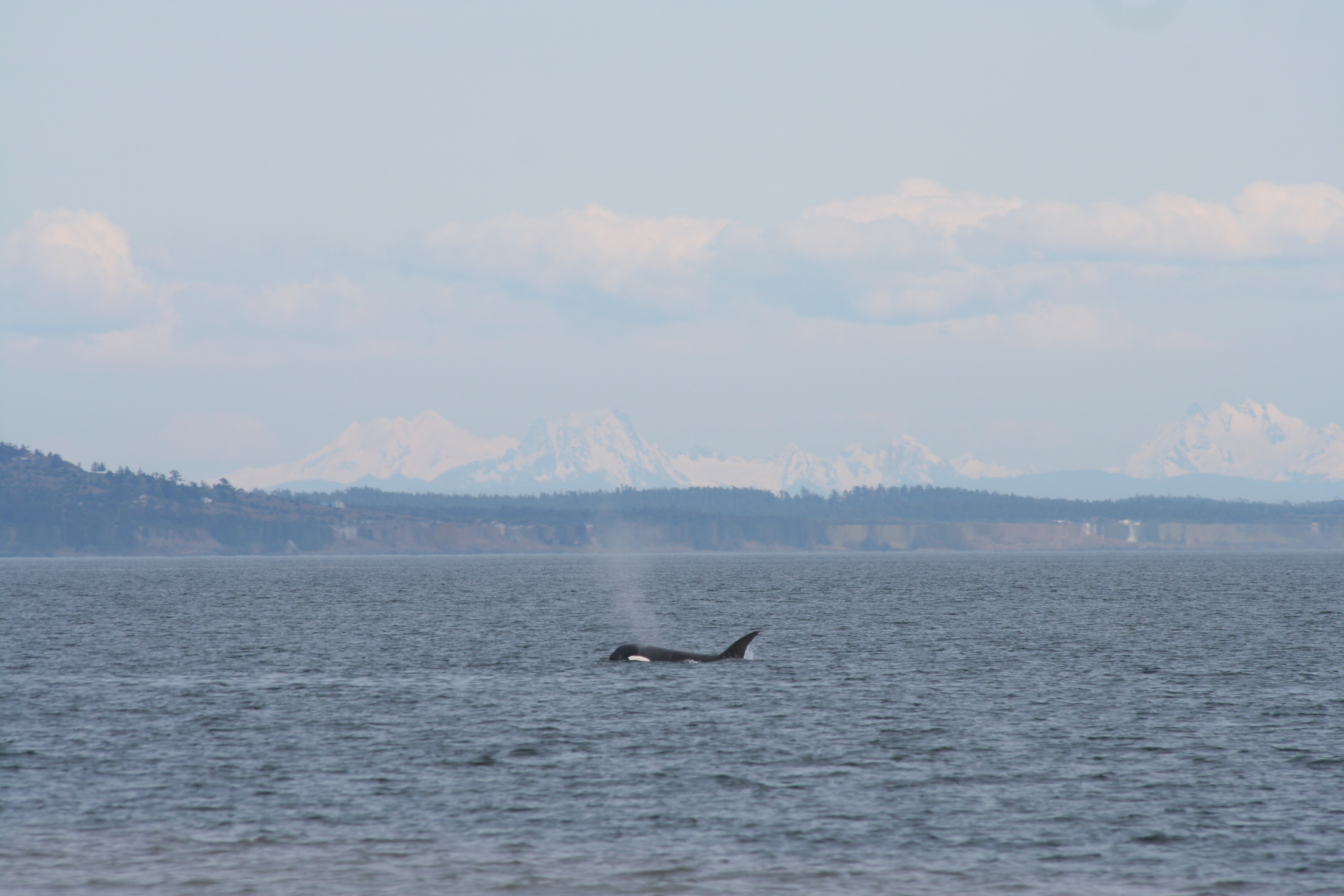
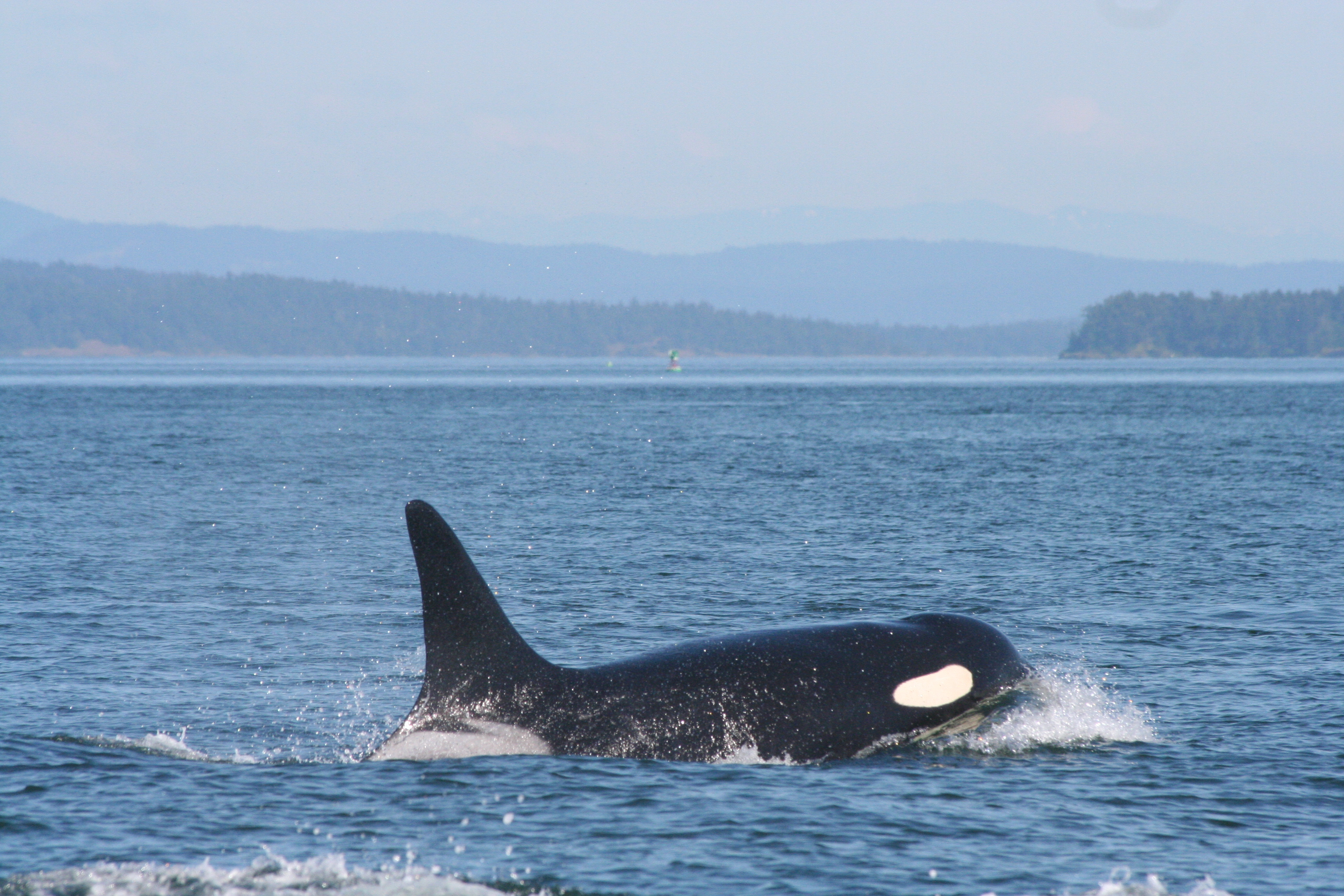
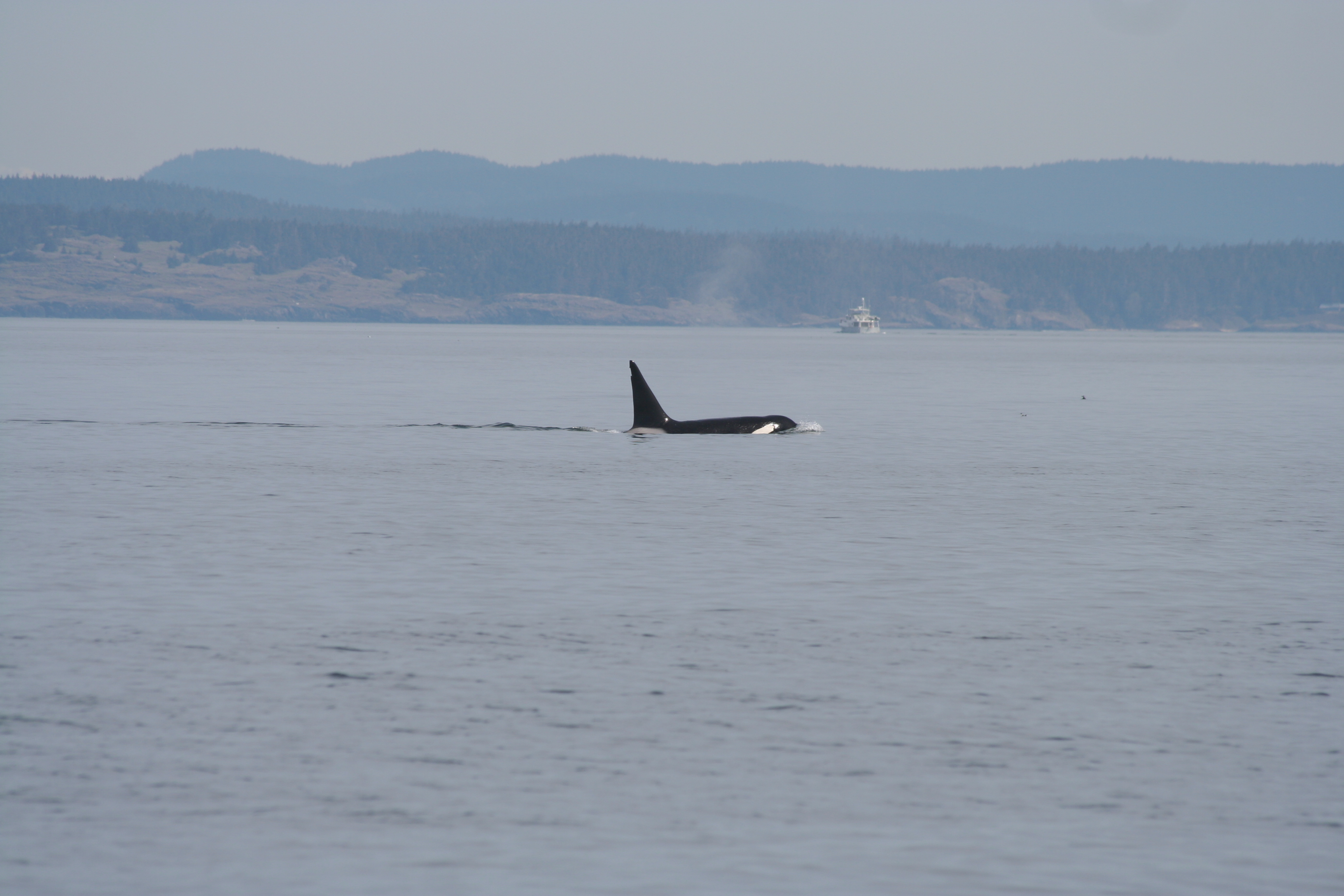
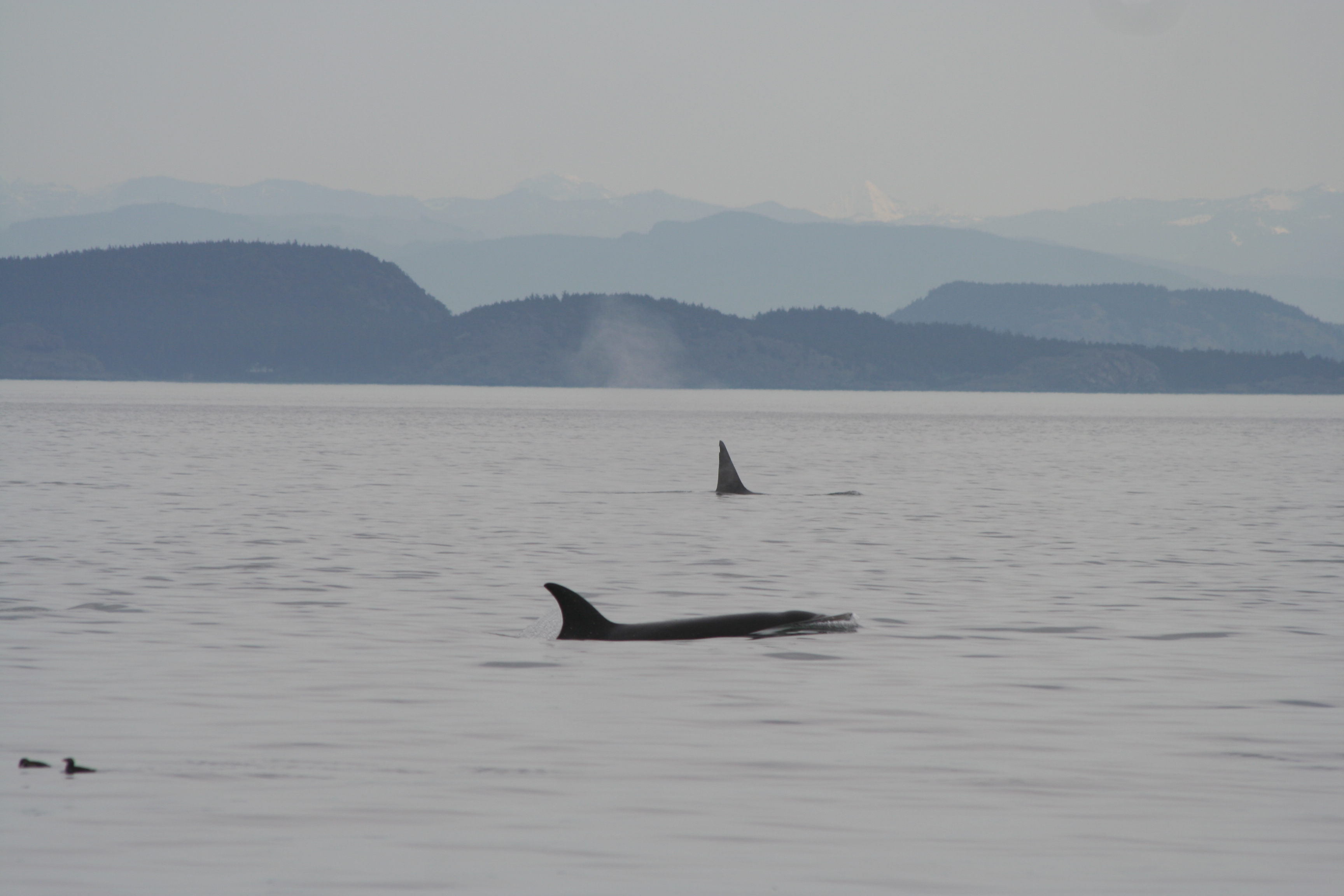
By this time Libby and Kathryn had been able to contact us to tell us they were back so we headed up to Snug Harbor to pick them up. Shortly before we got into Snug we heard that two Transients had been spotted about an hour away, so after getting Kathryn and Libby we headed out to see if they were still there. They were! We think that it was the same two form a few days prior. They had been identified as T124c (a female) and CA58 (a male? a Californian Transient).
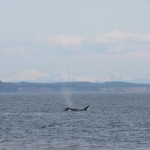 While watching them, we think we saw what is entertainingly called a ‘sea snake’ (a male orca with an erection). The whales got very close to a few of the whale watching vessels, circling and diving. We thought maybe a seal or something similar was hiding under the boats since we couldn’t think why they would want to be right next to the boat. Then we saw the ‘sea snake’ and decided that they were probably just socializing and didn’t care about the boats.
About 5 or 5:30 we headed back to Snug for the night and watched the first little bit of “The Life Aquaticâ€, which is a tradition on Beam Reach.
5/10
We decided to head out to Discovery Island off the southern cost of Vancouver Island. We were hoping that we might catch the Residents on the way back in to the inland waters. Alas we spotted no whales. We did however see a stellar sea lion feeding on what looked like a large food source it was pulling giant chunks off of.
5/11
Today is the last day of our first 2 week stretch at sea and still no Residents! We decided to head out to Discovery Island, again, to wait and try to catch the Residents if they come back in to the Inland waters.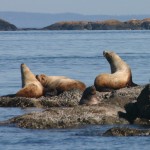 We saw a Minke whale, which was very exciting as as I have never seen one before. They are incredibly hard to spot and so have earned the name ‘slinky minke’ in these parts, or so I have heard.
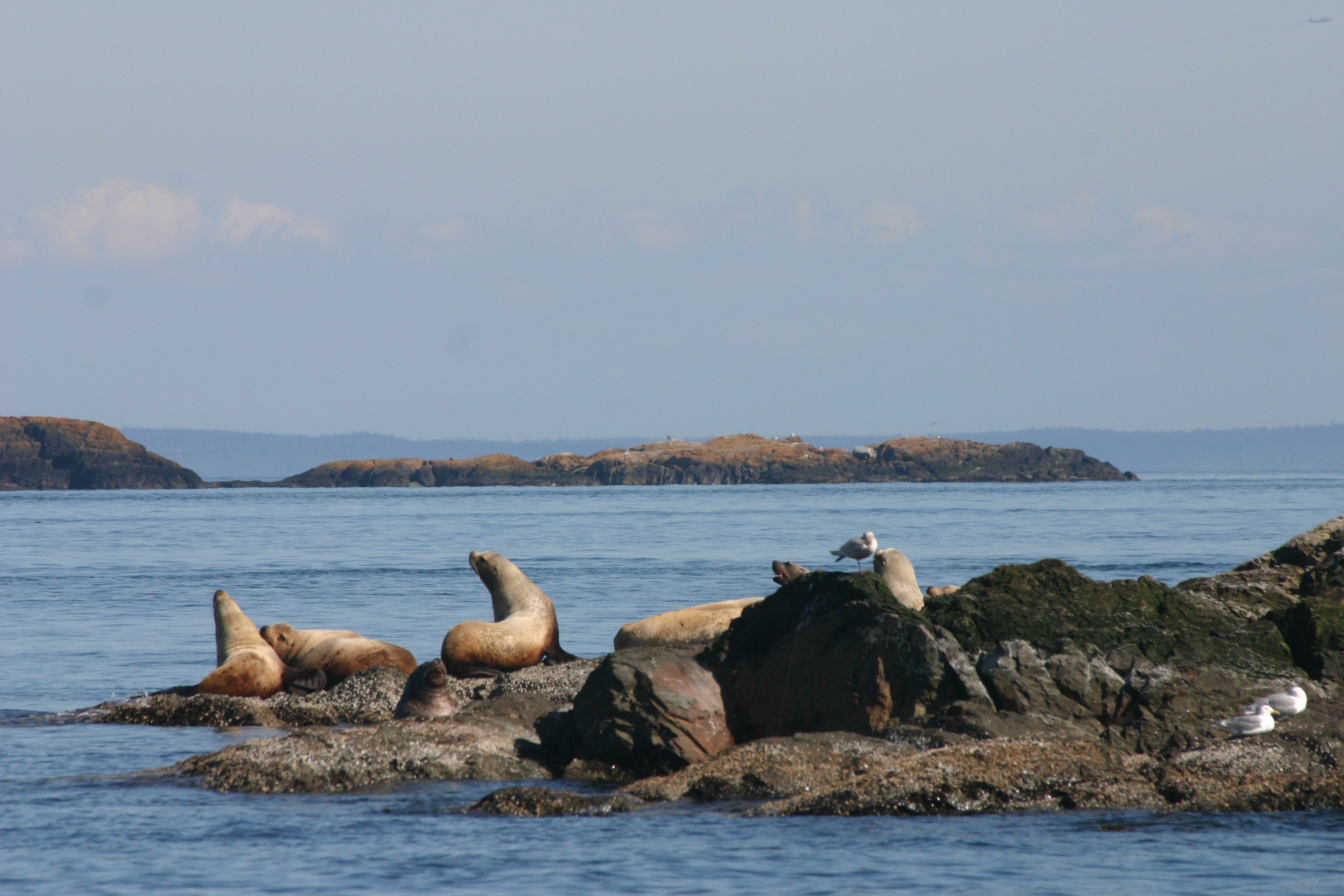
After drifting all day we decided to head back and anchor across from Friday Harbor in Parks Bay on Shaw Island. On the way into Cattle Pass we passed Whale Rocks which is a sea lion haul out. We saw maybe 10 sea lions. It was pretty cool!
5/12
About 3 minutes after we got everything off the Gato Verde and up to Lab 8 Jason got a text abou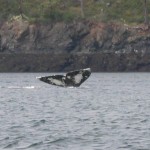 t a gray whale right outside of Friday Harbor. We decided to jump on the buzzard and go get ID pictures of it for the Whale Museum. We went out and found the whale pretty quick and even managed to get some great ID pics, which is much harder than it seems. It was interesting how different the breathing noises are between grays and orac, orca are much louder.
5/14
Today Horace and I went to Wolf Hollow, a wildlife rehabilitation center, for our service project. Wolf Hollow is amazing! They are huge and have a great set-up. Shona, the head of the center, is very nice. She gave us a tour of the facility when we got there and was a joy to talk to during lunch.
Horace and I were given the task of weeding one of the enclosures usually used for herons. I found a lot of slugs on the walls and 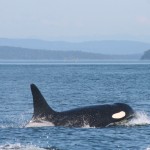 pill bugs were everywhere. It was like a pill-bug breeding ground, but I like pill bugs so it was OK. About 1 hr before we were scheduled to be done, we got a phone call telling us that the Southern Residents had been spotted close to San Juan Island heading South.
Yesterday we went to the Center for Whale Research and met the man in charge, Ken Balcomb. He offered to take us out on his boat with him if the whales showed up.
Libby and Kathryn picked us up about 20 min later and we raced over to Snug Harbor to meet Ken, hopped in his boat and went to find the whales. We found them pretty quick and spent the next 2 hrs with him following the whales taking ID shots as well as doing a few recordings. It was one of the most astounding and exciting moments fo my life. I saw two breaches! Ken identified the pod as L-pod.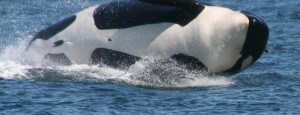
Be Joyous
Read More
I have could never find a good chance to update the blog. This is most likely due to the fact that I was out at sea for two weeks and no internet connection. Also might be the fact that I have too much to do and I’m always scrounging around to finish everything. I hope everyone is getting updates on our travels and experiences through the other blogs though. We have been through quite a bit these past 2-3 weeks.
We set off on the end of April and headed out to look for the whales. Todd was a bit late picking us up that day because he had to go out to buy groceries to prepare for our two week departure. Jason also got a call from the Stranding Network about another Steller sea lion washed up on a beach on Orcas Island. We ended up departing at a very late time, but two weeks, I was looking forward to it no matter how late we left. The next day, unexpectedly, J-pod returned to San Juan Islands, after a long period of absence. Jason heard the update right when we docked on Stuart Island; my heart jolted straight away. The residents are back! I was really excited from hearing this, trying to contain myself in the middle of Todd’s sailing lecture. We did peek our heads out off of Turn Point to see if we could spot them. We actually did too! They were pretty widespread, as I could only spot two females surface a couple of times. We believed them to be foraging around that time, which was 6 pm. But the next day, they were gone. No updates left of the residents, which made us sad. The salmon runs are probably not quite here yet.
The next few days, we did not hear from Orca Network about any updates on the whales’ whereabouts. We did see quite a number of other marine mammals though, such as harbour seals, dall’s porpoises, and more. But getting lots of science goals out of the way was really great. We calibrated our hydrophones, went through a behavior exercise with Jason on the Gatito, had a couple of sailing lectures, wrapped up our final research proposals, and journal club readings. It was sort of nice that the whales did not come by during this time, because it was indeed crunch time when we had to finish up our proposals. I can recall I was one of the ones that were sleeping later than usual, with my eyes popping out of their sockets from working on the proposal for hours. We finally turned it in on Friday, after what I felt was a long process of hard work.

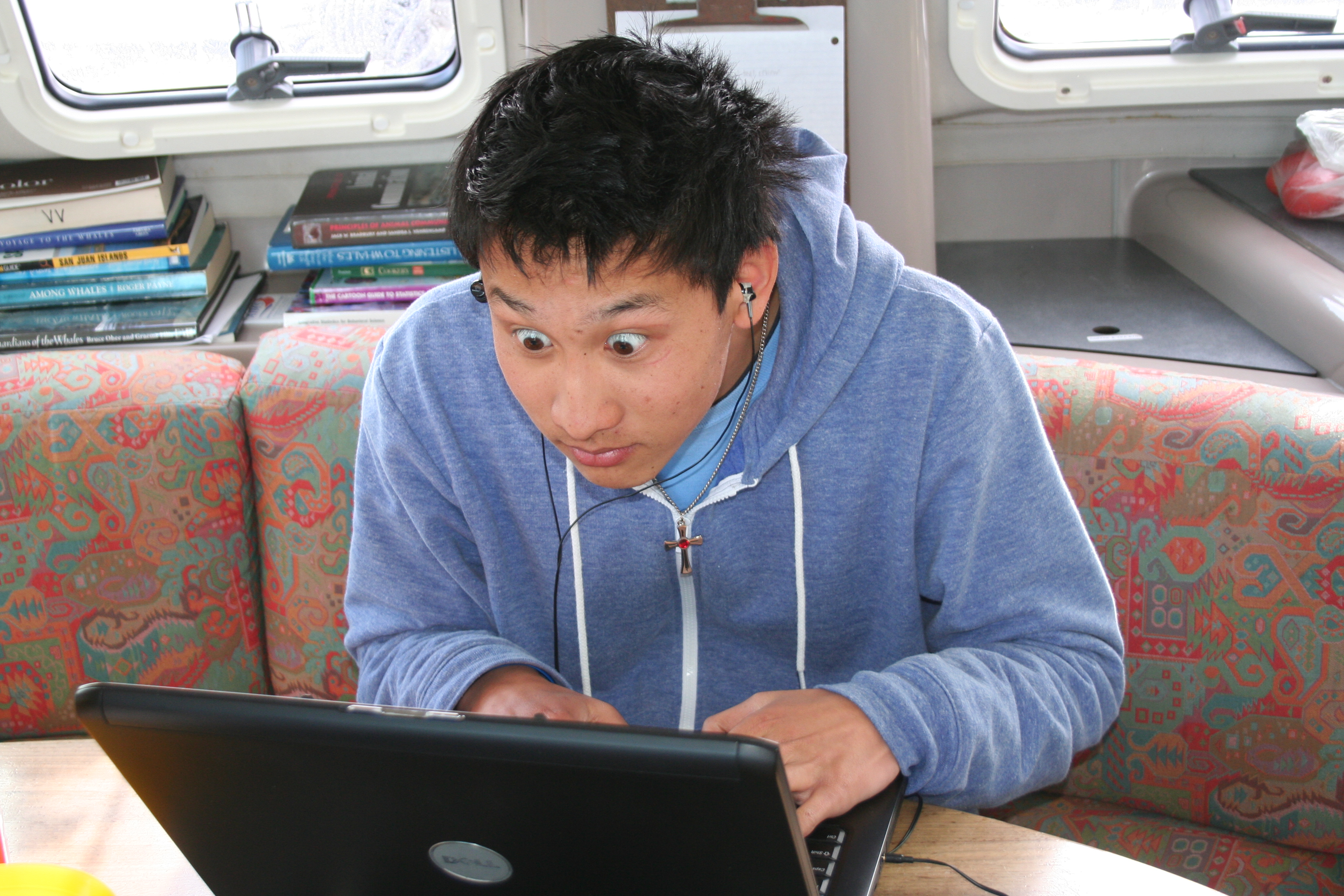
But, before turning the proposal in on Friday, transients! We were stationed out by Turn Point for almost the entire week, drifting about, waiting for the whales to show up. It was on May 7 that we finally got to see the whales. We got the text that there were two transients heading north on San Juan Channel. Perfect! We were right north of them, heading south.  In that sense, we immediately headed down towards them, in hopes to catch them on camera and film after not seeing whales for a long period of time. We motored all the way down towards Orcas and saw several boats off in the horizon. We thought that they were the whale watching fleet out there, and sure enough, they were. There must have been over eight of them surrounding the two whales. It was much more different than the time that Kathryn spotted the whales when we wanted to go to Neah Bay. We were practically the only ones following them. This made such a huge difference for us, since we had to tow the hydrophones this time to get recordings and boats kept getting in our way. It was seriously very frustrating. But we did get a great recording of what we thought of as a call around 17 minutes into the recording!
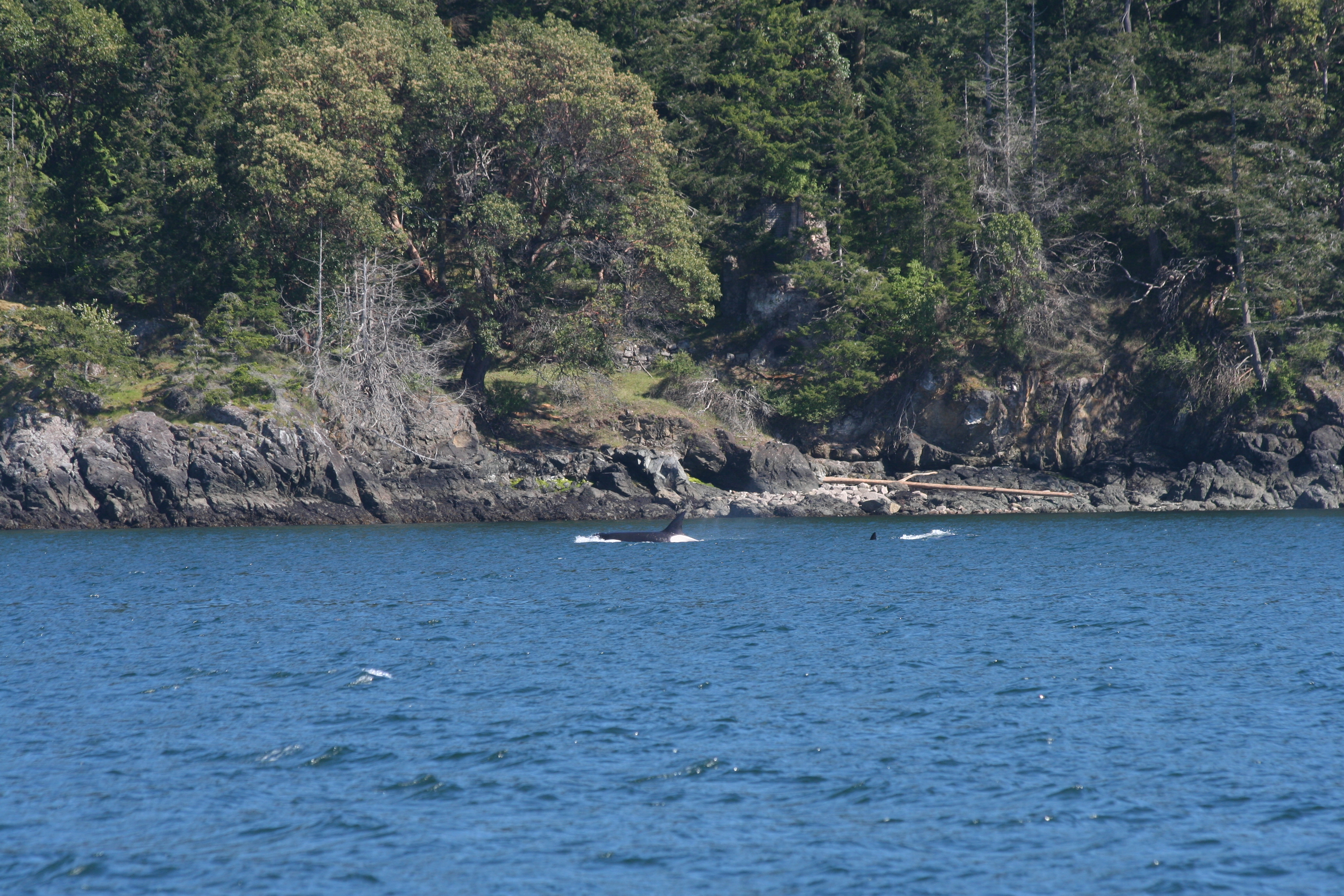
Afterwards, we sailed back to Friday Harbor Labs in preparation for the open house that was going to happen. The open house was an event in the labs where the area is open to the general public. All the students at the labs get to show off what they have been doing this whole time in the labs and demonstrate what they have learned so far. I thought that this was a great time for everyone to share their findings and interests to the public, hoping to educate them as well about the science out in the world. For their service project, Libby and Kathryn went to a walk to spread awareness about the salmon farms at Vancouver Island and Alexandra Morton was going to be there. She was one of the leaders and since it was during the exact same day as the FHL open house, Nora and I had to take over the entire chore rotations and make sure everyone was attended to during the event. The open house was a success. I loved every bit of it: the enthusiastic kids, parents that had loads of questions, and all the FHL folk that came down to take a gander at the Gato Verde. I really felt my communication skills come out during that day, since several times, Jason and Todd were occupied with another person and I would have to take over along with Nora. Even better, was the fact that it was such a nice warm day. During my break, I went over to visit the Zoobots and Kellen’s genomics class to see what they were up to. I ate some gummi worms while investigating the labs, and learned some pretty neat stuff! Vincent showed me this hermit crab that had a mutualistic relationship with a sea anemone that lived inside of the shell. Whenever the hermit crab was fed, the tentacles would pop out, and gather and food. That is just crazy! I saw scallops also flip around and swim too, rather quickly I would have to say. But all in all, it was such a great day. To top it off, we had internet and stayed another night at the labs. That meant another night of soda, showers, and comfy rest.
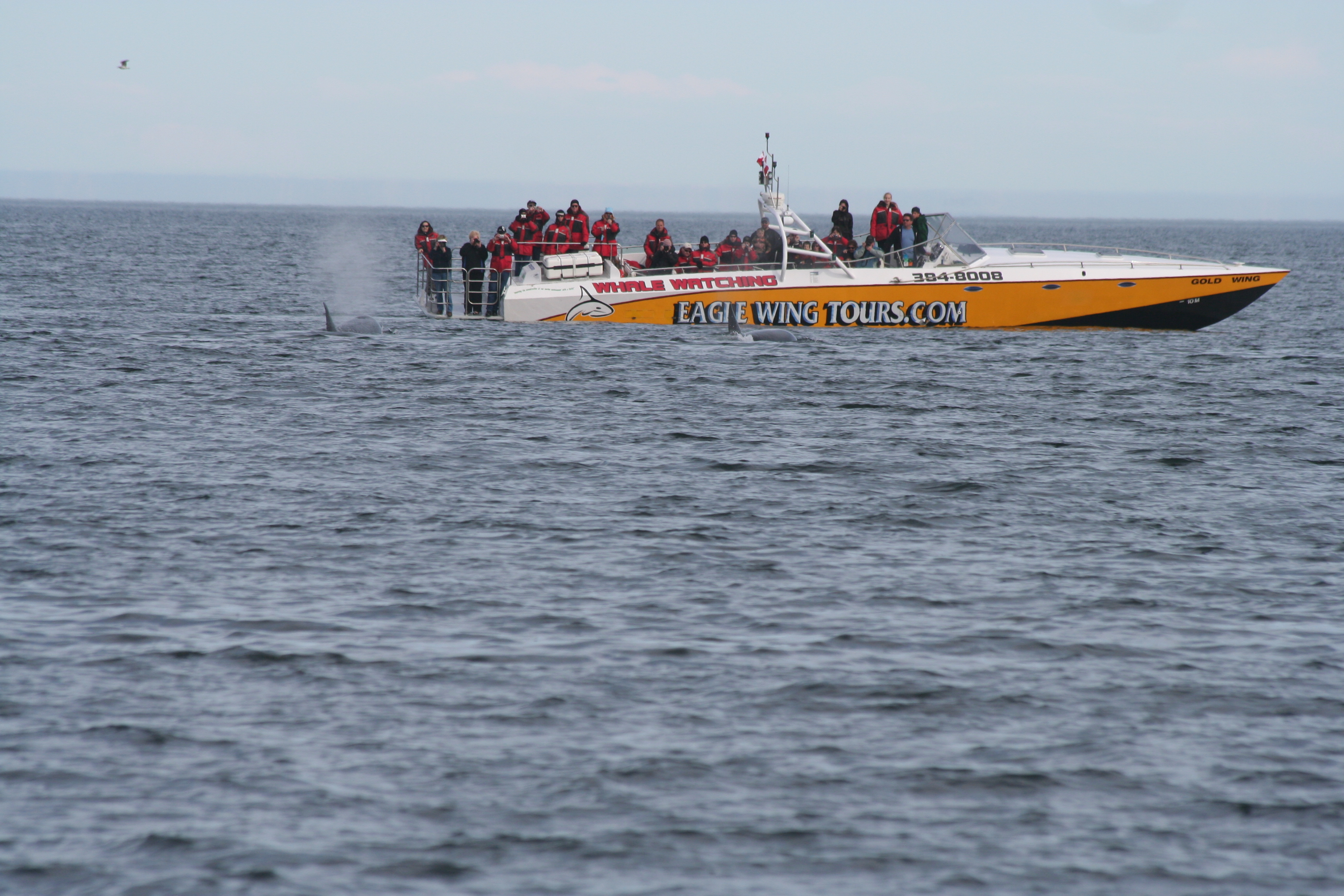
It was then, during the next day, that we saw two transients again. We crossed the Canadian border and found two whales being followed by about 8 vessels once more. We were at first very far out so it was difficult to see them. I had the camera for the first time and it was hard for me to get shots of them since we were facing right towards the sun. I tried my very best. This time though, it was much more exciting than the day before. We got to be able to see them act quite strangely. For one, they started heading towards a boat and not going away from it. We thought that there was perhaps a seal or something heading underneath the boat that the orcas were that interested. But for a solid 10 minutes, it would not leave the vicinity of the boat. The whales kept bobbing up and down around the Prince of Whales and stayed there for a long time. They did the exact same thing to Eagle Wing. What was most memorable was when we saw lots of great splashes and some interaction between the two whales. And…what was most intriguing was that we thought we saw a bit of pink flash on the surface of the water. Sea snake perhaps? We all shouted and exclaimed in excitement over the orcas as they were just a spectacular sight to see, yet again.
I felt as if these two weeks zoomed by so quickly, that I did not even notice. Time never waits for anyone does it? But we did accomplish so much, and I have felt that I have grown so much since the very first day of Beam Reach. I am constantly learning, being the youngest and only teen of the group. I have a long way to go but I aspire to end with lifetime lessons and exuberant experiences that I can share to my folks back at home.
Read More
I got blisters on my fingers… and by fingers, I mean toes. My feet have never been so beat up in my entire life, but I can safely say that I sacrificed their happiness for a worthy cause. On Saturday, Libby and I walked from the marina in Sidney, British Columbia all the way to the parliament building in Victoria.
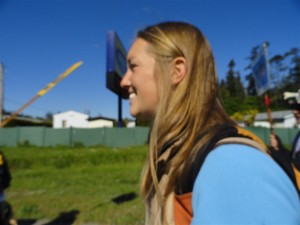
Libby walking
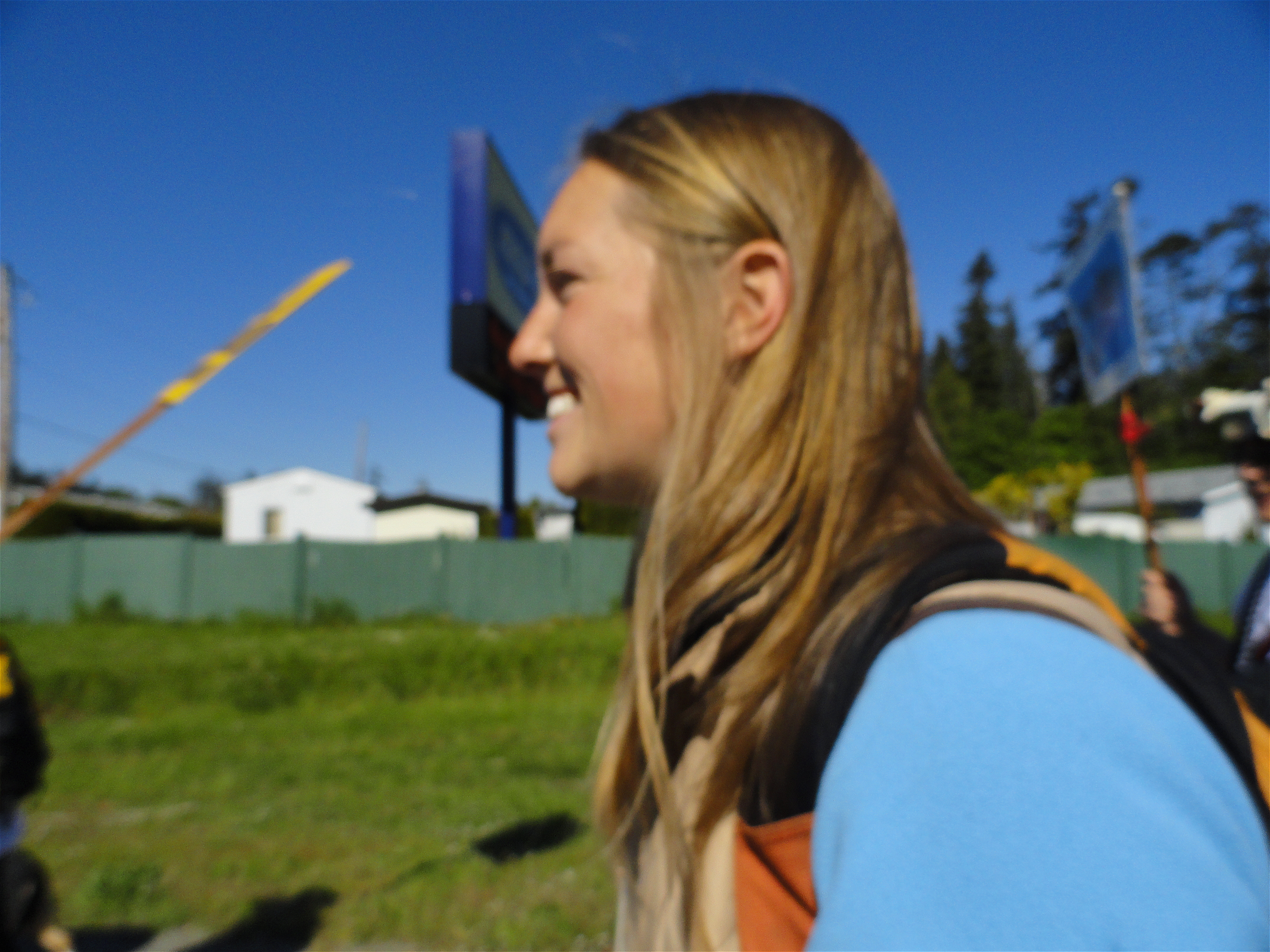
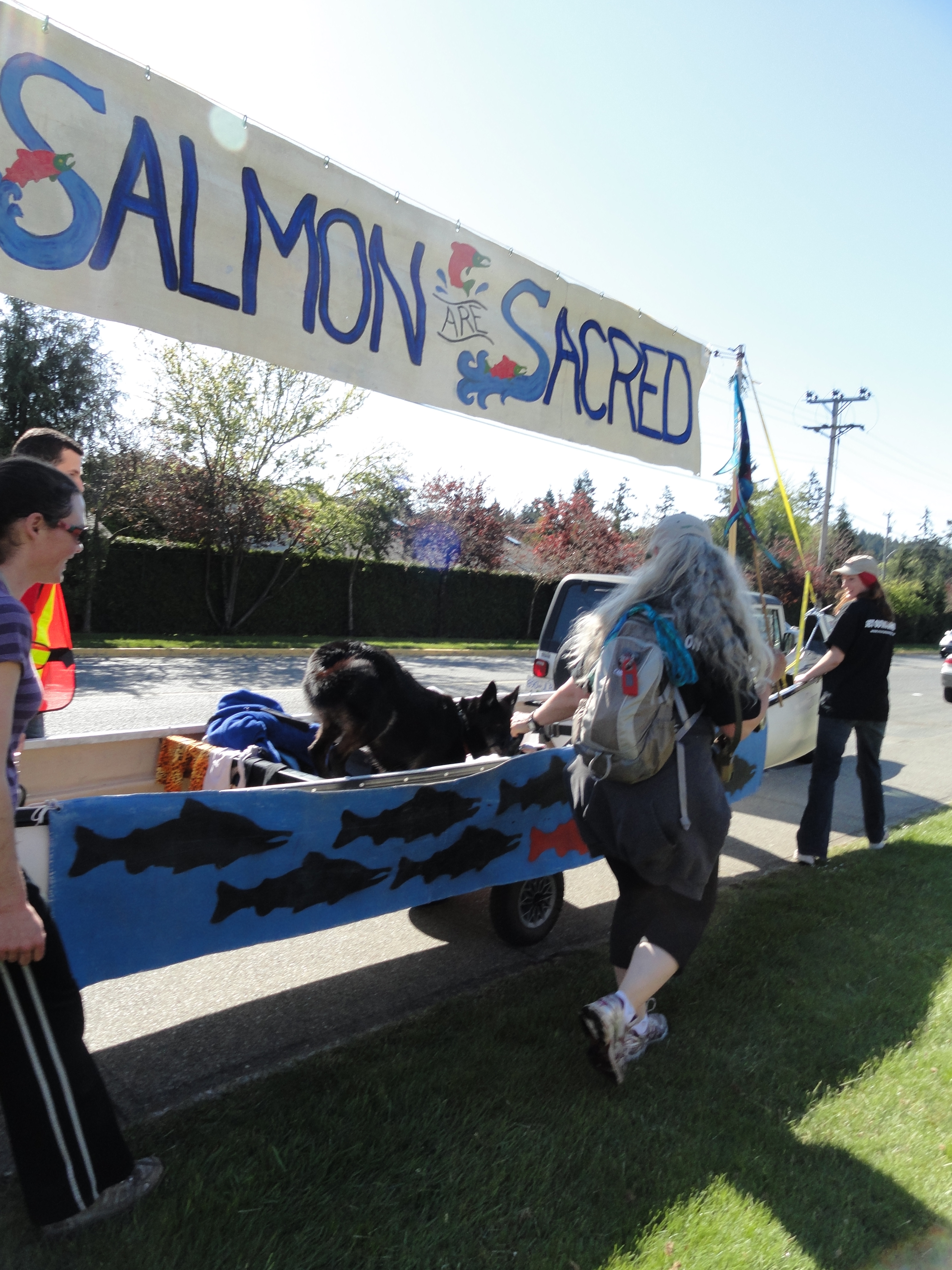
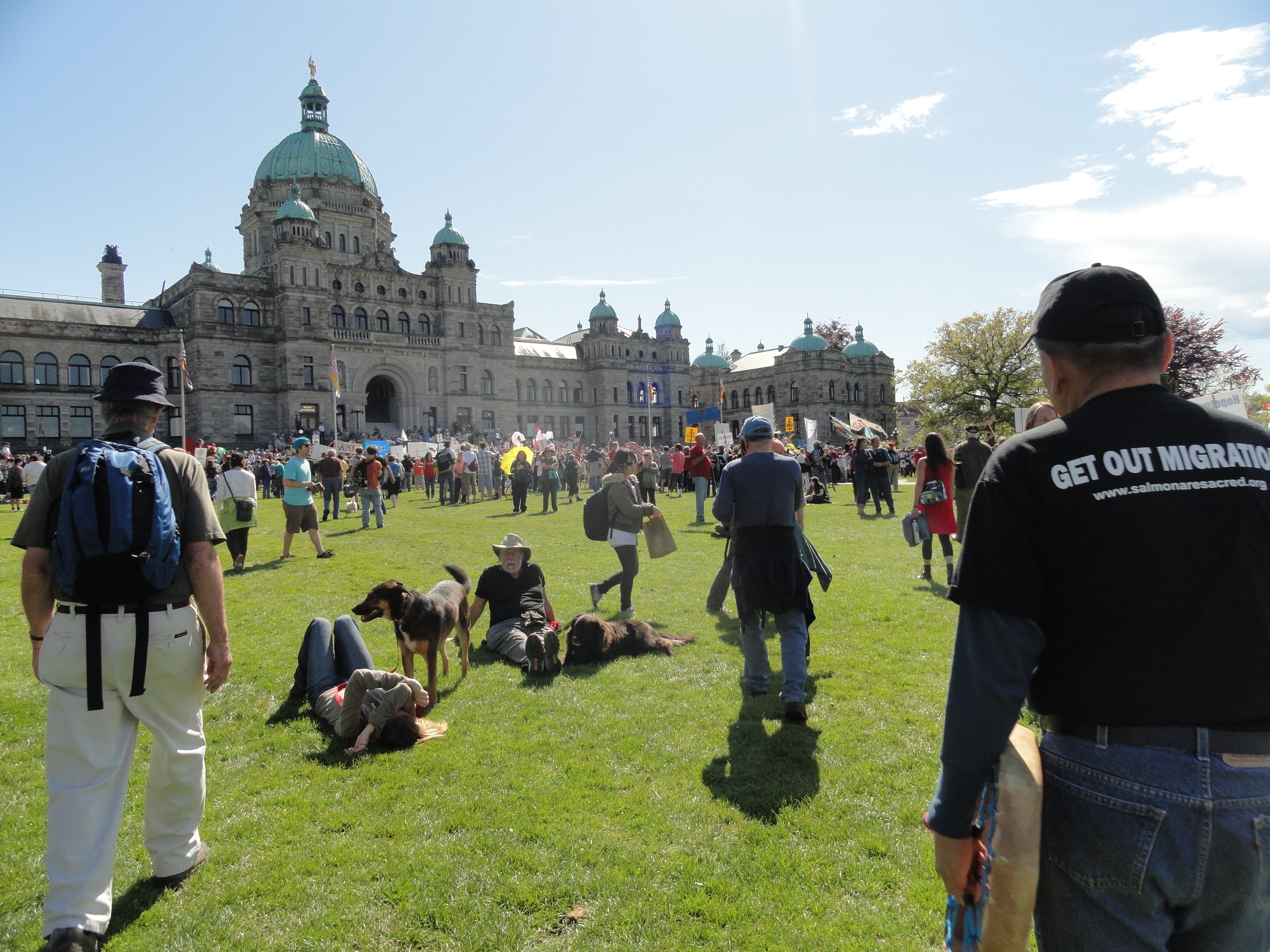
We walked approximately 18 miles with hundreds of other people as part of the Get Out Migration, a march to raise awareness about open-pen fish farms led by a woman named Alexandra Morton. She has lived in the Broughton Archipelago for more than twenty years, researching the Northern resident killer whale community and, more recently, the effects of open-pen fish farms on the wild salmon populations. After ten years of working to eradicate Norwegian fish farms from the area, Alexandra organized a three-week walk from the Northernmost to Southernmost tip of Vancouver Island to spread the word about their negative impact on local communities and ecosystems. During a trip to Vancouver Island a few years ago, my father bought me Alexandra’s book, Listening to Whales. I did not read it until last summer, when I was living at a remote research station off the cost of Maine. Her narrative about studying killer whales and her depiction of life as a field scientist was formative for me – since then, I have dreamed of meeting Alexandra Morton. When I heard that she was due to walk into Victoria while I was right across the water, I decided then and there that I had to walk with her. After much logistical planning, Libby and I pinned down a ride and set out for Sidney. Because we had to clear customs, we missed the start of the walk at 8 am, so the beginning of our journey was fairly rushed. Walking briskly through the Sidney suburbs without any sight of Alexandra and her entourage, Libby and I started to wonder if we’d be walking all the way to Victoria alone. Just as we were beginning to contemplate hitchhiking, a car pulled up beside us. “Hey, are you guys trying to catch up to the migration?â€Â A young woman named Megan, who turned out to be none other than Alex Morton’s assistant, opened her car door and ushered us inside. “I know migrators when I see them!†she said. Five minutes later, we came upon a train of cars, signaling the back of the migration pack. A woman with long, wispy white hair came into view, and my eyes widened. I was way too sweaty and frazzled to be thrust into the presence of Alexandra Morton already! Libby and I thanked Megan for saving us many uncomfortable miles of walking and started down the road, trailing Alex’s heels and wondering what to do next. Turns out my body is not too keen on the idea of walking 18 miles, so for the majority of our migration to Victoria, I was solely focused on putting one foot in front of the other. Because of this, I did not get the heart-to-heart with Alex I had imagined, but simply being in her presence and taking part in this massive culmination of her efforts was enough for me. After a long day of trekking down Highway 17, we entered Victoria, greeted by a huge group of supporters. The final 1 km walk to the parliament building was spectacular – thousands of people flooded the streets, marching to the beat of the First Nations’ drum and shouting to spectators.
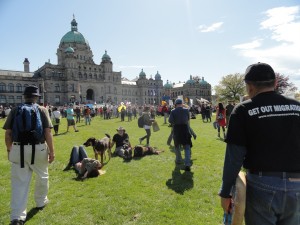
At the Parliament Building
It became evident to me that this is an issue that affects all of British Columbia’s citizens in different ways, but it is undeniable that the effects are uniformly negative. Libby and I collapsed on the parliament building lawn, ready to yank our shoes off and douse ourselves with cold water. The wide range of speakers at the final migration event, from First Nations chiefs to commercial fishermen, spoke of the cross-cultural concerns fish farms have raised. There were so many people crammed onto the lawn that we could not even see the stage, but it was enough just to be able to sit and listen. Alexandra was the last to speak; I had not lost all hope of meeting her, so I tried to keep one eye on her as she snaked back through the crowd amidst roaring applause. Libby pointed. “There she is!â€Â We knew this was the last chance we would get, so we pushed forward until we were standing right in front of her. As this was the end of Alex’s very long journey, I didn’t want to goad her into taking a photo with me or signing my book. I just wanted to say hello, so that’s what I did. Libby somehow managed to snap a candid photo of this moment (she’s amazing!), and I am so glad she did. Like I said, the blisters were well worth the pain.
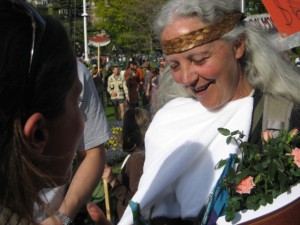
- Meeting Alexandra (Libby’s picture)
To learn more about the Get Out Migration, click here
Read More
Mitchell Bay to Mitchell Bay
We headed out towards the south side of the island in hopes of finding J pod. Not much wildlife sightings today, other than some seagulls. No updates on the phone or email on sightings of J pod either, which was sad for us to hear. We had a general prediction that since they finally came back into the area, they are still looking for the fish to eat. It is like moving back home after college life in the dormitories: the whales have to resettle into the area. We anchored at Mackeye Harbor on Lopez Island to have a quick lunch consisting of grilled cheese sandwiches. At Mackeye, we finished our calibration exercise using the data that we got from the hydrophone calibration yesterday. Afterwards, we headed back up to Mitchell Bay, spotting about 3 seals (unidentified) poking their heads out of the waters. At Mitchell (Snug Harbor), we then enjoyed at nice dinner cooked up by Jason and Nora: chile. Then moved on towards journal club to finish off the night.
Read More
We arrived back on San Juan Islands three days ago. Looking back, it has been a very interesting week out at sea. My thoughts are sort of all over the place right now, because a lot certainly has happened this week, all accounted for in Nora’s blog if you were interested. But I shall share with you my highlights and thoughts about this past week.
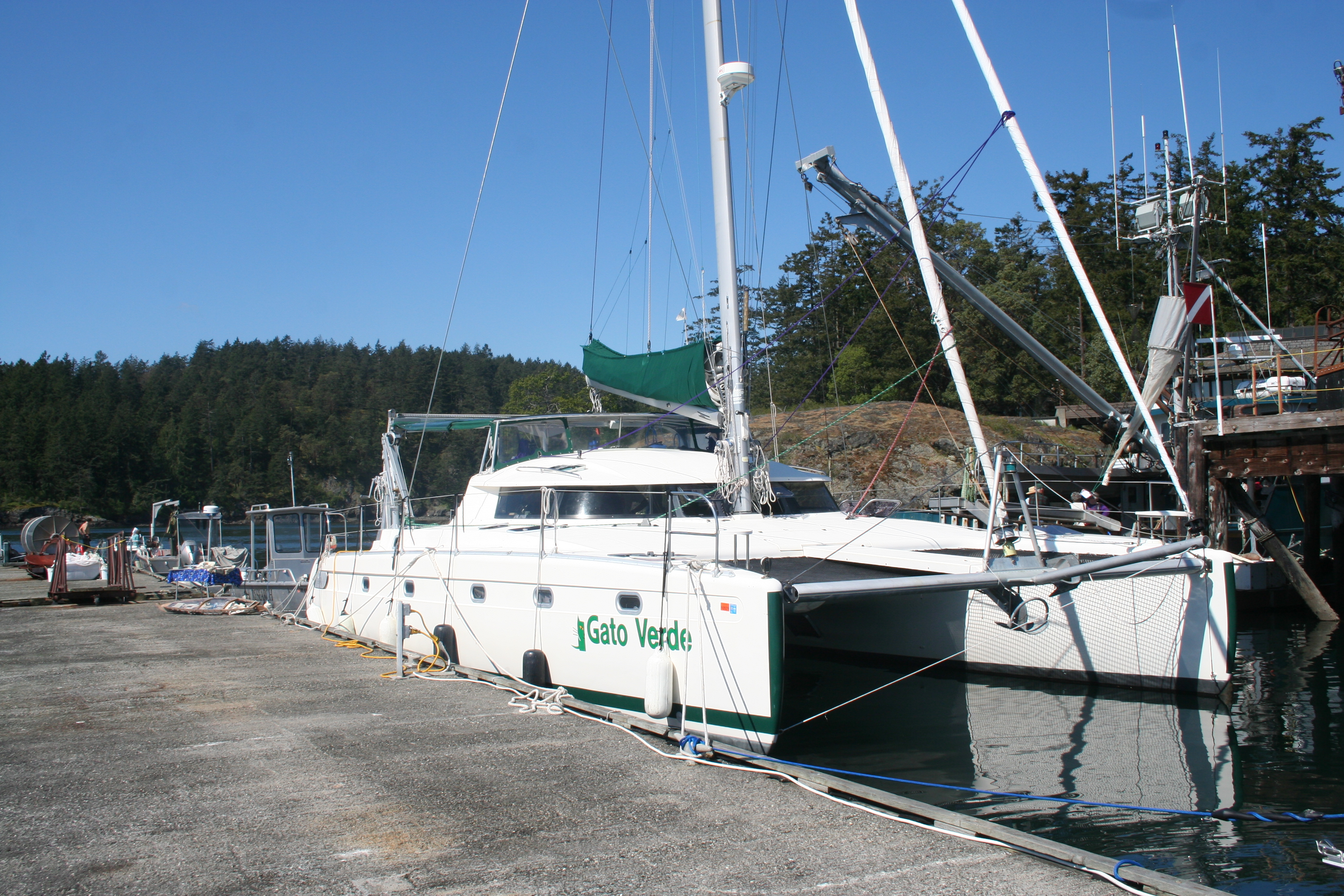
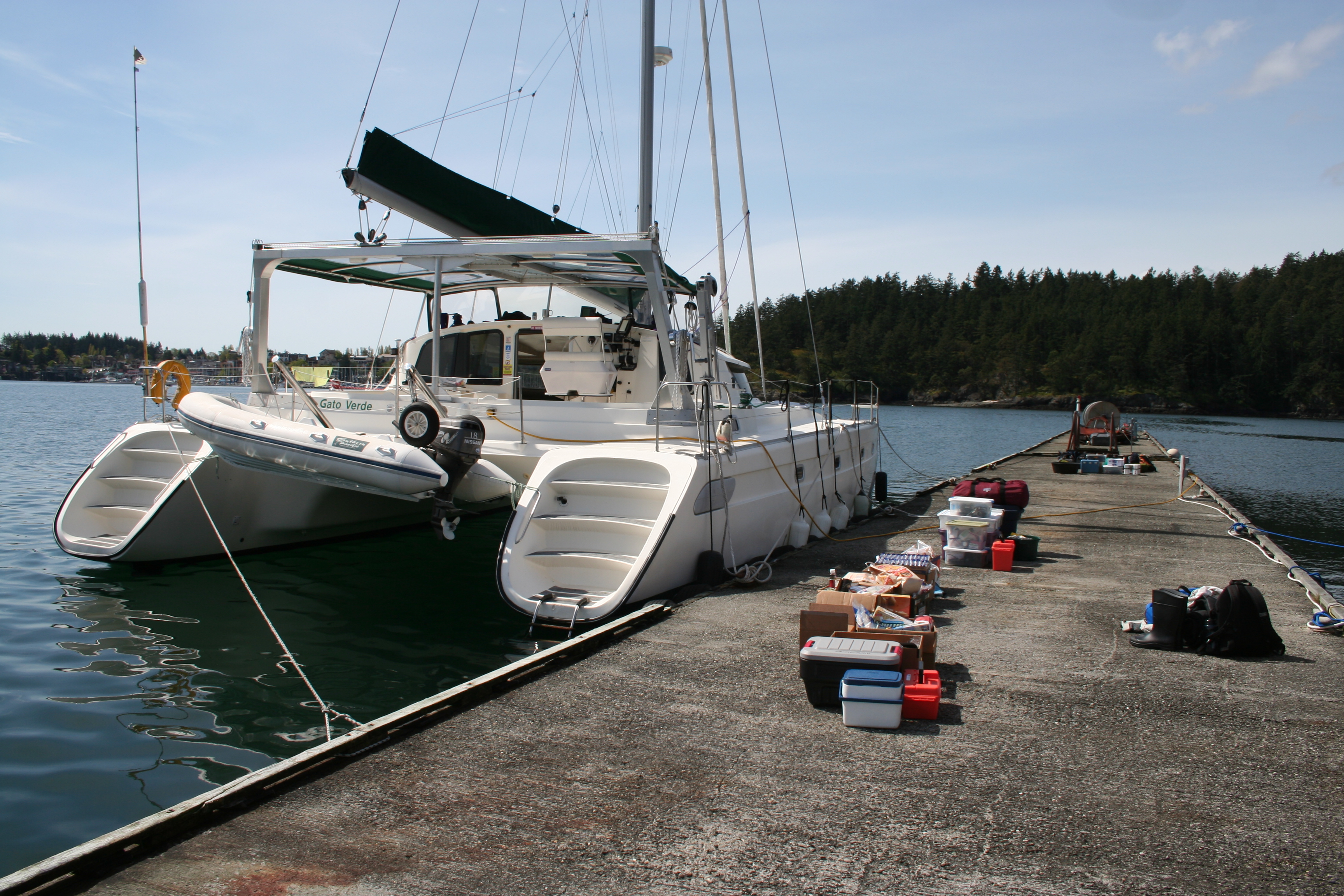
I have to say, this is my first time officially boarding a boat and sailing out. I have only been on ferries and cruises, so I believe it does not count. On the 42 foot catamaran, Gato Verde, our captain Todd Shuster, welcomed us to the sailing world. From there, I learned how to navigate, read current maps, tie knots, drive the boat and tack when necessary, learn the names of boat parts, and anything boat related I could think about. It was quite a bit to handle if you think about it, waking up at 7 every morning and getting right to work. By the end of the day, we as a group would slouch down on the seats around the laden lamp. Personally, I felt exhausted after everyday, but that tiredness would always quickly shift to giddiness and excitement. I’m out on a boat, you know! I’m actually going to be on this boat, living on it and collecting data on wild orcas, which drives me to continue to work hard.
Speaking of orcas, we saw a couple of them on the first day on the boat, which entirely flipped my mind. It was in the midst of the chore rotations, that we all jumped when Kathryn yelled, “Whale!â€Â And what do you know? There were two groups of transient orcas swimming about to the starboard side. Immediately, I jumped up, super excited about the orca sightings, feeling like a little kid again. Todd quickly made a huge U-turn to follow the whales’ path. From there, I knew that we were not going to make it to Neah Bay, where we were originally planning on going to fix a broken hydrophone.
But I think we all made the best decision in following the whales instead of sticking to our plan. We chased them for a good six hours, constantly scanning the horizon for their dorsal fins with binoculars, while Nora and Kathryn would share the Beam Reach camera in hopes to ID the whales. We did get an ID on the male and a female: T87 (approx 1963) and T90B (2006), respectively. That said, there were a lot more whales than that. We saw about eight of them total. It made it really hard to count just because they kept taking longer dives. I guess that is what people say: transients are more difficult to follow and research since they are they ones that dive deeper and longer. They also spread out into a smaller amount of individuals per group, making it difficult to trace if they speed on ahead of the boat.
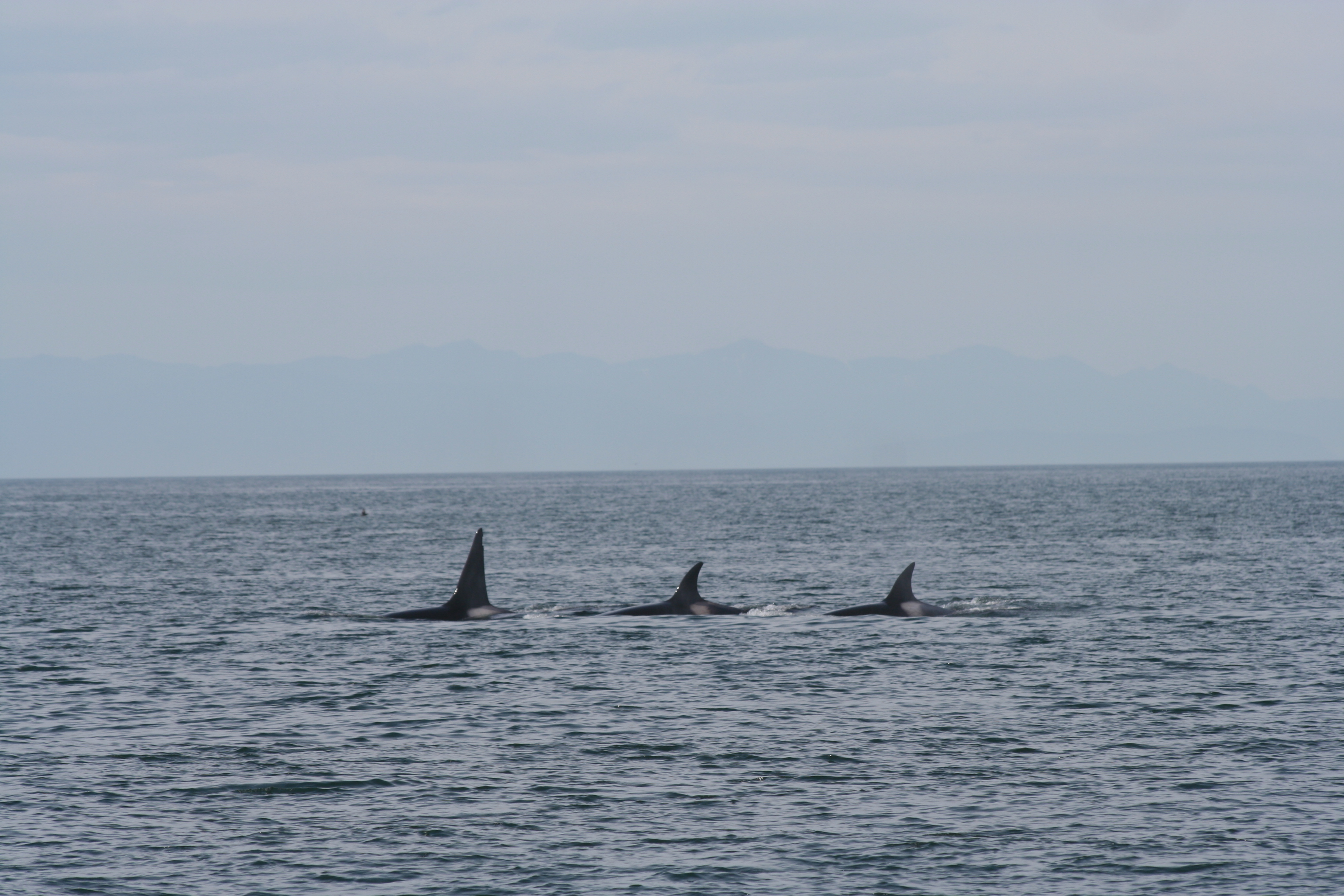
The most memorable things that happened were numerous. Firstly, a couple of orcas popped up from the water right behind the stern, startling us. I have to admit, I squealed with delight. They were so close, perhaps about three meters away from the boat. Todd shut off the motors instantaneously as we watched them swim by. I was too shocked and stunned to even lift my camera out to take a photo. It was absolutely gorgeous to experience a transient this close to us. Later on in the distance, we could see that the orcas were staying in the same area for a long time, erratically swimming in different directions and diving constantly. We suspected them to be foraging, or found something to eat perhaps. There were a ton of seagulls flying about, maybe looking for some meat scraps to pick off of. What topped it off though, was when, I peered through my binoculars, and one of the orcas performed a spyhop. Lastly, closer to the afternoon now, when two more whale watching boats joined us, we saw the group of female orcas out in the distance. They started to perform various surface active behaviors. They blew a couple of times out of the water, and then they started tail lobbing. That was really a sight to see, gazing at their tail flukes rising out of the water a couple of times. We also saw some tail slaps in the water.
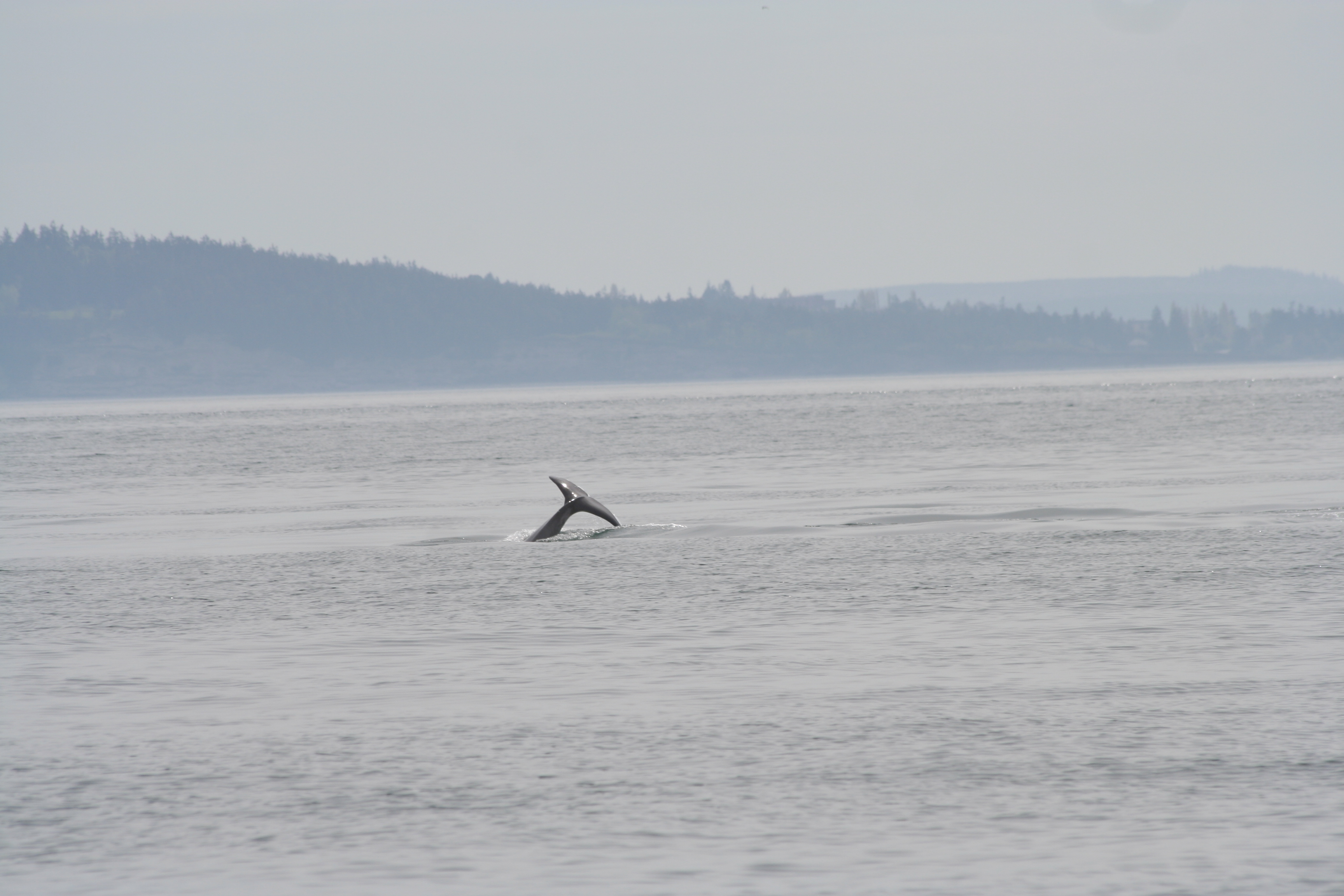
That was probably the major highlight of the week. Other than that, we saw other wildlife as well. Tufted puffins, seals, river otters, and many seagulls as well. We have practiced a couple of times in deploying equipment and getting situated with using the sound recording devices. We now just have to wait for the southern residents to show up. I am thoroughly excited for the rest of the sea weeks to come. Who knows what wonders can happen when out in the blue? We shall keep everyone posted while listening to the live hydrophones in a variety of areas.
Read More
4/18
Today was amazing. We had great weather today as well as a warm night. It is the 1st day on the Gato Verde (the boat) and everything is going smoothly so far. Todd is wonderful. He is happy to explain anything we want to know about the boat as well as other any other local or seafaring questions we have.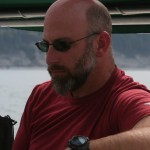
After leaving the dock at FHL we headed strait to our anchoring area, which was a gorgeous place called Griffin Bay. On the way to Griffin Bay we had very little wind but we got to put up the schreecher, the very front sail that is used primarily in low wind conditions, and everyone got a turn at the helm. While under sail we saw a few proposes, an otter and a Rhinoceros Auklet (a very cool seabird that develops a ‘horn’ on its beak in the spring). After anchoring, a very loud experience, we ate dinner accompanied by the call of a Loon. We eventually managed to spot and saw a Blue Heron as well.
After night fell we were still exploring the boat and saw some sparkling in the water off the bow of the ship. Scott told us it was bioluminescent plankton. We tried to get them to bioluminescence more by dangling a rope through the trampoline (the net on the bow of the boat) into the water the but the noise it made when we moved it through the net was echoing around the boat so Scott gave us the boathook to use instead. That made them light up really well!
You could see them really far down, they kind of look like tiny fireflies. Very cool! We are planning on going to Neah Bay tomorrow to repair the hydrophone.
4/19
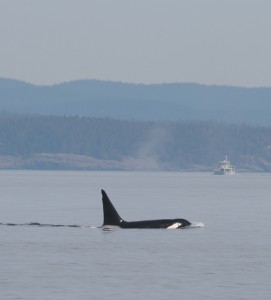
T87
Today we headed out for Neah bay at 7:00. Toward the end of breakfast Kathryn spotted some transient orcas! We got to run along side of them for the next 6 hours!
We took turns taking pictures with the zoom lens for IDs. I decided to try and look through the pictures and try to figure out which Transients they were. After some scrutiny I figured out that the male that we saw was a Transient named T87. I further confirmed this after ID-ing his sister T90b. It was very cool!
We followed the orcas down to Admiralty Inlet so we decided to dock at Fort Warden State Park in Port Townsend next to the Marine Science Center. We met the head of the Marine Science Center as well as the four very nice AmeriCorps women who work there and they let us go inside after hours and play in the touch tanks, which was a lot of fun.
4/20
Today was a very odd day. We decided to head back up to the islands and do a calibration type test for a project Jason, Scott, Val and a few others are doing before the instillation of the tidal turbines in Admiralty Inlet.
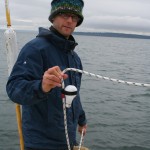
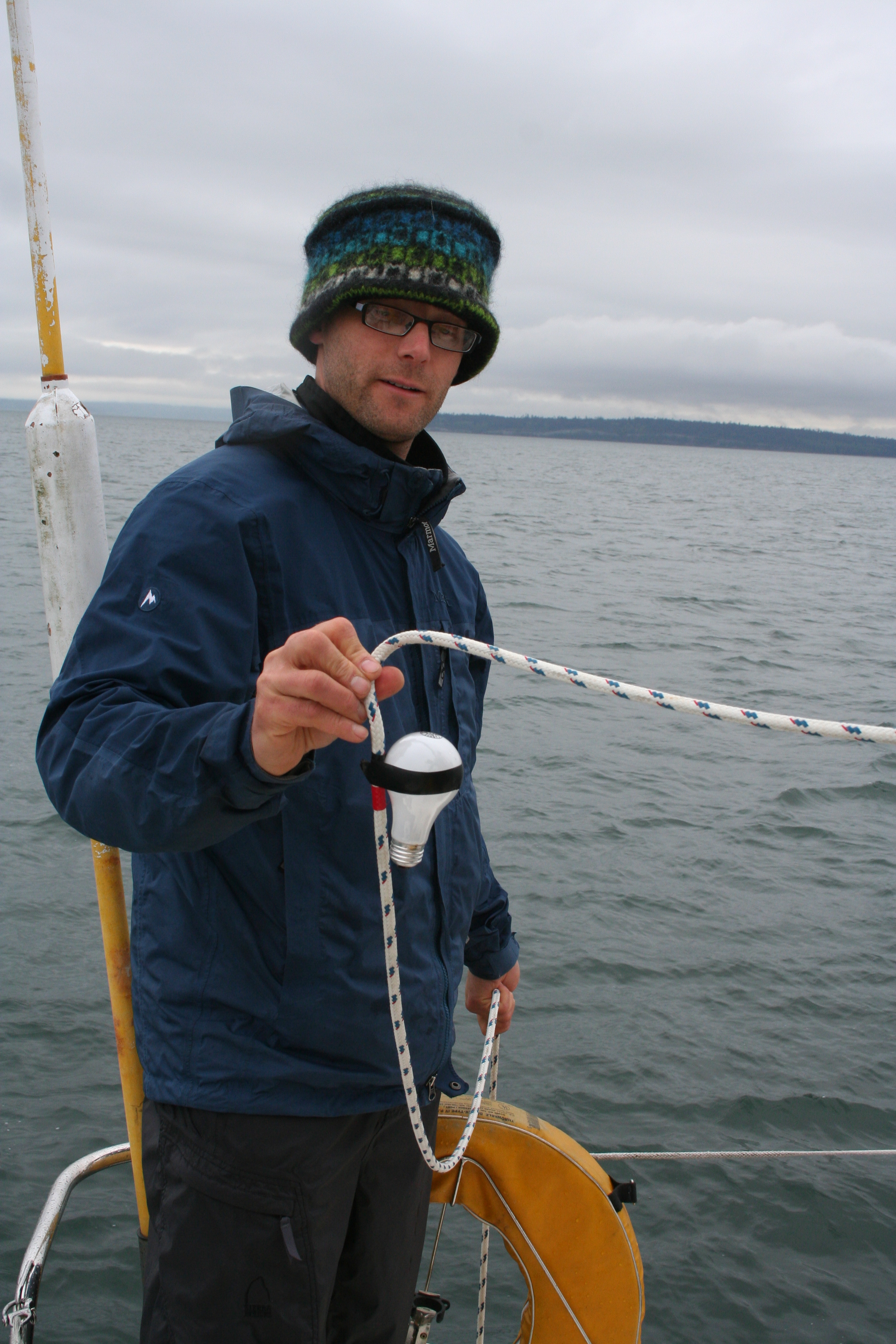
The light bulb deployment line.
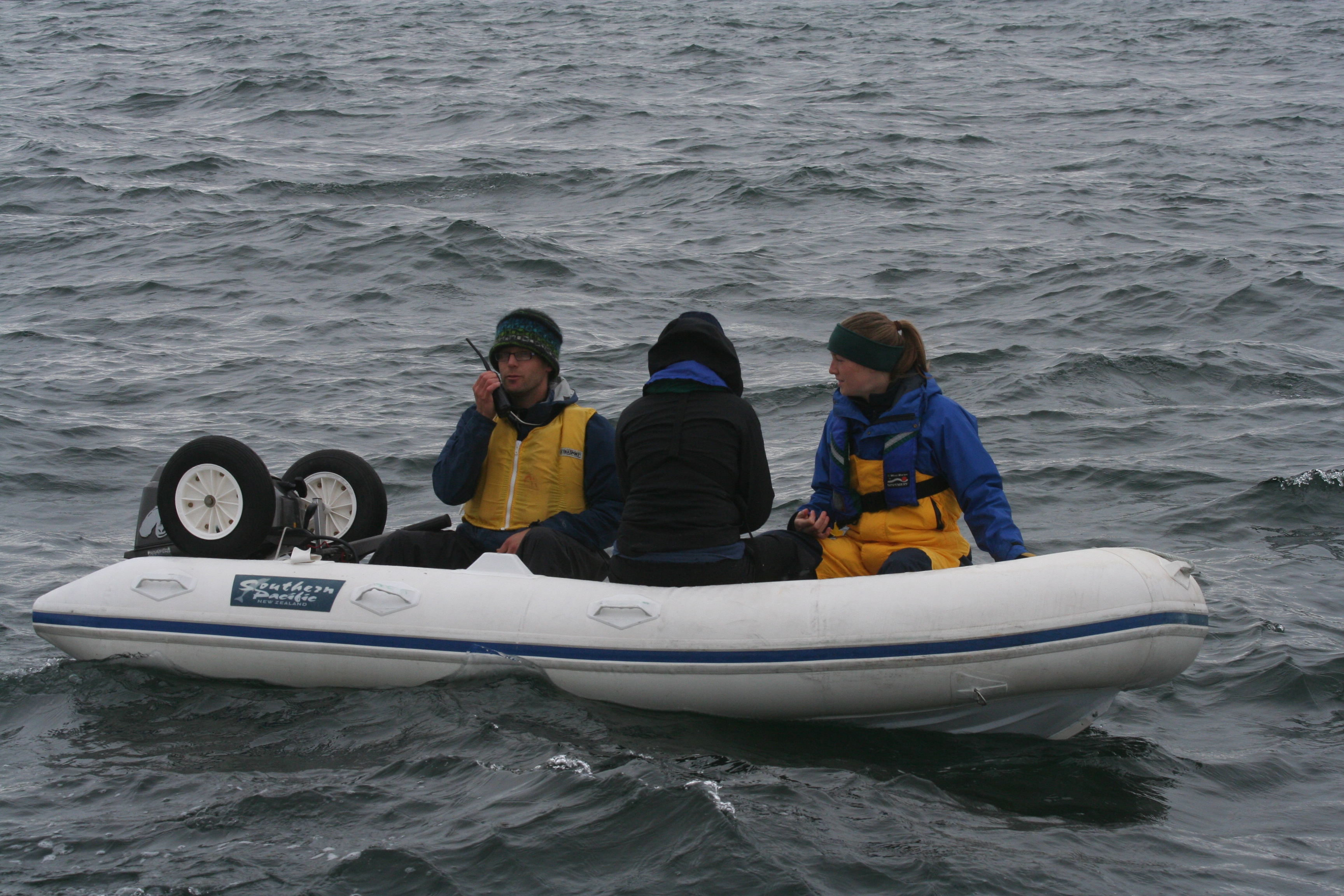
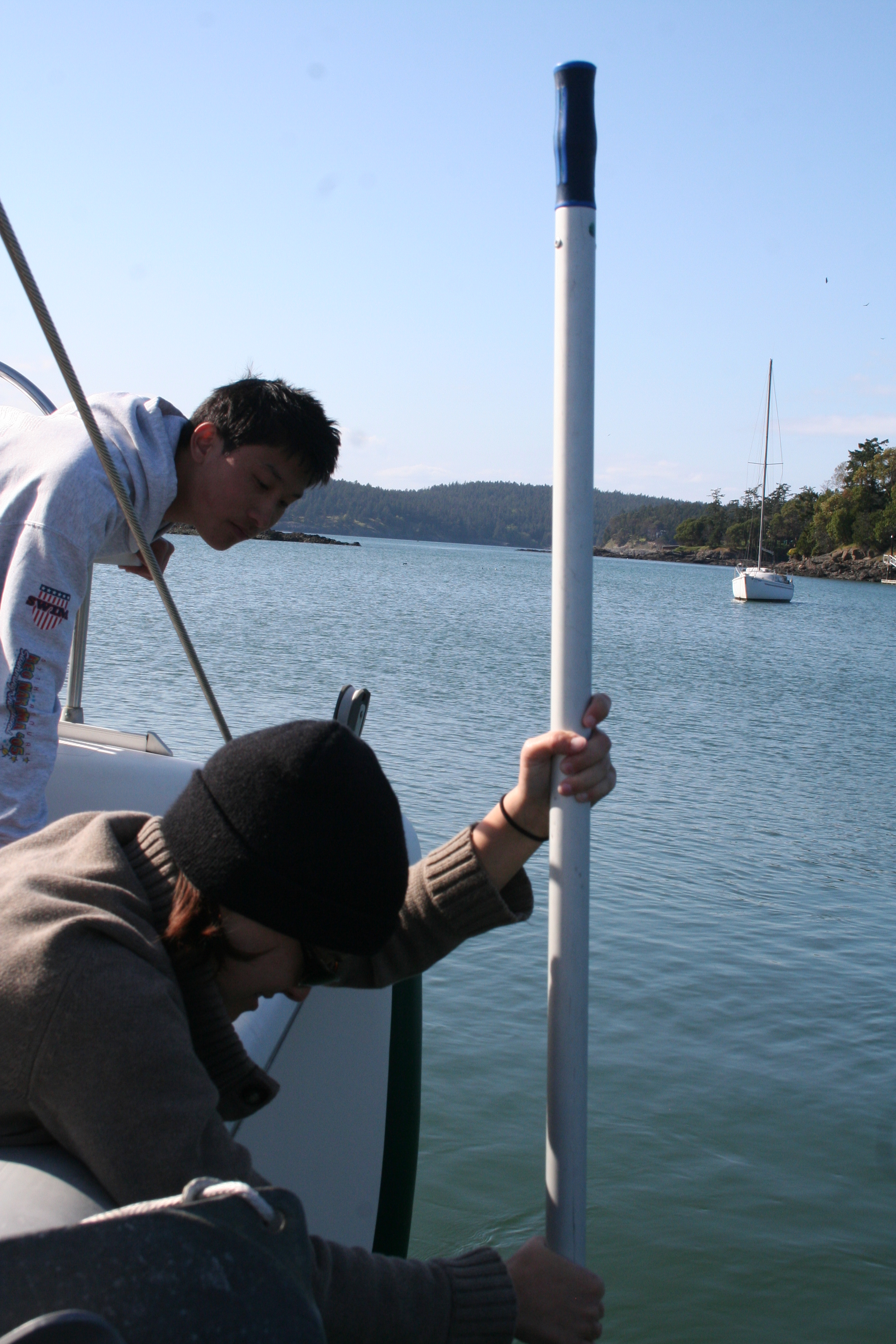
We needed to put six light bulbs 10 meters apart on a rope, deploy it vertically in the water and drop a weight from the top causing each of the light bulbs to implode in turn while hydrophones recorded it from 100 m, 200m, and 400m. It sounds easy but in reality is full of logistic problems, which Libby Scott and I found while deploying the light bulb line from the inflatable dingy, affectionately named Gatito, in the middle of Admiralty Inlet while the 4 foot waves rocked us about.
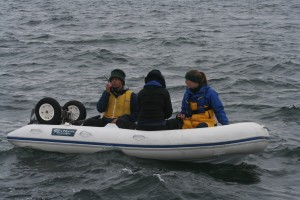
- Scott with the hat, Me in the black and Libby in the blue jacket.
We never got more than the first two light bulbs to break in about four hours of trying! We kept adjusting our attachment and weight deployment methods until the radio ran out of battery and then Scott’s telephone got too cumbersome to use. Welcome to field science!
By the time we got back to the boat we realized that with the wind, currents and time we wouldn’t be able to make it back to the islands before dark, so we decided to dock at the main harbor in Port Townsend. It was full of sailboats and the wind through the rigging made a wonderful sound like bells and chimes. It was beautiful!
4/21
We started early today, casting off at about 7:00. Horace and I were in charge of breakfast for that day so we were already up. The weather had turned foul during the night and after about 20 minuets out of the Harbor we realized that the winds were too strong, gusting to about 35 knots, and we wouldn’t be able to make it back to the islands. The seas were very choppy and because I was in the cabin cleaning up after breakfast I got pretty queasy. It wasn’t fun but at least I didn’t throw-up.
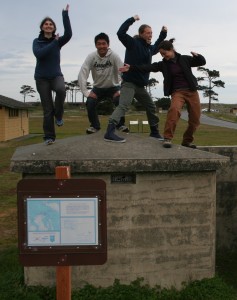
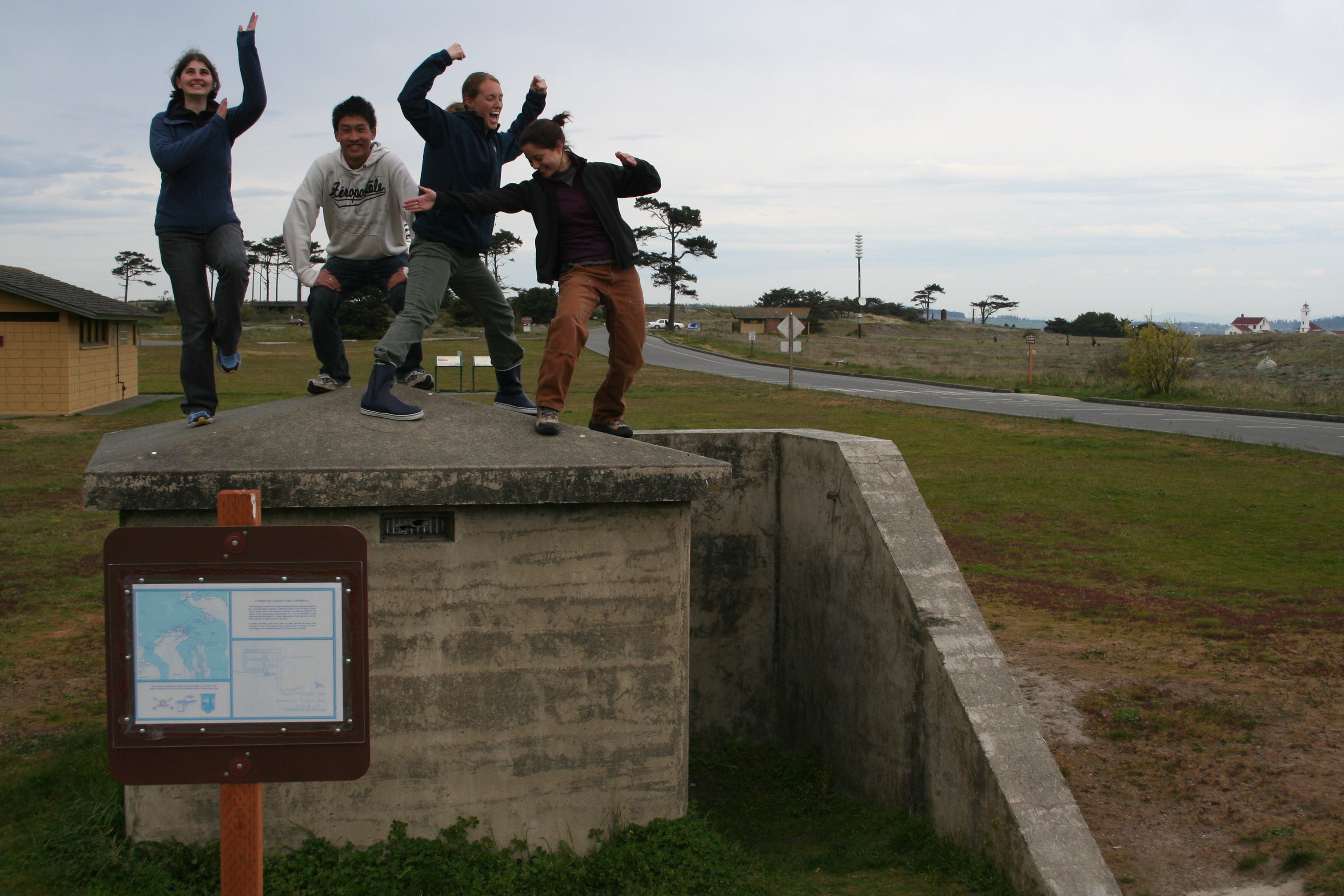
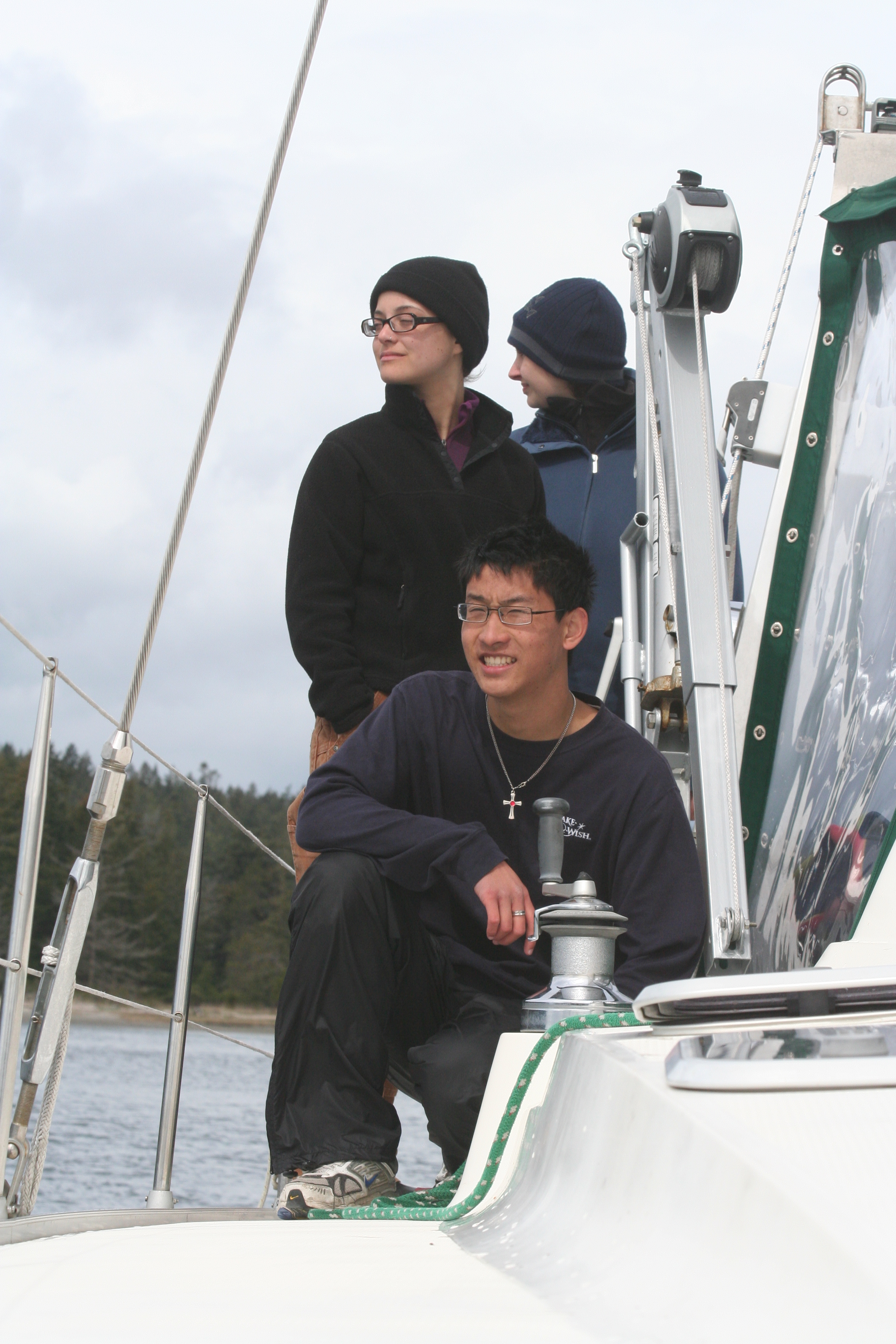
- Me, Horace, Libby and Kathryn playing at Fort Ward
We quickly turned around and ended up docking at Fort Warden for the second time in three days. It was actually a good thing too because we had a chance to accomplish some things we hadn’t gotten around to yet.
First we got to learn the names of the different parts of the boat. It was a lot of fun. I enjoyed it primarily because not only do almost all of the names make sense, but now I can respond properly to Todd’s requests.
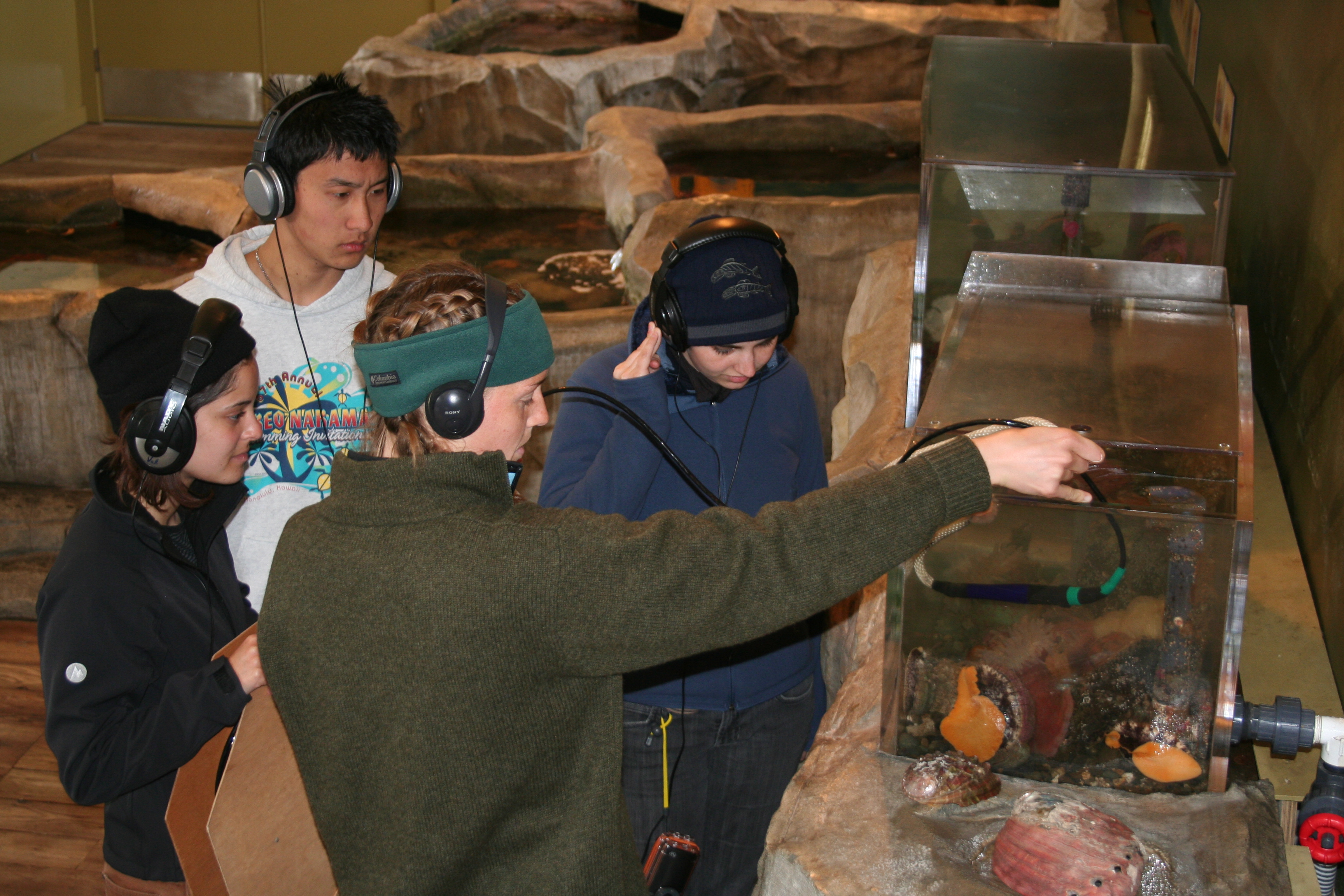
Next, since we hadn’t listened to Libby’s hydrophone yet, we got to stick it into the Marine Science Center tanks to see if any of the creatures were making any noise. We were disappointed at how quiet they were. After that we stuck it through the floor to listen to the ocean. It was a good thing we did because there were some technical problems with the recorder, but we got them fixed pretty quick.
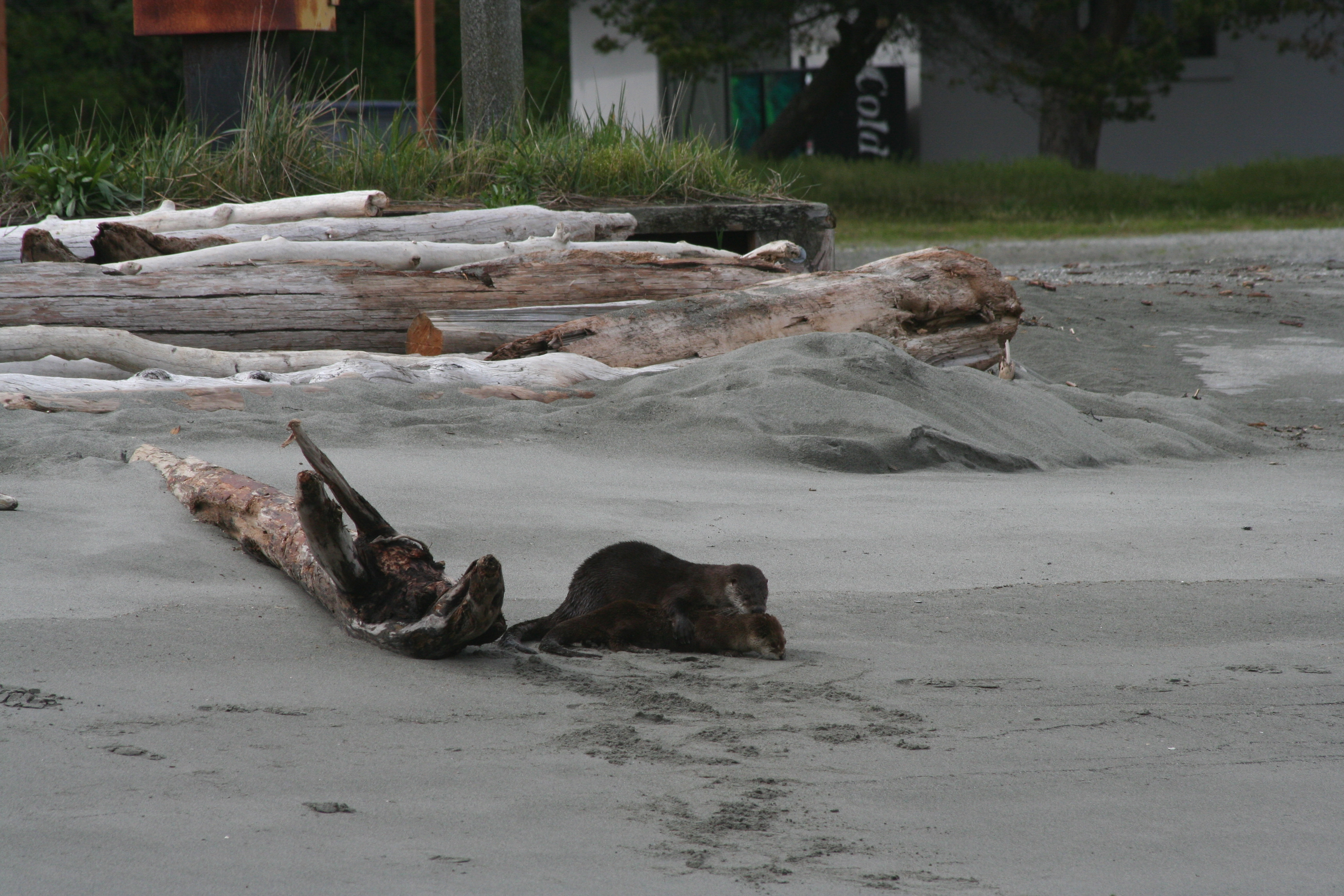
 While we were in the Science Center there were a pair of otters which were mating in front of the boat and on the beach. We could hear them all the way from inside the building. It was pretty wild.
After that Scott took us to the Marine Museum and let us explore a bit before he taught us all about rocks and the geography of the area. He took us to the point down by the bunkers and we each tried to find some of the types of rocks he mentioned, igneous sedimentary and metamorphic. We had to smash some of the rocks open to get a better idea of what they were, which was very fun. Afterwards we threw an orange in the ocean to figure out which way the tide was going.
It was a very relaxing day.
4/22
Jason had to leave the boat at 5:30am to get back up to Friday Harbor to give a talk on some of the projects he is doing.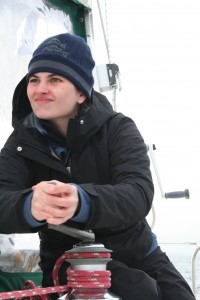
We left Fort Warden for Snug Harbor, at the North end of San Juan Island, around 9:00. On the way there the weather was perfect weather for sailing so Todd taught us how to raise and lower the mainsail and we got to do some sailing. It was a lot of fun even during the beginning when everyone was feeling a bit queasy.
We made great time and got to the head of Snug Harbor earlier than expected so we were able to do a plankton tow. We found some very cool critters, including a long translucent worm, some baby jellyfish and a few other larger predators.
Horace and Kathryn manning the camera
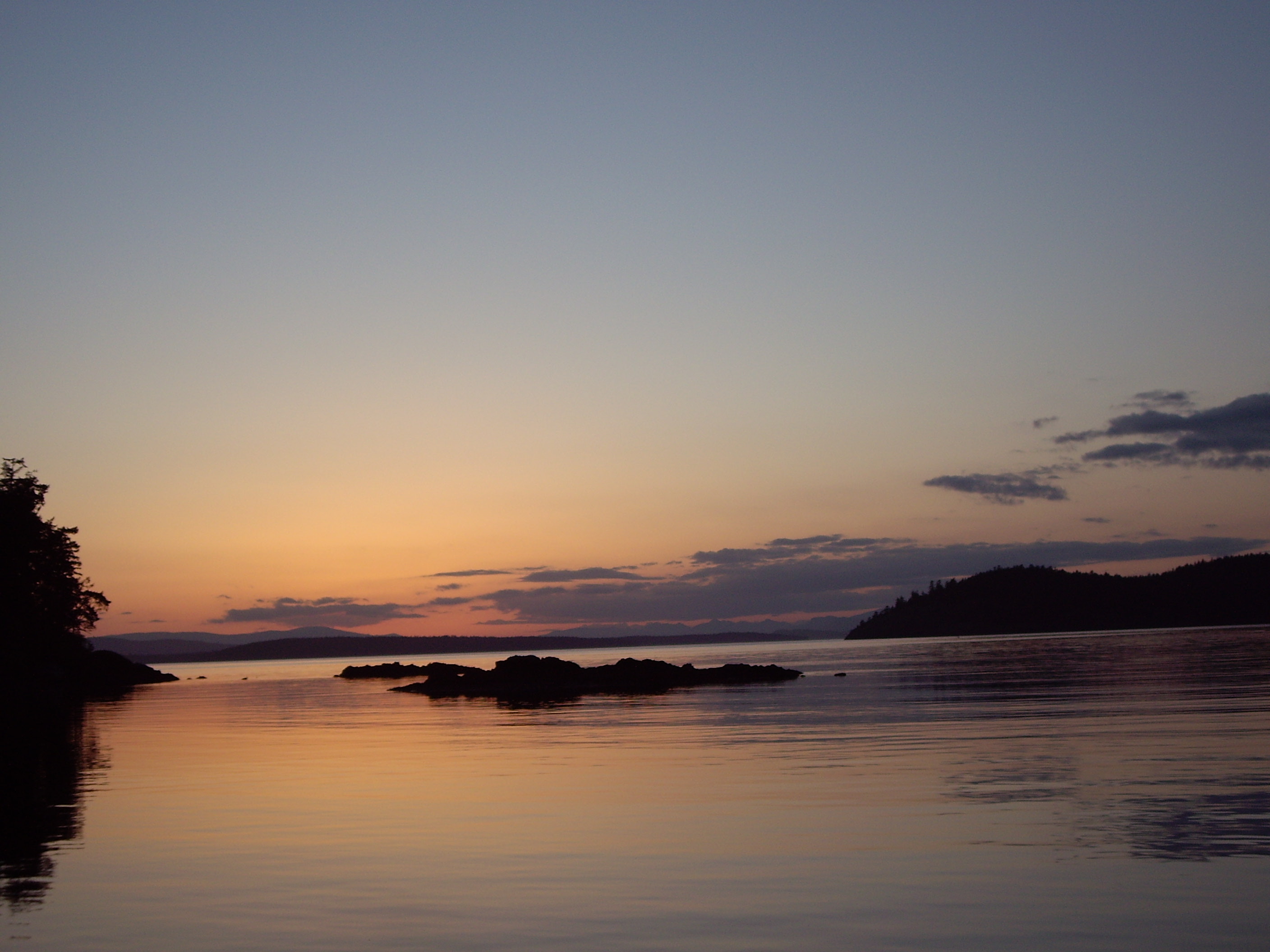
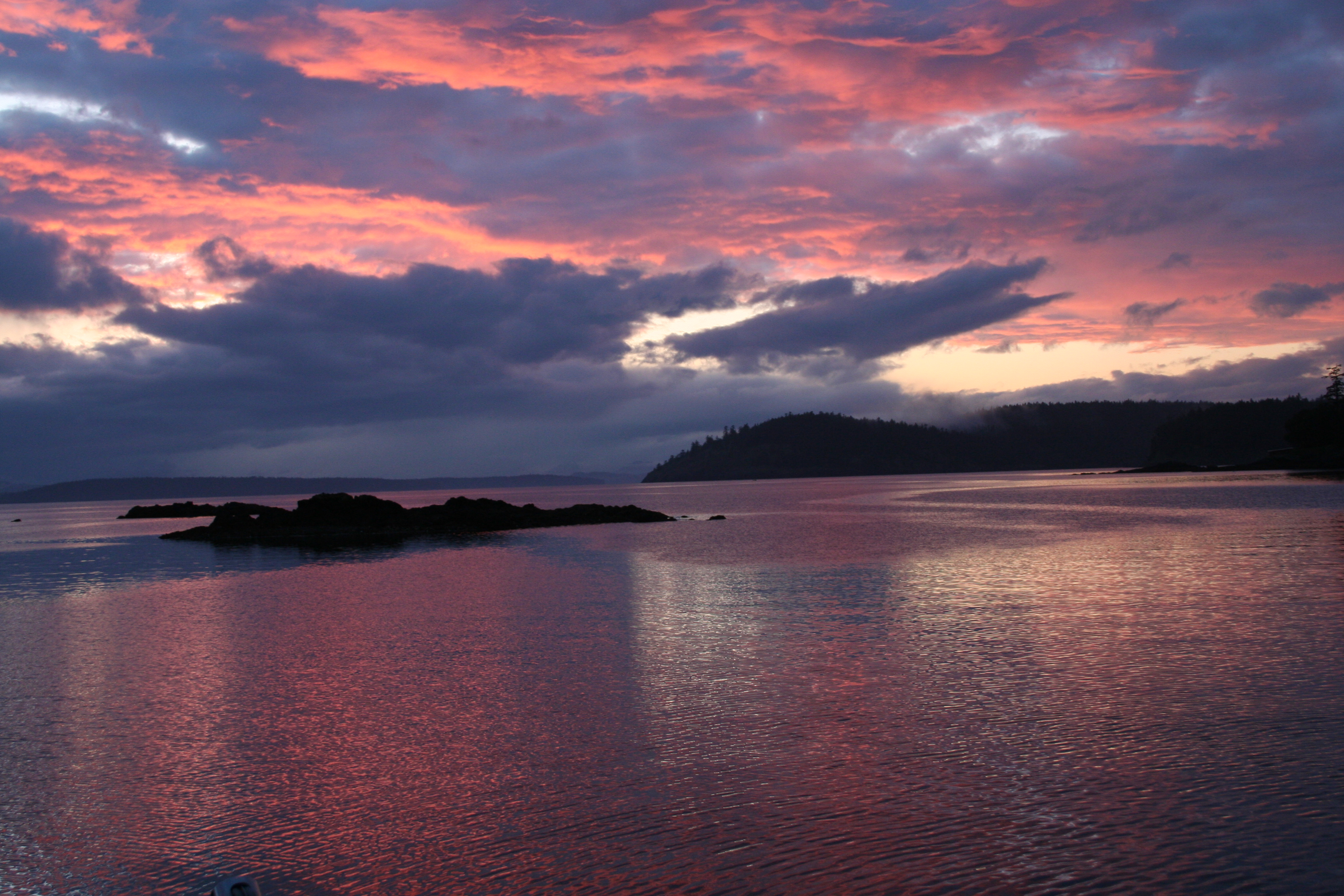
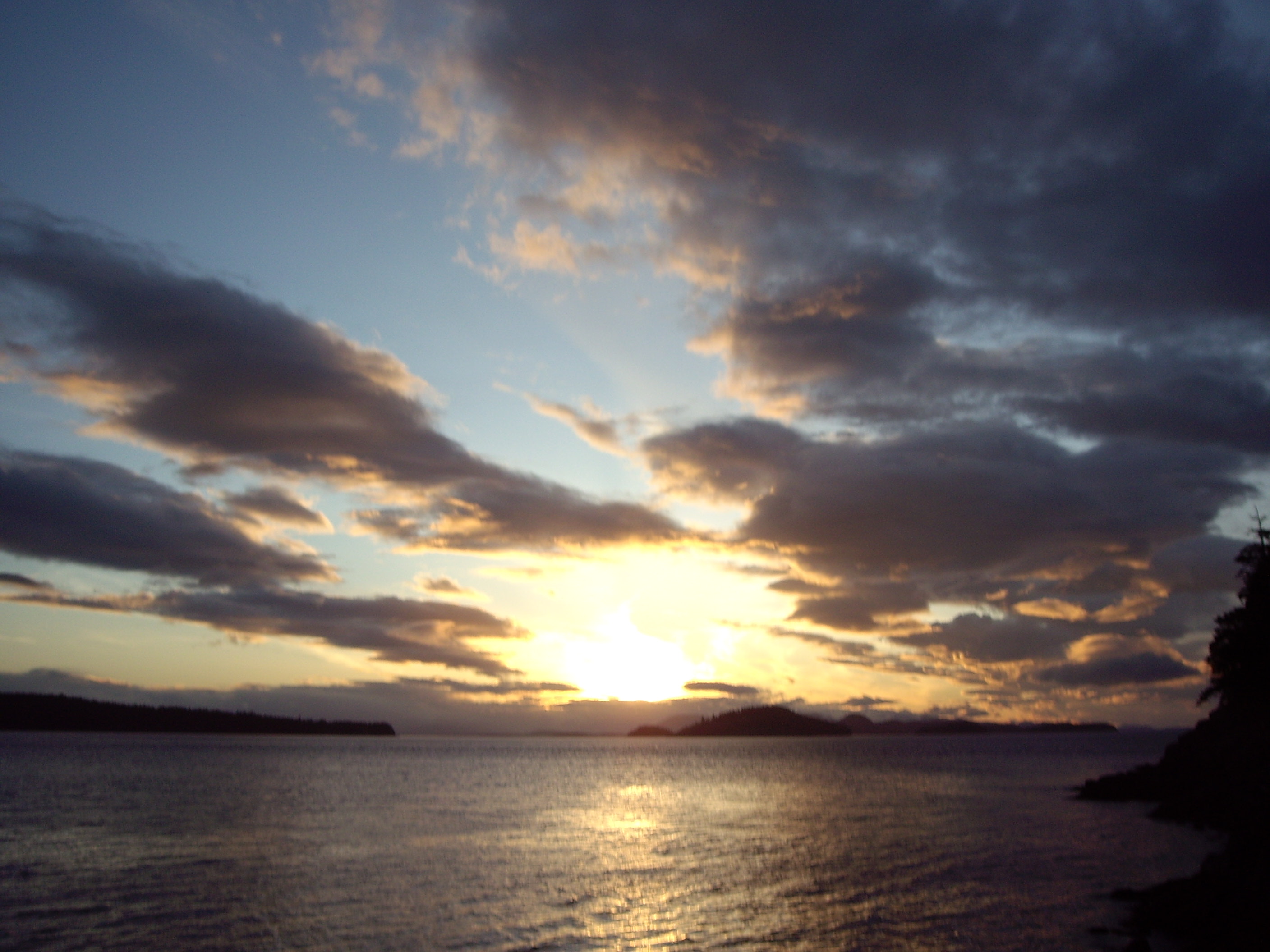
After getting into the harbor, and finding out that the Beam Reach mooring was in fact gone, we decided to search for it. We used the very cool SplashCam, which is an underwater camera, to search the bottom for the anchors. While searching the bottom with the SplashCam we got to see a lot of seaweed and one crab, which startled everyone into a fit of laughter. It was a lot of fun! We never did find the mooring but since we didn’t see any eelgrass, which is important habitat and rarer than it should be, we decided to drop anchor. After we brought the camera up and ate dinner, Scott went a shore to bring some things to Val and contact Jason, who hadn’t returned to the boat or contacted us yet. We watched the sunset and after it had gotten dark we got a call from Scott saying that his sister, Laura, had given birth to a healthy son named Tennessee Viers Martine and that he was staying the night at his parent’s. Laura’s new baby is super adorable by the way!
4/23
Jason and Scott came aboard after breakfast and we decided to head down to Lime Kiln to try and find one of the hydrophones that has been lost over the years. On the way down there were perfect conditions for sailing so we got some practice in for the race we were contemplating joining the next day. We all got to man the helm as well as pull and release the Jib sheets. Kathryn and I hoisted the mainsail, not as easy as people make it look, and I got to release it.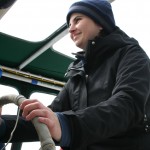
When we got to Lime Kiln we deployed the SplashCam and got an amazing look at the various sea stars, clams, sea urchins, sea cucumbers, seaweed and fish that we ran across. Unfortunately the awesomeness ended when the screen went blank and Scott shouted for Todd to stop the engine. The cord had gotten wrapped around the Starboard engine and damaged in a few areas.
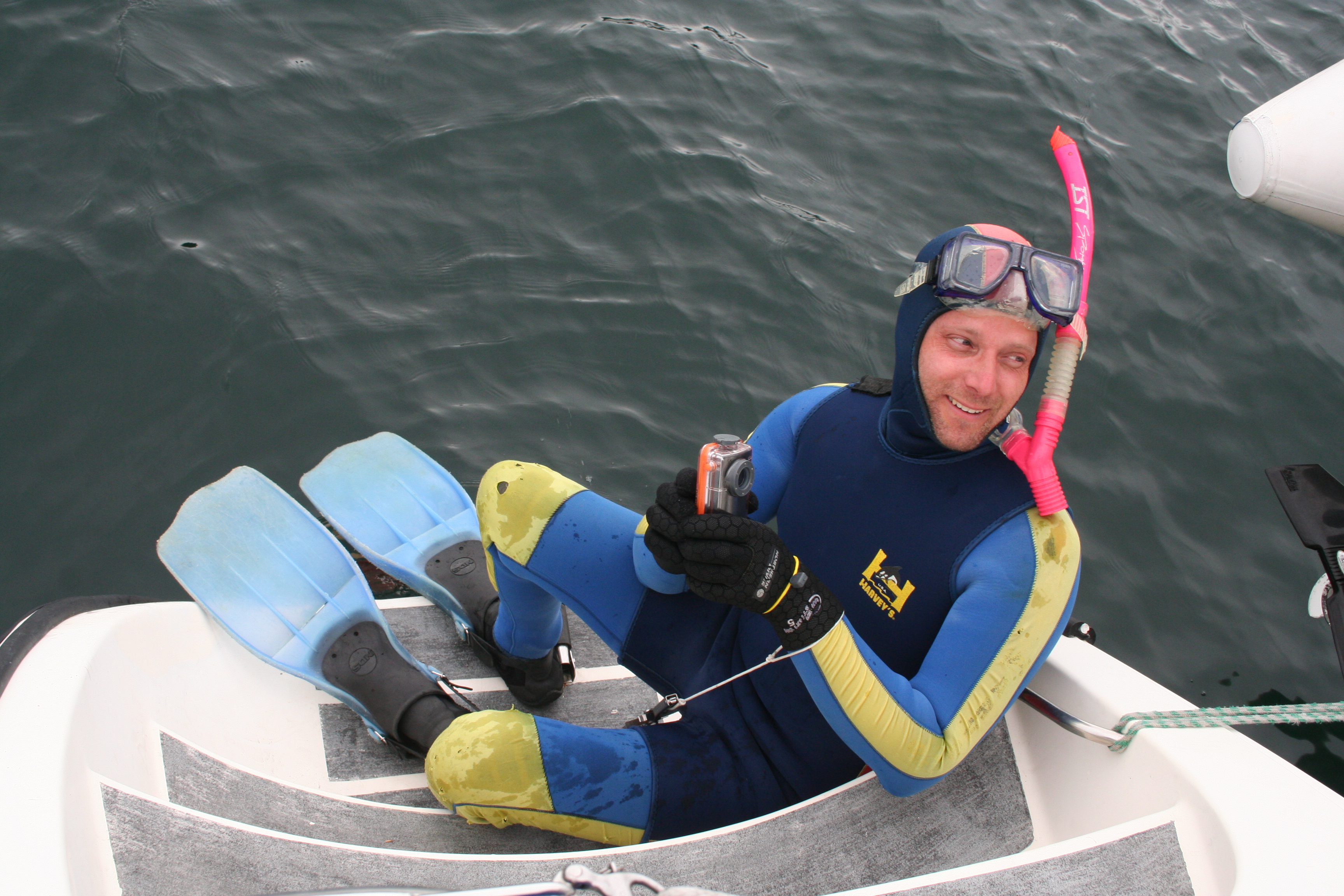
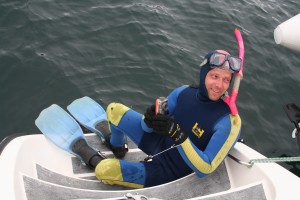 We couldn’t get the cord unwrapped from the boat, so Scott got into his wetsuit and snorkeling mask and had to dive in to un wrap it manually! A long time later, maybe 30 min to an hour, Scott unwrapped all of the cord and we were able to see the damage. It wasn’t too bad but damaged enough that they will probably have to splice the line. On our way back up to Snug Harbor we deployed the blue 4 hydrophone array as well as Libby’s hydrophone for practice. Everything went smoothly.
When we got back to Snug Harbor Scott and Jason went out in Gatito so Scott could snorkel to try and find the mooring anchors or ball. They were unfruitful. While they were doing that we all learned how to use a pressure cooker from Todd. It was very exciting!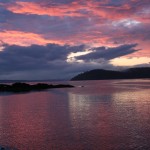
4/24
Today we started out at about 9:00 so we could get readings for the temperature, salinity and dissolved oxygen every 10 meters for 100 meters of the water that we did the plankton tow in a few days prior, before the race started at 11:00.
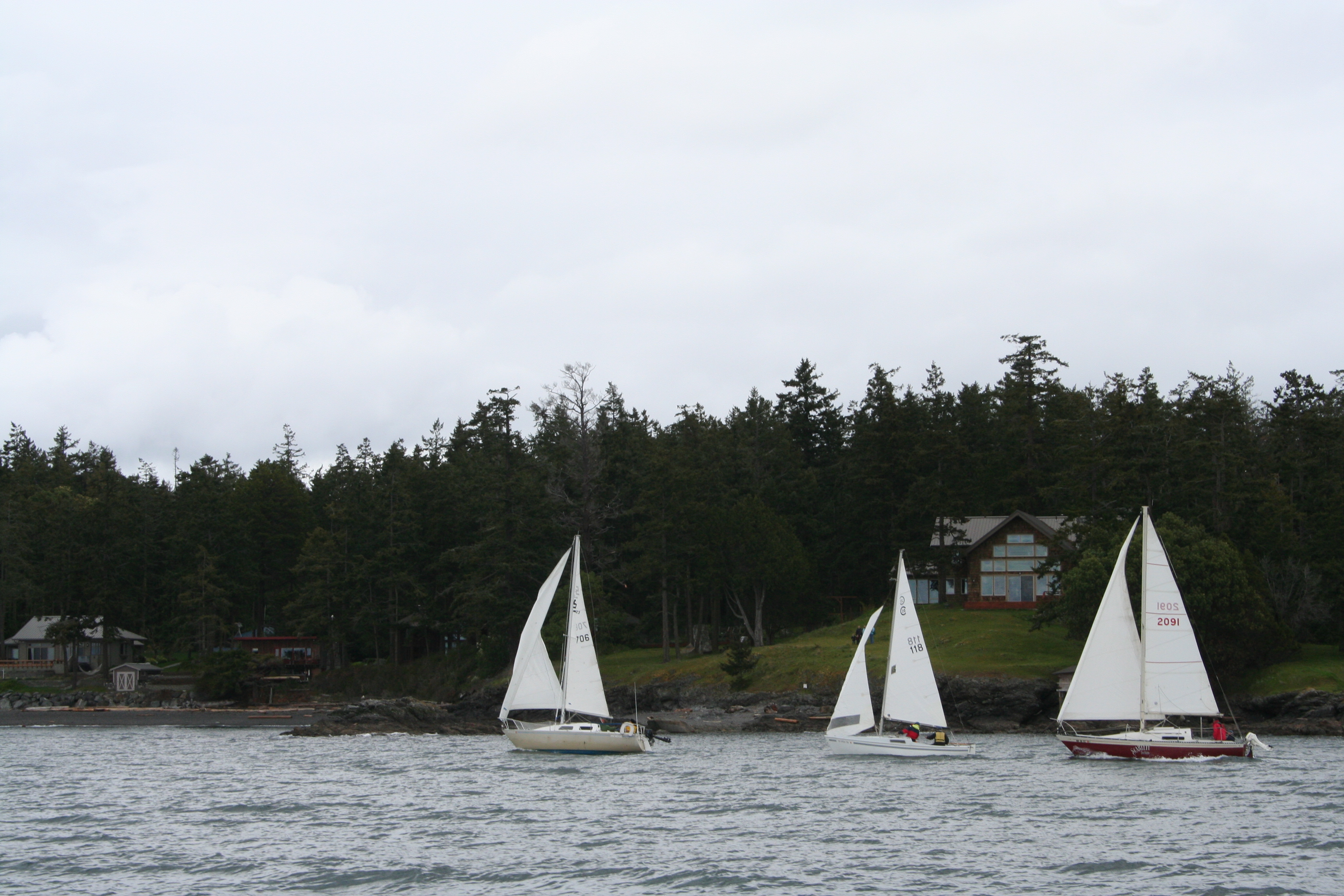
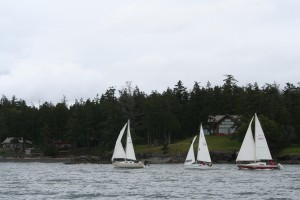 We participated in two of the races. It was a blast. During the first race we couldn’t get around the first checkpoint because our boat was too big to catch the little wind that came around the point the buoy was behind. But we did well after that.
During the second race we were doing very well at the beginning, but one of the other sailors got stuck on some rocks so we stayed it the area until he got free. Instead of finishing the race, since we were already going the correct direction, we decided to head up to Roche Harbor to pump the holding tank (sewage) before going up to Jones Island just Northeast of San Juan Island.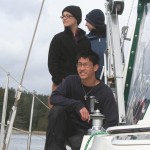
Jones Island is a gorgeous area! We got to learn how to tie to a mooring, but when someone left we moved to the dock so we could use the land heads. Before dinner, and the move to the dock, Todd showed us some knots we need to know. We learned the square knot, the bowline, the clove hitch, the girth hitch, the truckers hitch and a few others I don’t remember the names of. It was a lot of fun!
Libby Kathryn and I went for a walk and after playing on the West side of Jones Island heard from a couple that they had seen a pod of at least 12 orcas not 10 minuets prior that were traveling south past he point of Jones. We kept watch for a while but never spotted them. It was a really fun night.
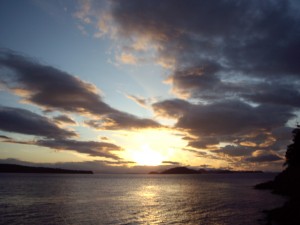
4/25
Today we left early, got to Friday Harbor Labs around 9:00 and managed to clean down the boat in about and hour. Then we waved goodbye to Todd and went back to S1 for the next 4 days. (Gato Verde translates as Green Cat)
^_^
Read More
Port Townsend to Port Townsend
(Boat Haven to Marine Science Center)
We raised anchor early today and were out of Boat Haven by 0715. Capt. Todd had anticipated strong winds, but when we got out in open water, we realized the 35 knot gusts weren’t worth the risk. We turned back toward Port Townsend around 0800 and tied up at the dock by the Port Townsend Marine Science Center.
At 1400 we went to the science center to test the Flip videocamera in its underwater housing. We took footage of a juvenile octopus as we knocked on the glass, trying to get an idea of how sound from the outside affects the octopus’s acoustic environment.
We also used a hydrophone to listen to sounds inside several of the center’s tanks to see whether or not the organisms were making any sounds. We deployed the same hydrophone into the ocean but realized we couldn’t hear anything when we used the Marantz (which,we later realized, was due to a faulty XLR to quarter inch cable).
Read More
Port Townsend to Port Townsend
(Marine Science Center to Boat Haven)
Departed Port Townsend after breakfast at about 8:00. Arriving out at Admiralty Inlet, both Jason and Scott performed their SnowPud experiment with lightbulbs and a hydrophone array. Scott, along with Nora and Libby, set out on the small dinghy, the Gatito. Taping lightbulbs at 10 meters apart from each other on a marked rope, it was lowered into to the water with the help of a weight. A hydrophone array was lowered on the starboard side of the Gato Verde, where Jason was stationed to prepare to record. A shackle with a weight would be sent down the lightbulbed rope, hoping to break all the lightbulbs. The sounds would be recorded by the hydrophone array at 100m, 200m, and 400m distance. Being in Admiralty Inlet made it difficult to perform exact distances, plus some lightbulbs did not break. Recordings were still taken. Docking at Boat Haven, Port Townsend Marina, we pumped out and charged the boat.
Read More
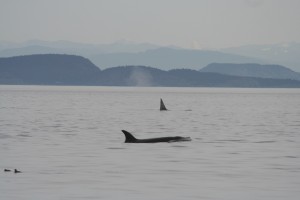
Transients traversing the San Juans
Griffin Bay to Port Townsend:
We departed San Juan Island with the intention of sailing all the way to Neah Bay, but shortly after finishing our chores, Kathryn said the word everyone was hoping to hear “whale off Starboard!”
We were able to identify Transient male #87, and think we know some of the females as well. First the male was swimming with four others, then two groups converged for a bit of exciting times, and departed once again. Overall, the transient group seemed bound to the east/southeast. They led us past Smith Island and all the way into Admiralty Inlet.
Once we were joined by two whale-watching boats the whales seemed to lighten up and give us a show. We saw plenty of tail slaps and harmonious movements, and even a spy hop and peck slap were seen. Great first day of being on the boat! The sun was out for most of the day, and the wind was gentle so we did not put up the sails.
We set up and tested the new hydrophone array. All 4 elements work and we were able to hear nearby boats, but the transients made no audible sounds during the hour or so that the array was in the water.
Read More
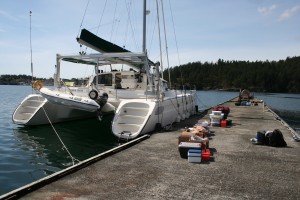
On dock before deck
FHL to Griffin Bay
We left the Labs at about 3:45 pm and used the screecher sail and motor, each taking a turn at the helm. We arrived and got an introduction to anchoring around 5:00. Because it was our first day we didn’t do any science but Jason saw a seal. We had great weather.
Read More

 This morning Kathryn and Libby left at 6:30 to go to Sidney, a city a little further North of Victoria on the southern tip of Vancouver Island, to walk to raise awareness about the fish lice outbreak that is occurring in wild runs of salmon due to the presence of fisheries.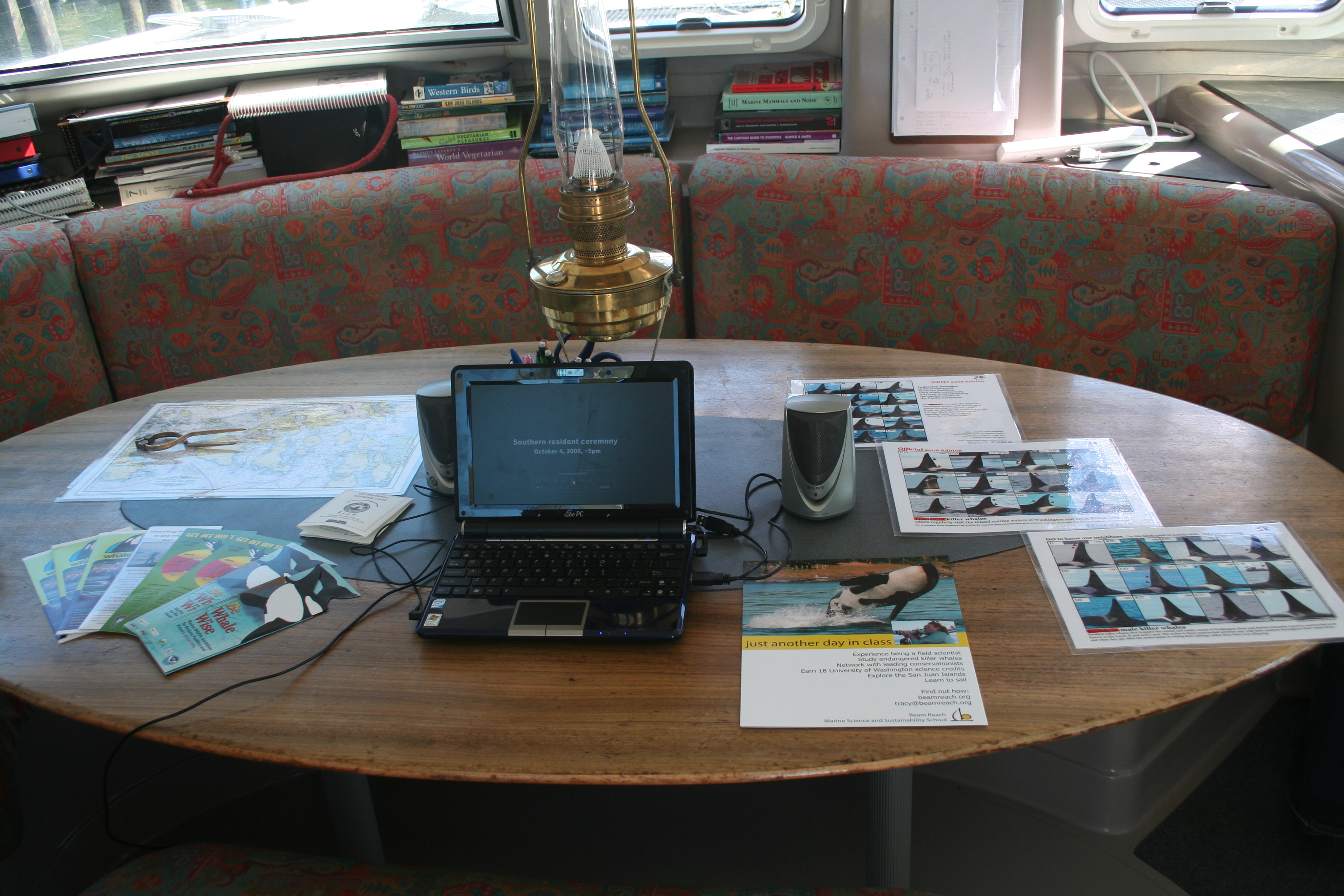
 We left FHL this morning around 10, pumped out and headed out to sea. The weather was amazing, I only wore 3 layers instead of 4 or 5. On the way out of Friday Harbor we saw a bunch of harbor seals poking their heads out of the water and looking around. They are getting a lot easier for me to spot.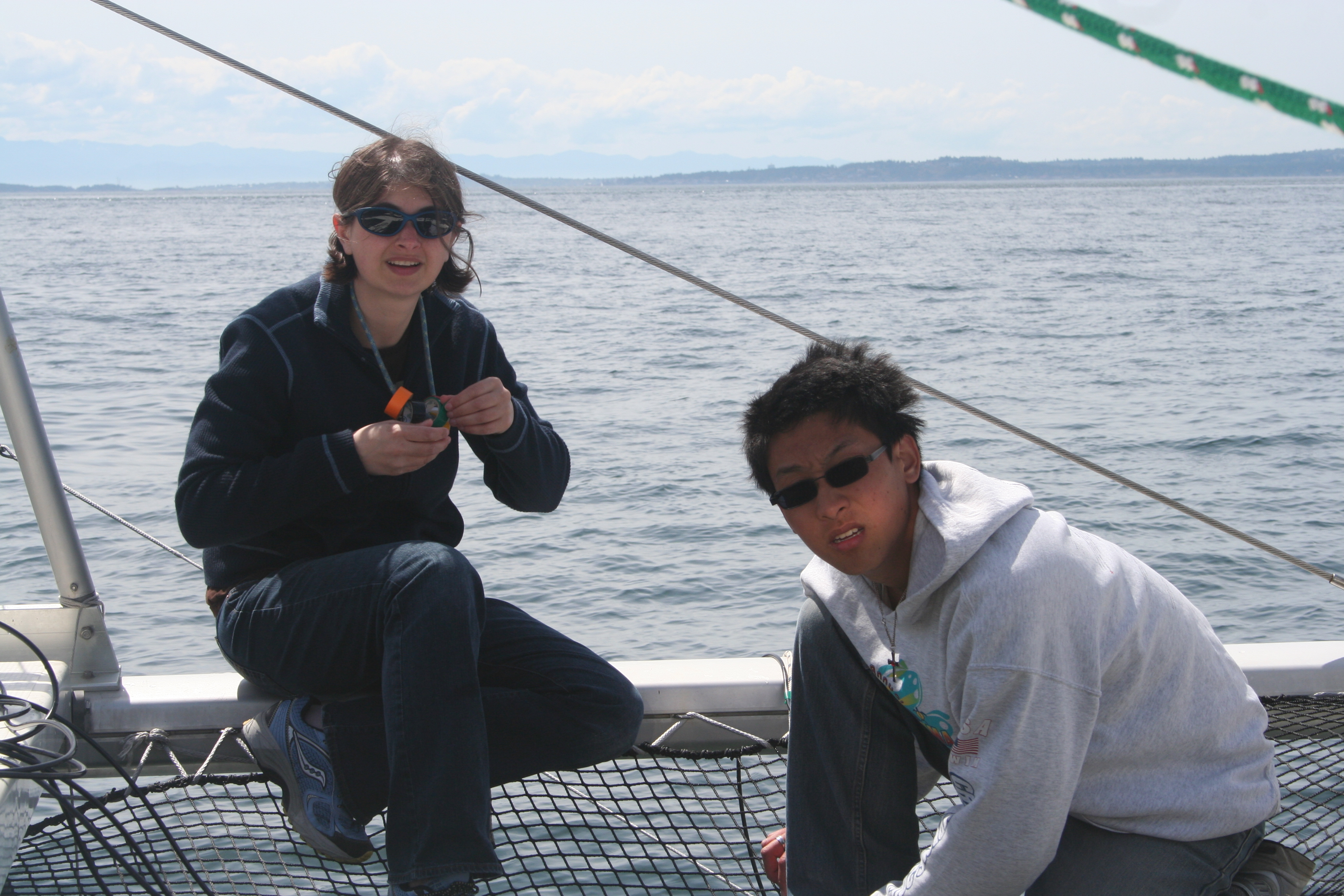
 While watching them, we think we saw what is entertainingly called a ‘sea snake’ (a male orca with an erection). The whales got very close to a few of the whale watching vessels, circling and diving. We thought maybe a seal or something similar was hiding under the boats since we couldn’t think why they would want to be right next to the boat. Then we saw the ‘sea snake’ and decided that they were probably just socializing and didn’t care about the boats.
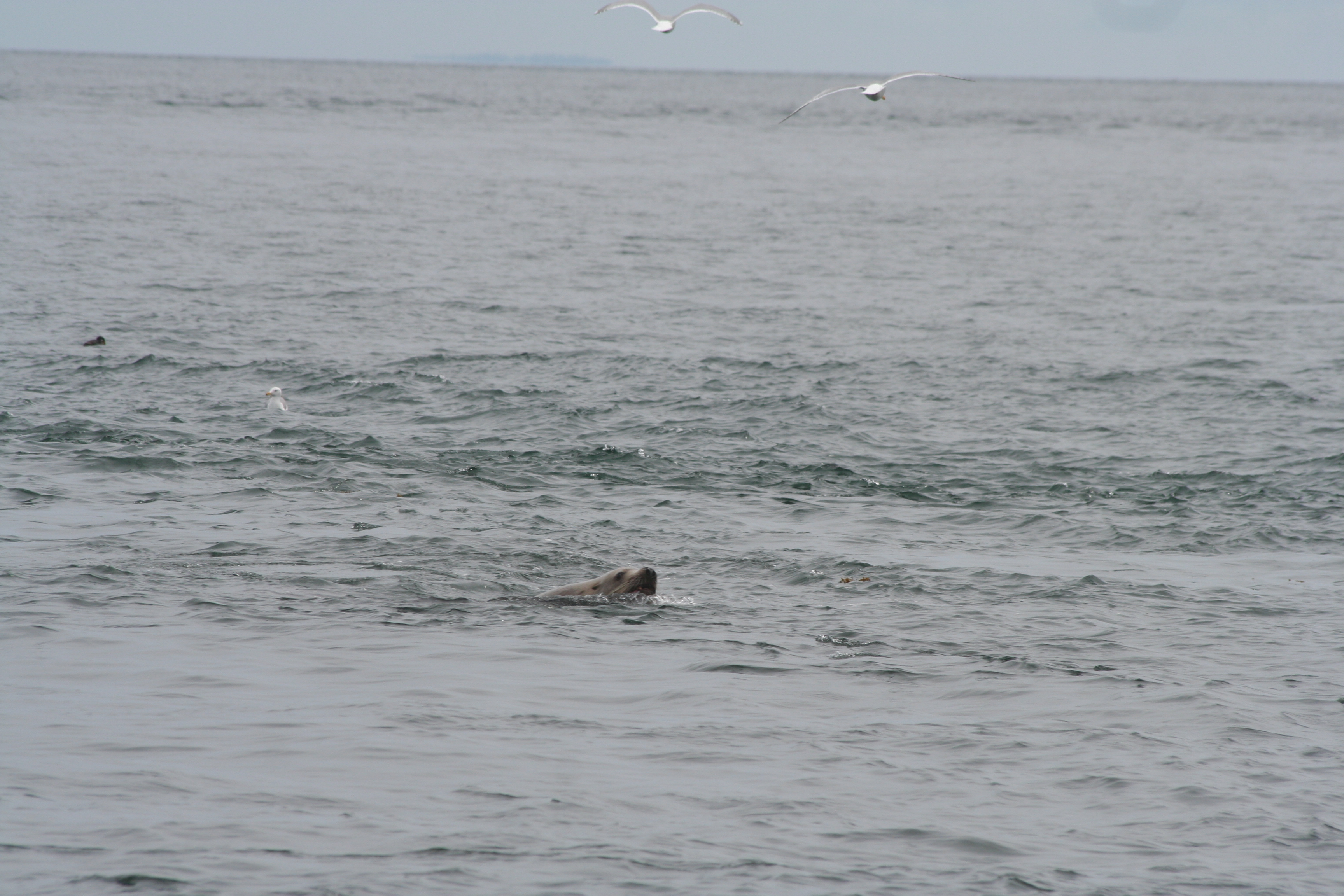 We did however see a stellar sea lion feeding on what looked like a large food source it was pulling giant chunks off of.
 We saw a Minke whale, which was very exciting as as I have never seen one before. They are incredibly hard to spot and so have earned the name ‘slinky minke’ in these parts, or so I have heard.
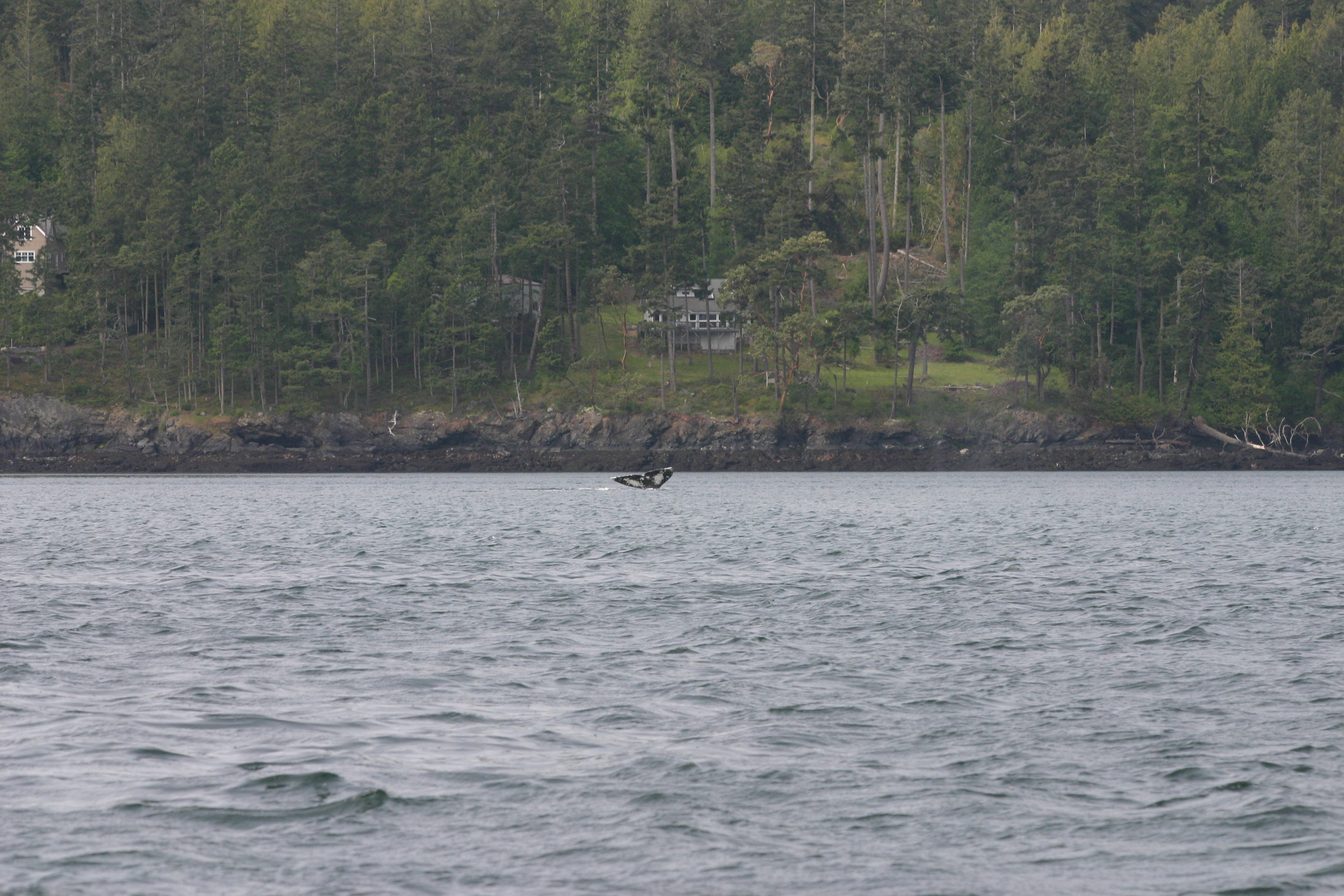 t a gray whale right outside of Friday Harbor. We decided to jump on the buzzard and go get ID pictures of it for the Whale Museum. We went out and found the whale pretty quick and even managed to get some great ID pics, which is much harder than it seems. It was interesting how different the breathing noises are between grays and orac, orca are much louder.
 pill bugs were everywhere. It was like a pill-bug breeding ground, but I like pill bugs so it was OK. About 1 hr before we were scheduled to be done, we got a phone call telling us that the Southern Residents had been spotted close to San Juan Island heading South.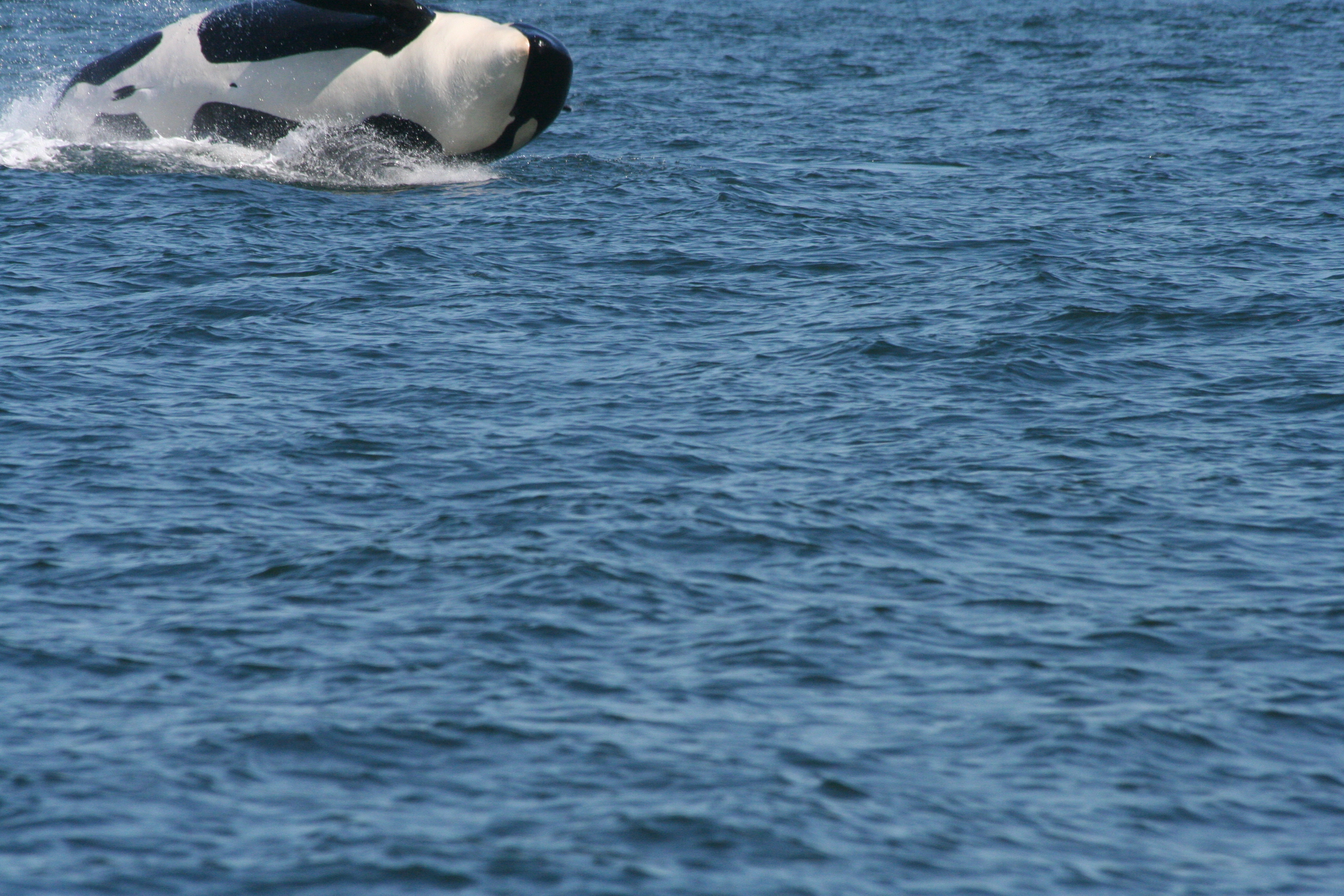




 Twitter
 LinkedIn
 Facebook