There was not much that went on during this week, despite the lectures, advisory meetings, and work time. It was a week of work, to prepare for the following week which would be our first week in this program out at sea!
We refined majority of our methods this week and figured out any group data that we would be able to collect to ease the process. We had talks about food consumption and how we can manage what we eat. I learned that being a meat eater that does not eat responsibly makes a huge impact, such as global warming, to our atmosphere. Localization of killer whales: now that lecture completely boggled my mind. Technology is so advanced these days that computers can estimate where a whale is located from a call produced.  Vessel regulations were also gone over in our group discussion, regarding the conservation of southern resident killer whales. Logistically, this week has been a less stressful one, but there was a lot more information to take in compared to last week’s Steller sea lion incident.
But, I cannot contain my excitement about sailing out of the labs. It will be a memorable experience to be able to go on a boat to conduct research. This first week, since the southern resident killer whales will not come up quite yet, we will be learning how to sail. We did hear some transient killer whales off of the Port Townsend hydrophone network however, so I am anticipating on catching some with my eyes out there. Sailing has so many components that I have barely touched, since I come from living in a large city. Boat terms, ocean currents, knots, and other materials will be taught to us. I feel as though this sailing week will be a good one though, since it is a chance for us to bond in a smaller environment as a group. We get to work together, socialize, cook and clean together. That way, we all get to know each other better on a personal level and help each other when needed.
From what I have heard, the Gato Verde, the boat we will be boarding and sailing on, is a 42 foot long catamaran equipped with loads of bunkbeds, bathrooms, a galley, and decks for us to go out and observe nature. With such a large boat and so few of us, I will find all the upcoming sailing weeks a pleasure! Similar to what we did on Wednesday cooking granola together at S1, I feel we’ll have so much fun!
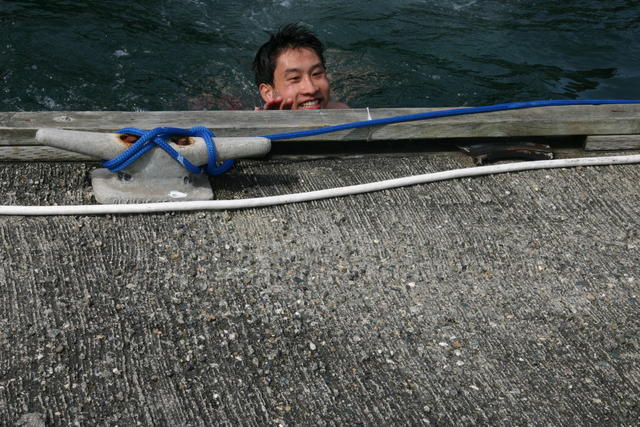
Lastly, before I end this blog, I just wanted to mention our Cold Plunge tradition of Beam Reach. Every year, Beam Reach will require all students to jump into the waters by the dock to experience how cold the water actually is in the Pacific Northwest. Instructors follow along as well, and other students not in Beam Reach are always welcome to join. We had some students from the 3 Seas program join us this year and it was really fun. I finally got to experience the cold waters myself and I have got to say, when people say its cold, IT IS COLD.
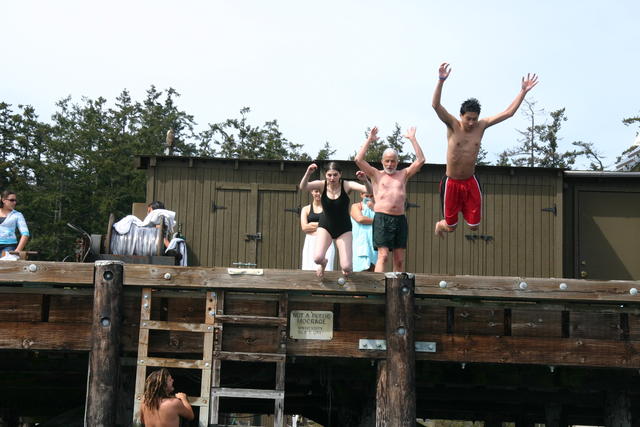
Nonetheless, I was awake for the rest of the day. You should definitely try it out.
Read More
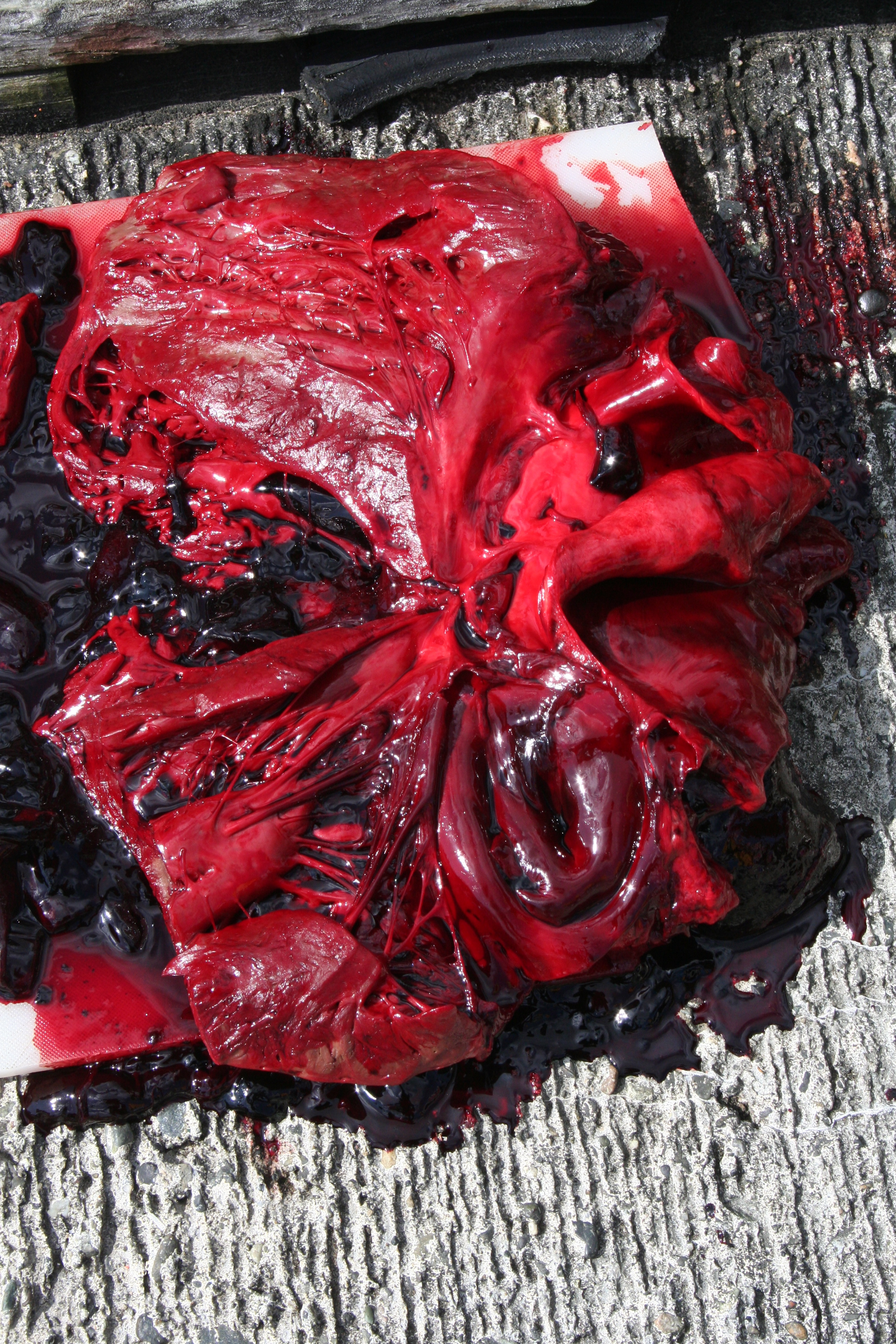
Just a note, farther down this blog entry are graphic pictures of insides of a marine animal. If this kind of thing disturbs you please don’t read past 4/8.
4/5
This morning a very cool guy named Russell came to talk to us about the juvenile salmon that use the San Juan Islands as a nursery. It was a very interesting talk and I learned quite a bit about the ecosystem that salmon spend their juvenile time in and how we can affect it.
After he left Jason taught us about the anatomy of whale sound production and reception. It was extremely cool! The anatomy of sound production and reception between terrestrial and aquatic mammals is very different and even the production difference between baleen and toothed whales is pretty significant. Whales don’t hear through holes on the surface of their heads like we do, instead they most likely hear through the surface of their head and along their jaw! I find the different ways that animals evolve amazing, especially things like basic senses.
After lunch we went down to the dock to play with the recording equipment. We got to lower a microphone to make sounds, one of the orca calls on a loot, that we could then record with the hydrophone. It was great. We each did all of the different jobs from moving the hydrophone box and recording, to measuring the distance between the hydrophone and the speaker. About half way through we saw a harbor seal pop up to look around. We surmised that it was looking for the predators it could hear under water. It was pretty cool.
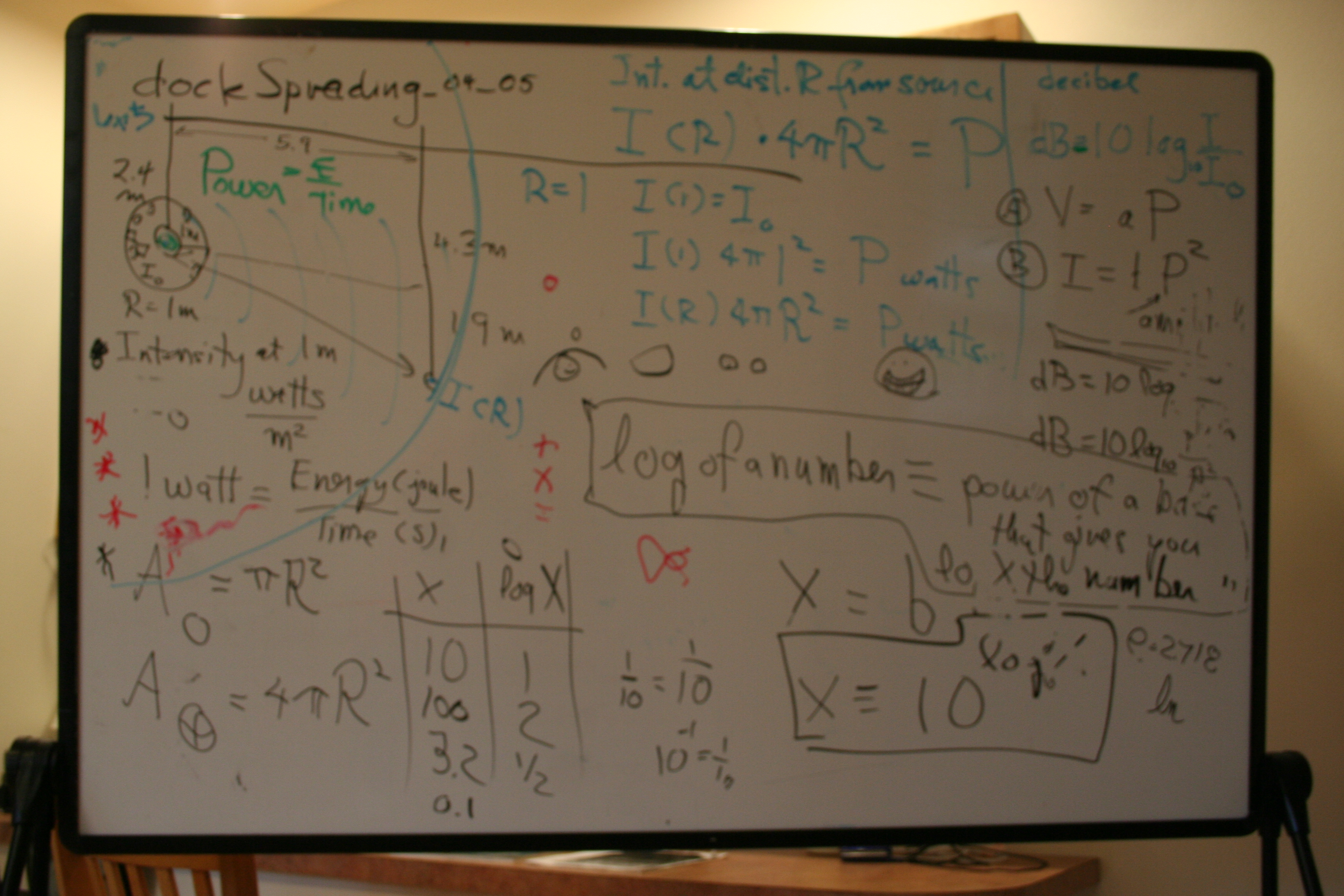
When we got back to S1, the duplex we live in, we entered the data into Excel and made a graph. Most of us are still a bit confused but we will be doing more tomorrow since our lecture got cut short. We did learn that “The log of a number (x) = the power of a base that gives you the number (x)â€.
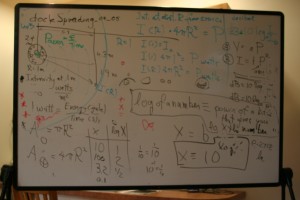
Val’s Board
4/6
We spent the morning learning a bit more about sound and how it is related to energy. That was pretty cool and a little less confusing. It is amazing seeing Val work on the board because you can tell that he loves what he does and he gets so into it!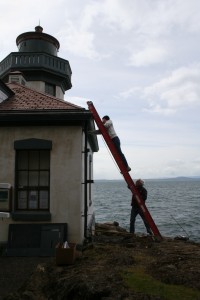
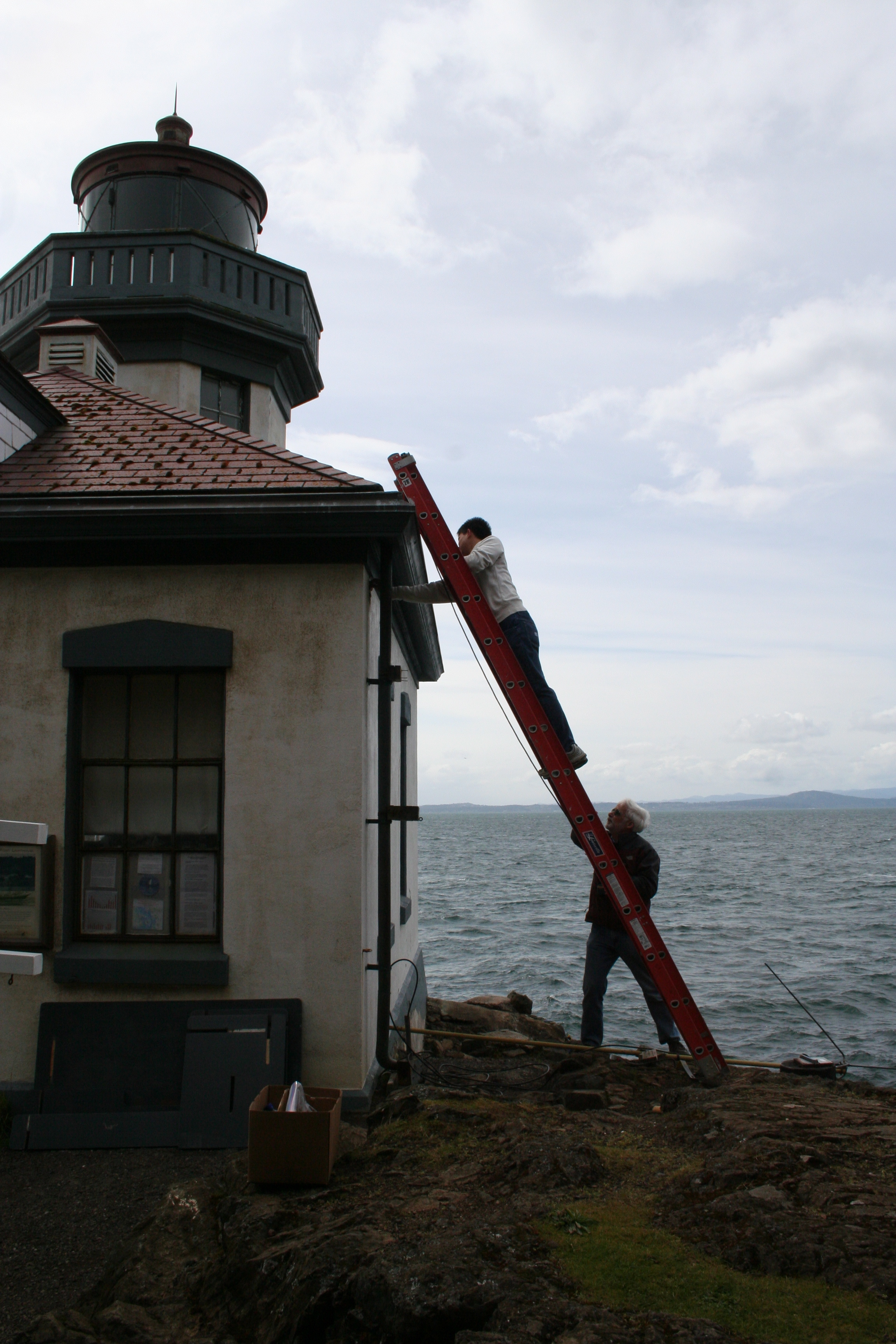
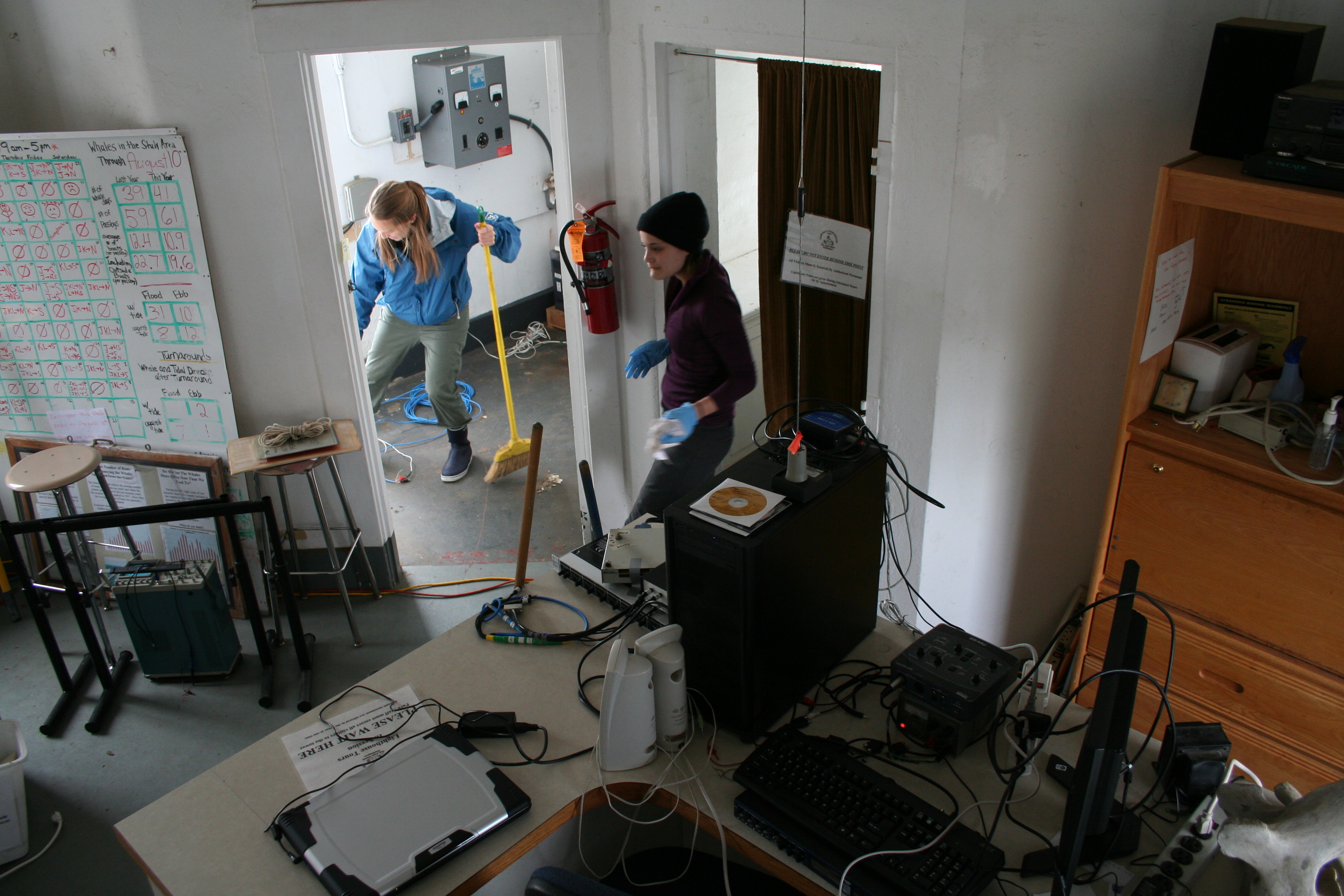
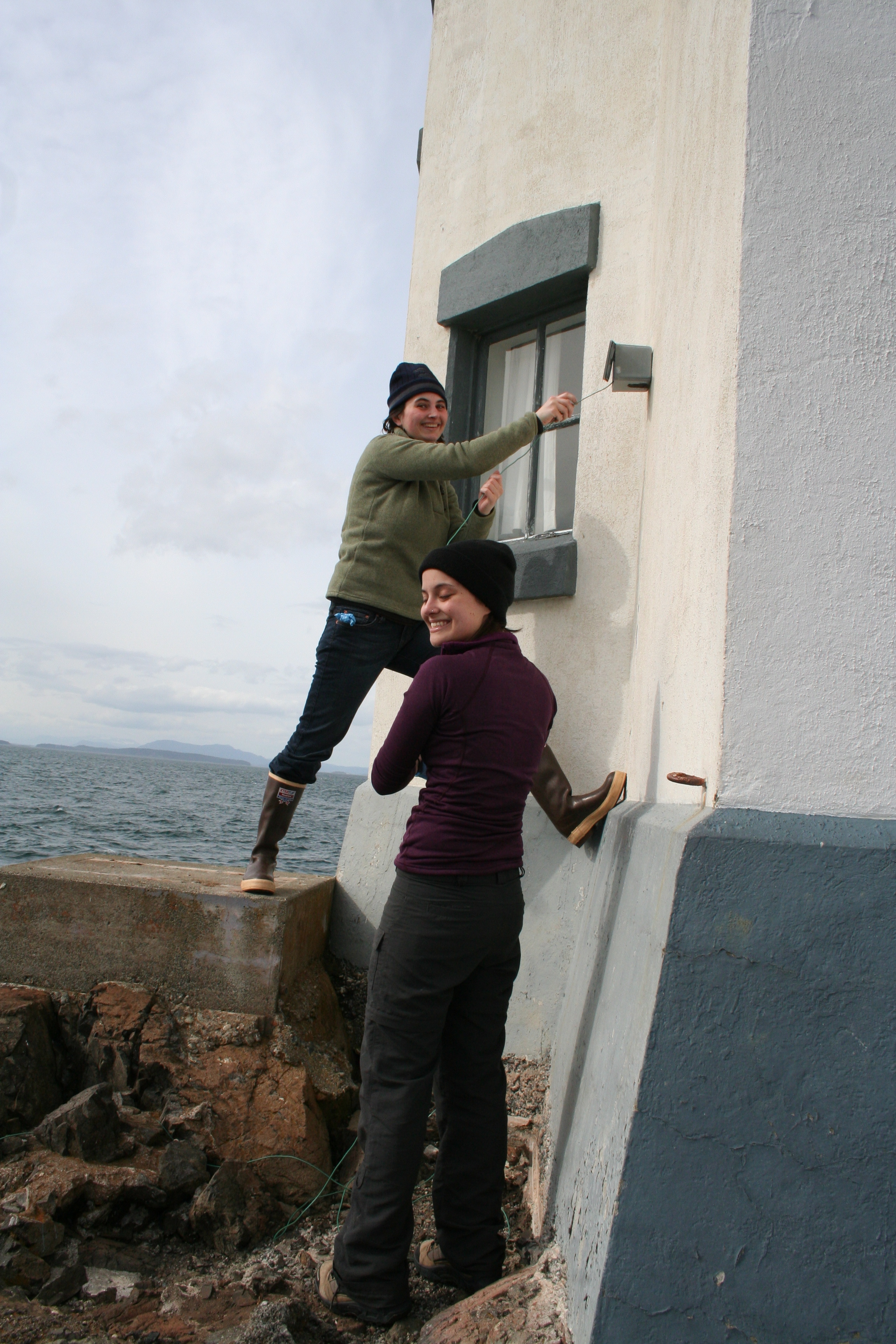
After that lecture we go to head down to Lime Kiln to clean out the lighthouse as part of our group community work. It was actually quite fun and very therapeutic. Horace and Val replaced the radio tower that streams live sounds to people with receivers in the park. 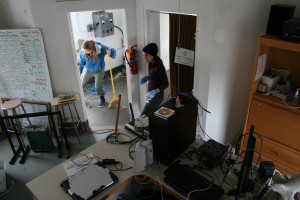 Kathryn, Libby, Jason and I worked at cleaning out the lighthouse and organizing the computers. After the inside was mostly put together I got to take the grounding wire from one side of the rocks below the lighthouse and move it to the other. Basically I got to jump around on rocks with a green wire for 30 min! It was fun!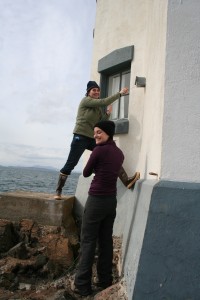
4/7
The proposal rough draft is due tomorrow so today is study study work work!
4/8
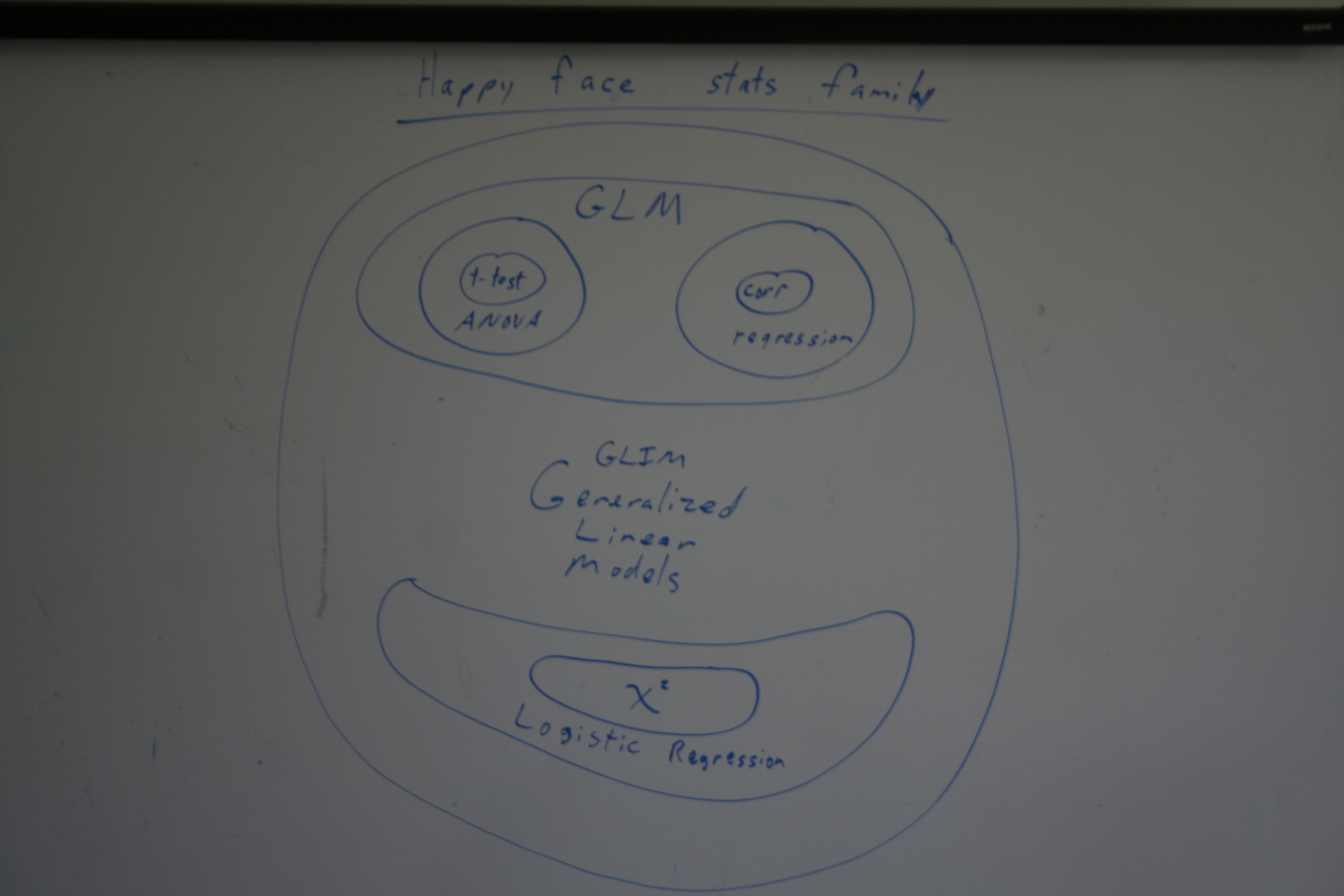
We had a very informative lesson on statistics today from Jason. We were introduced to the “Happy Face Stats Family†which entertained us all while being very informative.
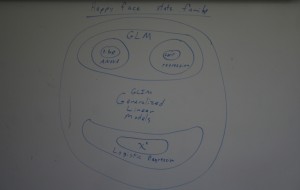
Happy Face Stats Family
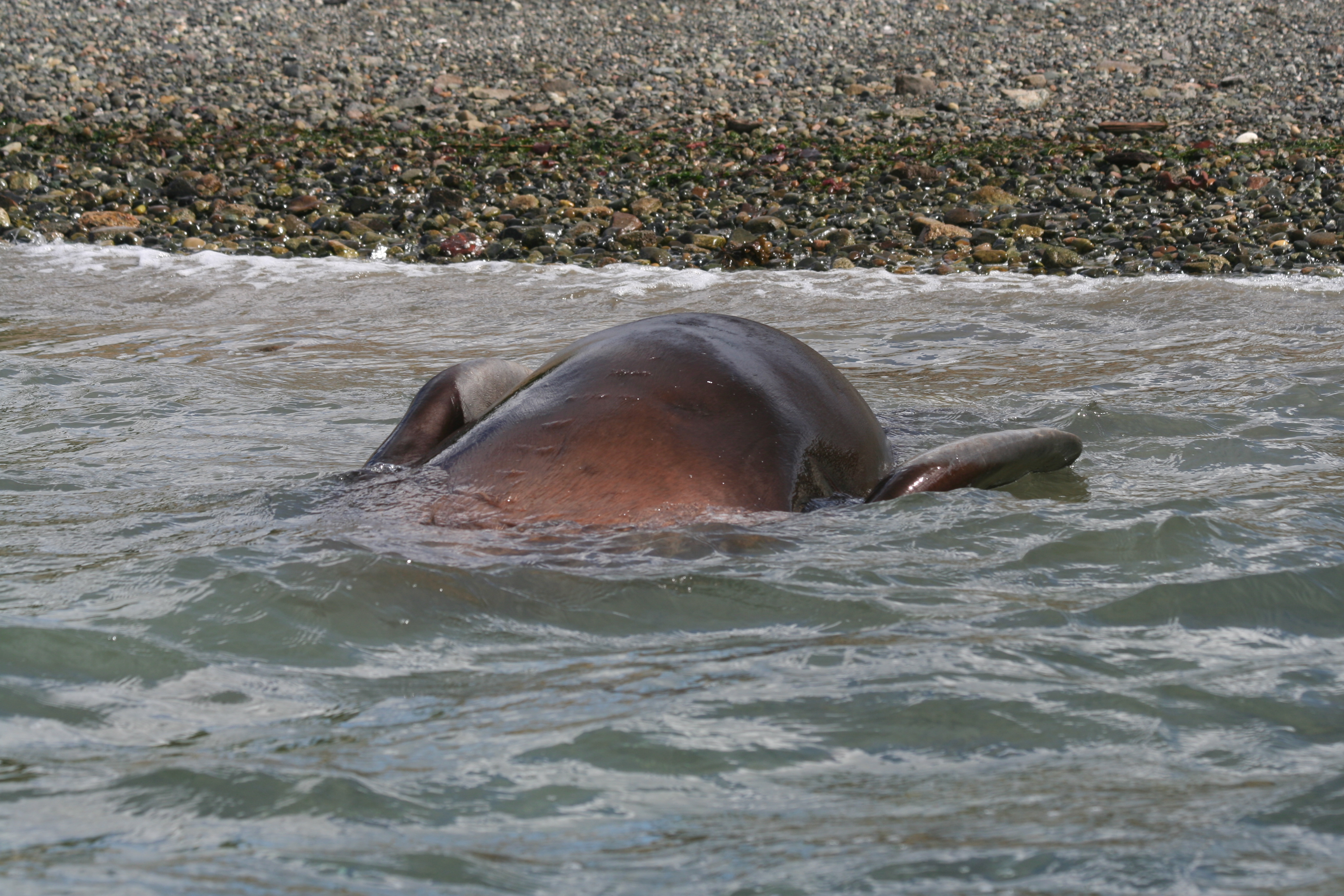
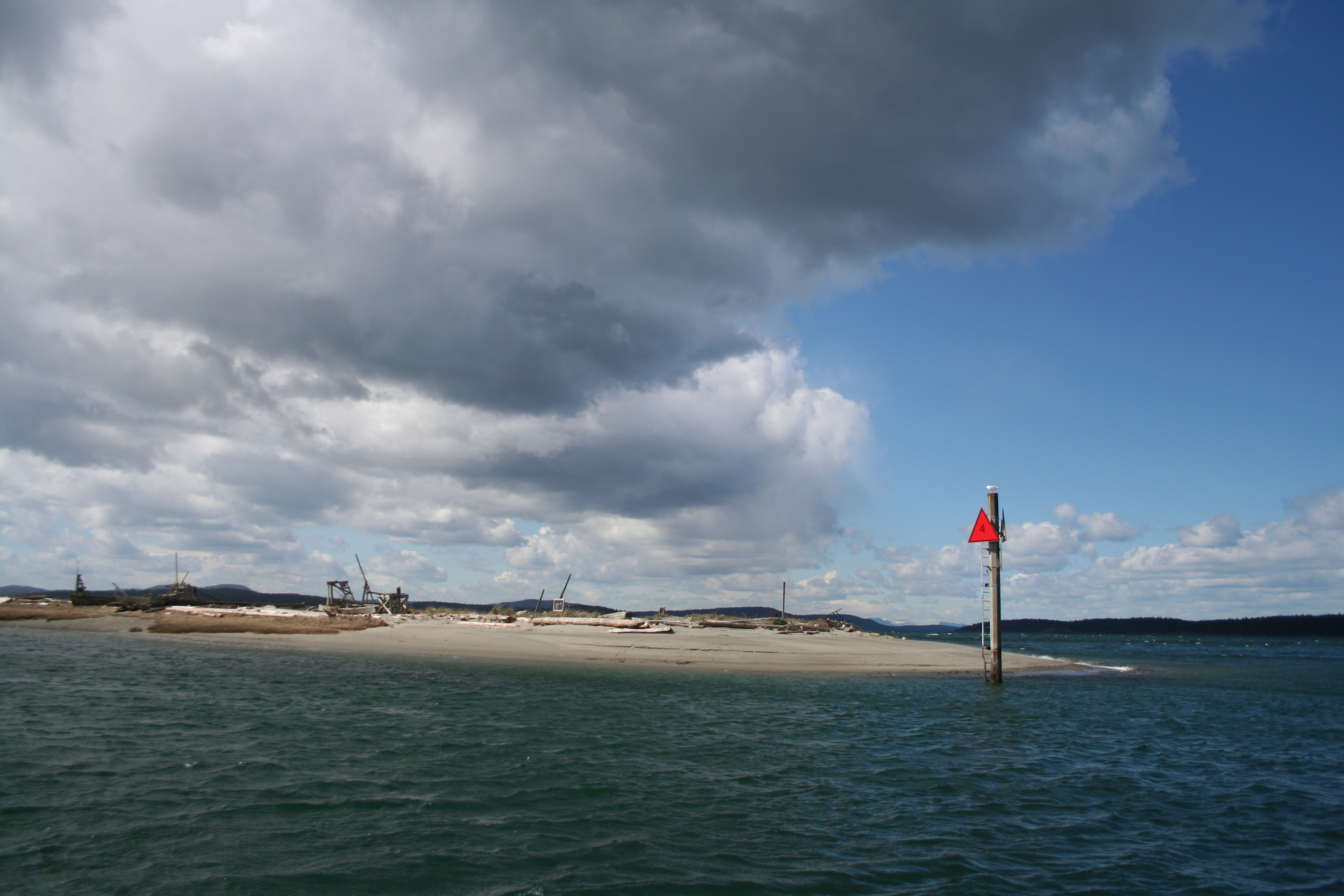
Around 12:30 ish Jason got a call from Amy, a person who then informed us about a stranded sea lion 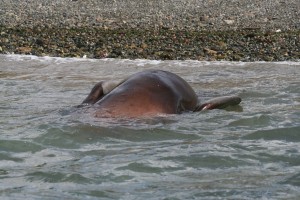 that she needed us to pick up. We set out about 40-50 min later in the buzzard to pick up a sea lion that was floating in a harbor. When we got there the sea lion had washed to the shallows on the beach and, although the Buzzard is made for that kind of situation, Jason didn’t want to get too close to shore cause getting back out to sea can still be problematic. So we went to the beach to inspect our options and decided to have two people, Horace and Libby, stay with the sea lion, tie a rope around its flippers and throw us the line so we could drag it back out to sea. The sea lion was still in pretty good condition and w
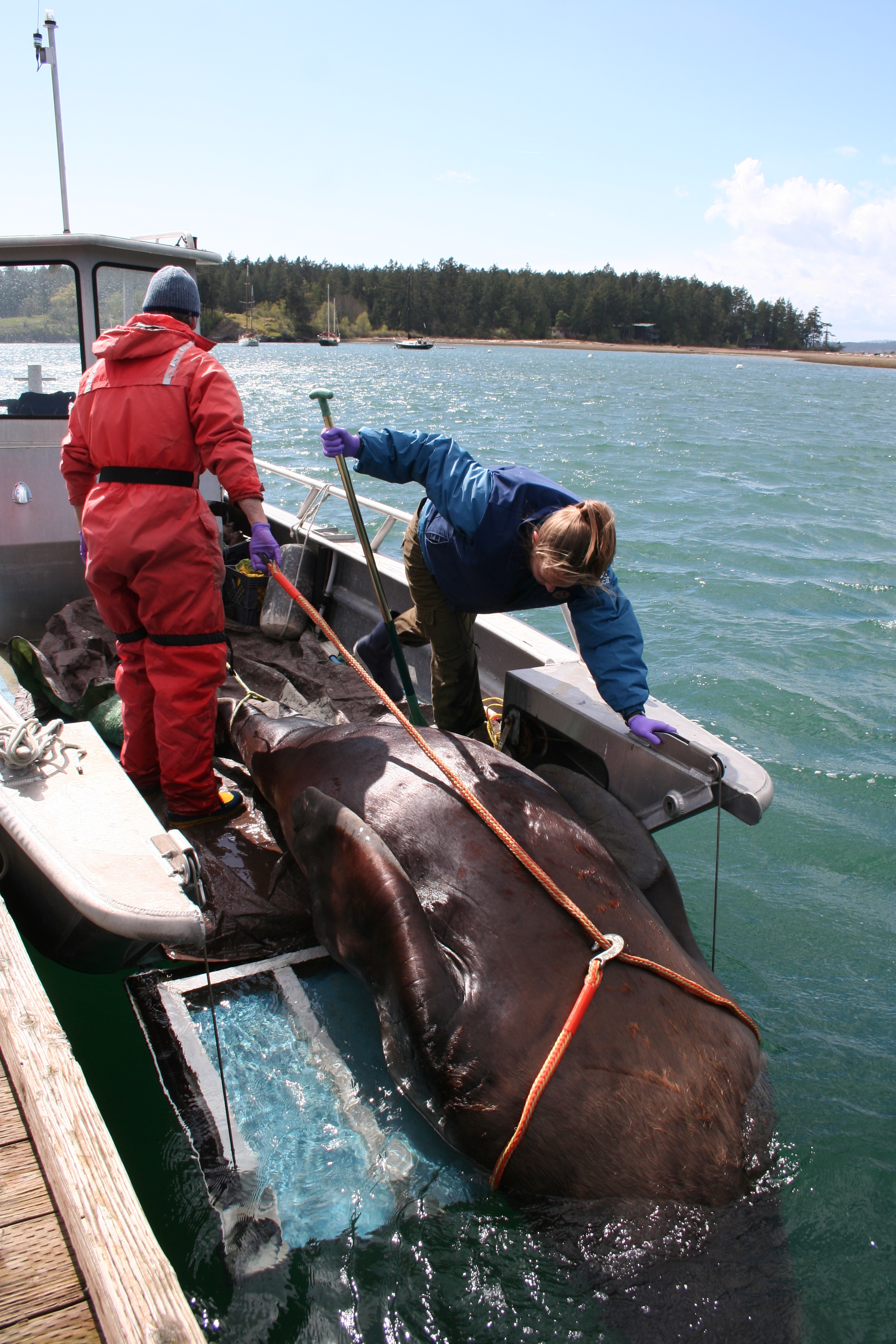
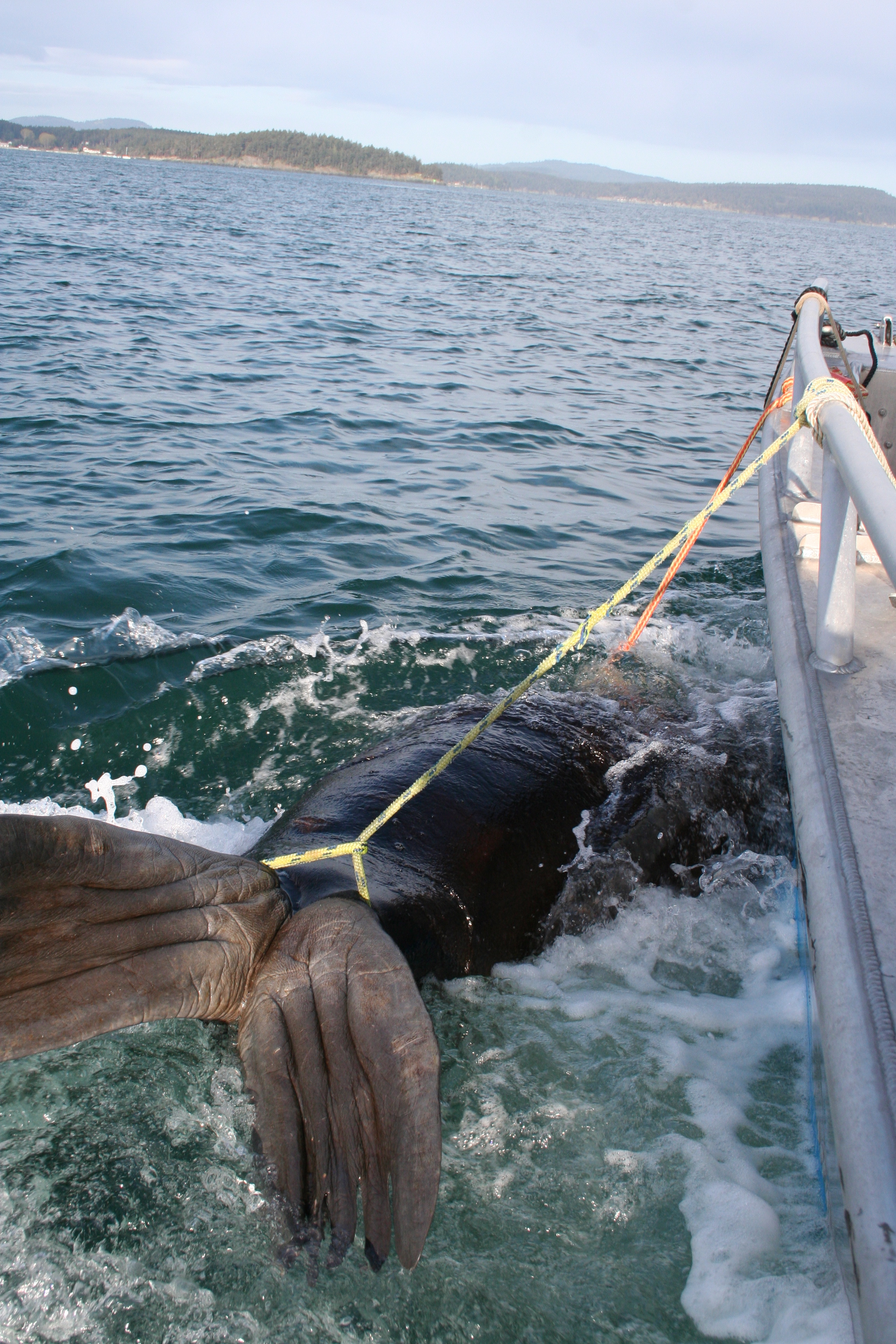
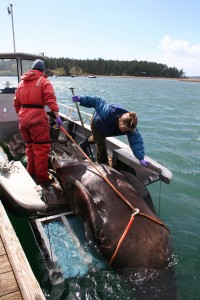 as just a bit bloated so it floated really well. Of course by this time it had started to hail and snow! After we got back to the dock we decided that the best cores would be to pull sea lion into the boat. This was a big mistake! We tied the rope around its feet to the winch and started to winch it into the boat, when we had about half of the sea lion in the boat the winch broke! For the next 20 min or so we tried to pull it in by hand. Not an easy feat as you may imagine since it weighed about 1 ton. Finally the winch came back, as did the sun, and we got the sea lion in the boat. Te sea lion firmly on the boat and all of us perched on the back to balance out its shear mass, we set out only to realize that the wind had picked up and the boat was too heavy. So we went back to the dock, pulled the sea lion off the boat, by tying it by its armpits to the dock and the other to the boat and driving away, and cinch it to the dock so we could come back the next day and pick it up. Then we rode home and got back about 4:45. I slept well that night!
4/9
Today we got a call from Jason at 7:15 telling us that he was heading back out to pick up the sea lion at 7:45 and of course all of us once again jumped on the chance. 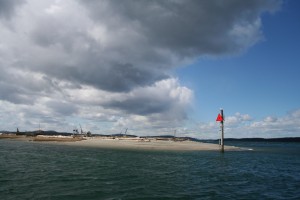 The ride out was very smooth and absolutely gorgeous! Â We got there quickly and found him in the same spot we left him, tied to the dock. We unhooked him and decided that since we had ropes around his tail, torso and snout we should tie him to the side of the boat rather than hope that we could get him all the way back to the labs towing him. Because of our extra load and the careful manner in which we drove, it took us about an hour to get back to the labs.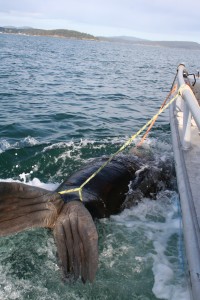
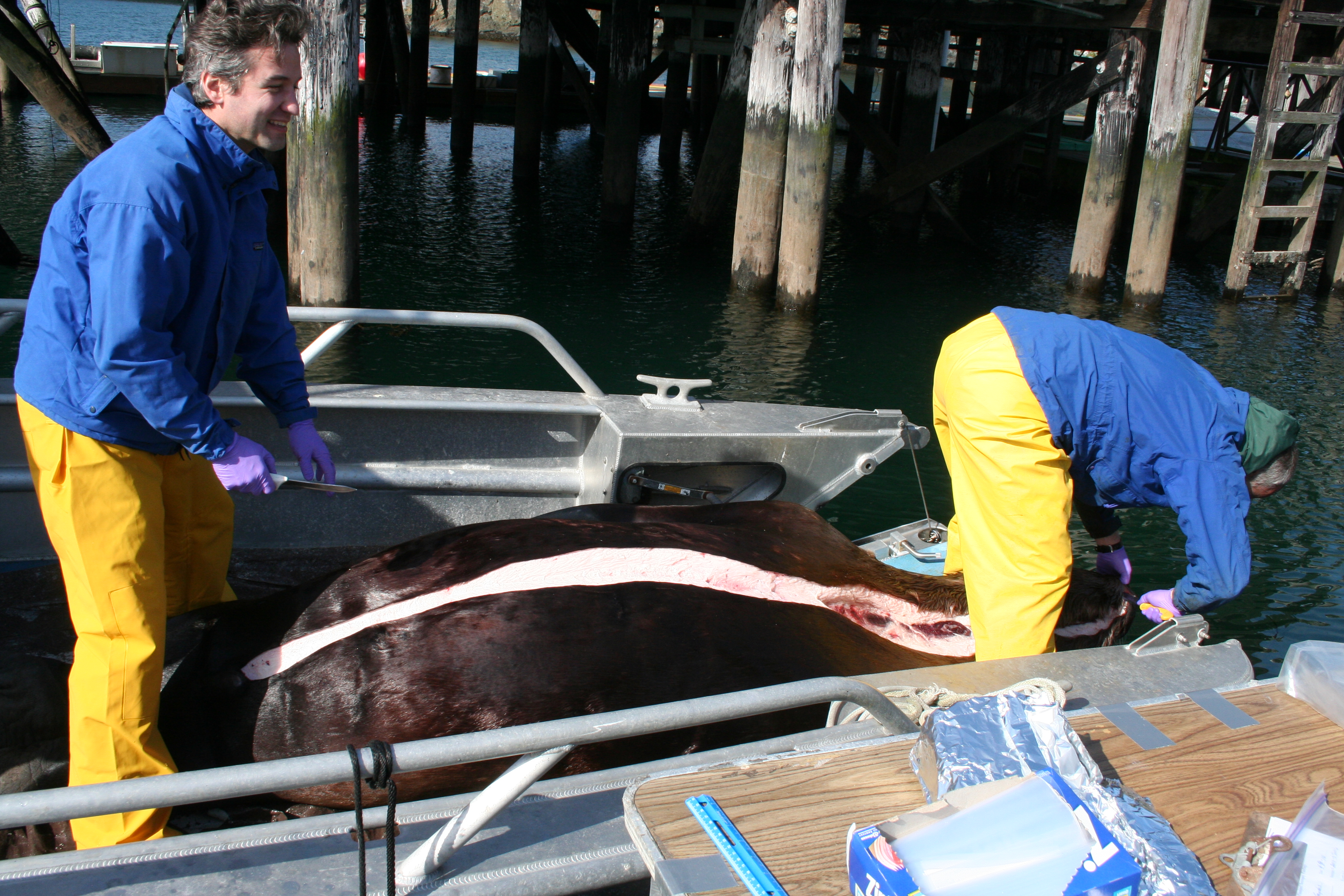
We were met there by whale museum volunteers who often assisted the Orcus Island veterinarian named Joe who routinely performs necropsies on stranded animals that are brought to the labs that are still in good shape. Joe hadn’t gotten there yet but Jason called him and it was decided that it would be best to perform the necropsy in the boat. So once again it was ‘haul the 1 ton sea lion into the boat’ time! The winch broke AGAIN but only for a few minuets and since we had some experience it went much quicker this time. After the sea lion was in the boat and we took some measurements of girth, length, etc., Joe got down to business. It was awesome!
I have ever seen a necropsy, excluding cat lab in college and the few frogs and squid from elementary school. The shear size of everything boggled my mind. The heart was the size of my head! Its blood has two kinds of oxygen carriers in it making the muscles look very dark red and it had a good 3 inches of blubber. During the necropsy Joe would quiz us on different parts and explain what he was doing. He was great and answered all of our questions.
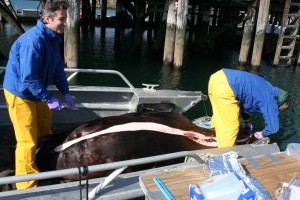 We found out that the sea lion has suffered some major trauma and had a lot of hemorrhagic tissue in his chest cavity. Trauma like that was most likely caused by a run in with a ship or some orca. We got to look at a bunch of different organs up close and Joe even went through the anatomy of the heart and cut it open for us to look at all of the parts. The liver was strange because it had abnormal yellow and black spots on it but Joe didn’t know if it was just a natural oddity or a sign of disease. The kidneys were also interesting because instead of having one outer area filtering into one inner area like ours, it basically had hundreds of little kidneys all filtering into one area.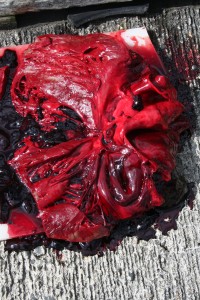
After Joe was finished with the necropsy it was about 12:30 and time for us to eat lunch lest we miss it! After lunch we got finished cleaning the boat, a very stinky and messy job, and then got sailing lessons from Val in his sail dingy.
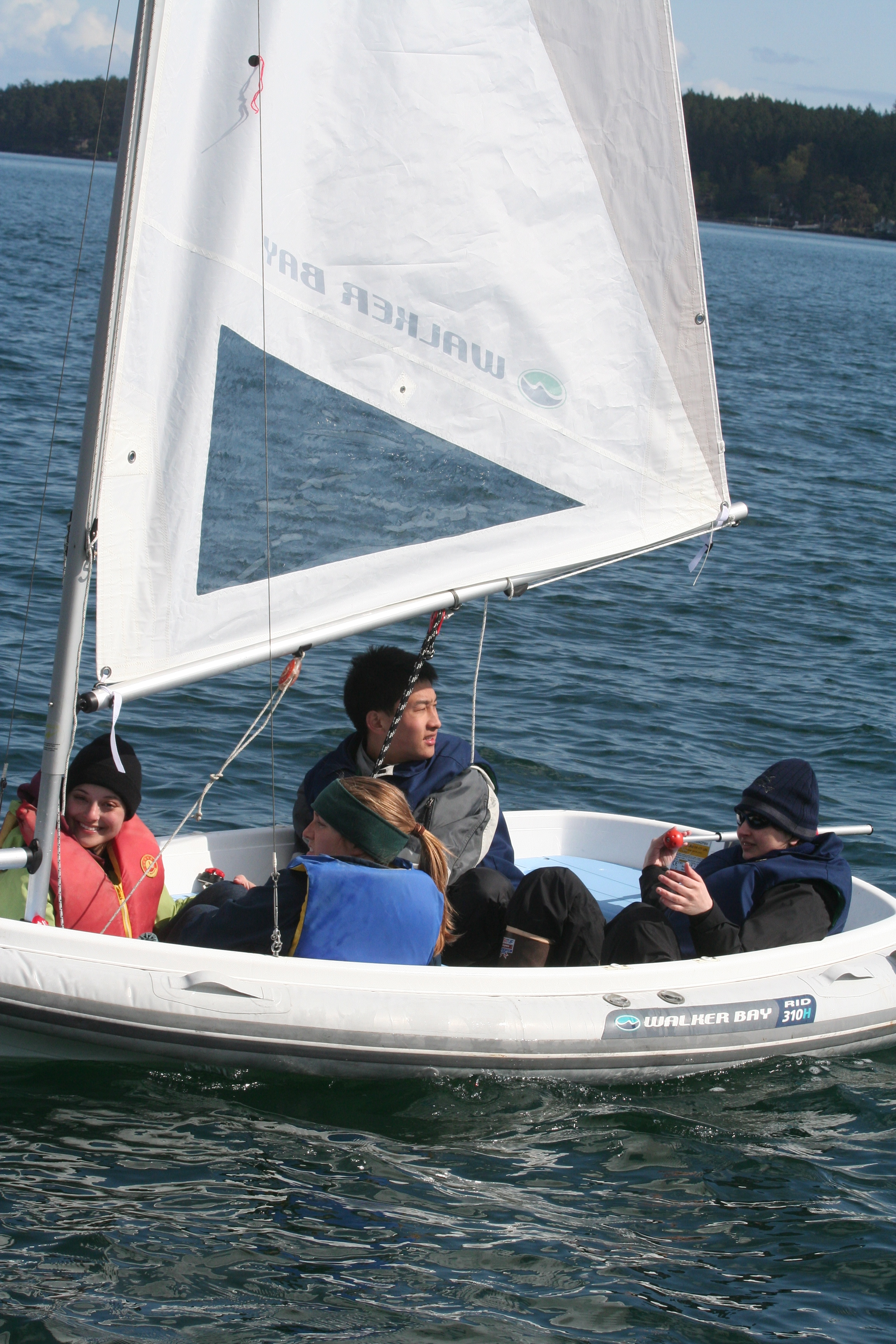
The first time we went out we were with Val so he could explain what to do. Libby and Kathryn were first and then Horace and I went. The second time all four of us went, that was hilarious because we barley all fit into the boat! After that Val put on the jib sail and we went out in our pairs of two, this time without the guidance of Val. Libby and Kathryn did good as did Horace and I, given that none of us really knew what we were doing. Horace and I got stuck in no wind areas a few times and spent a lot of time going in circles. It was a lot of fun and a great end to a stressful week!

In case you missed it no lunch was actually mentioned.
Be joyous!
Read More
Another week has passed here on the San Juan Islands, and overall, it has been an adventure indeed.
This week, logistically, we went over a lot on statistics, acoustics, and equations that would scramble the neurons in your brain. I did my best to keep up with the work. On Monday as I recall, we were able to head down to the dock to collect sound data. We all had great practice in using the sound equipment, in preparation for our main research projects that are coming up. Gathering the data was a lot of fun, because we finally got a chance to get hands-on with what we were doing. We hung a speaker on one side of the dock and kept it there, as we inched our way down the dock with the hydrophone, measuring at different distances. With the data set we collected, we used what we learned in statistics and sound to start on our dock spreading exercise.
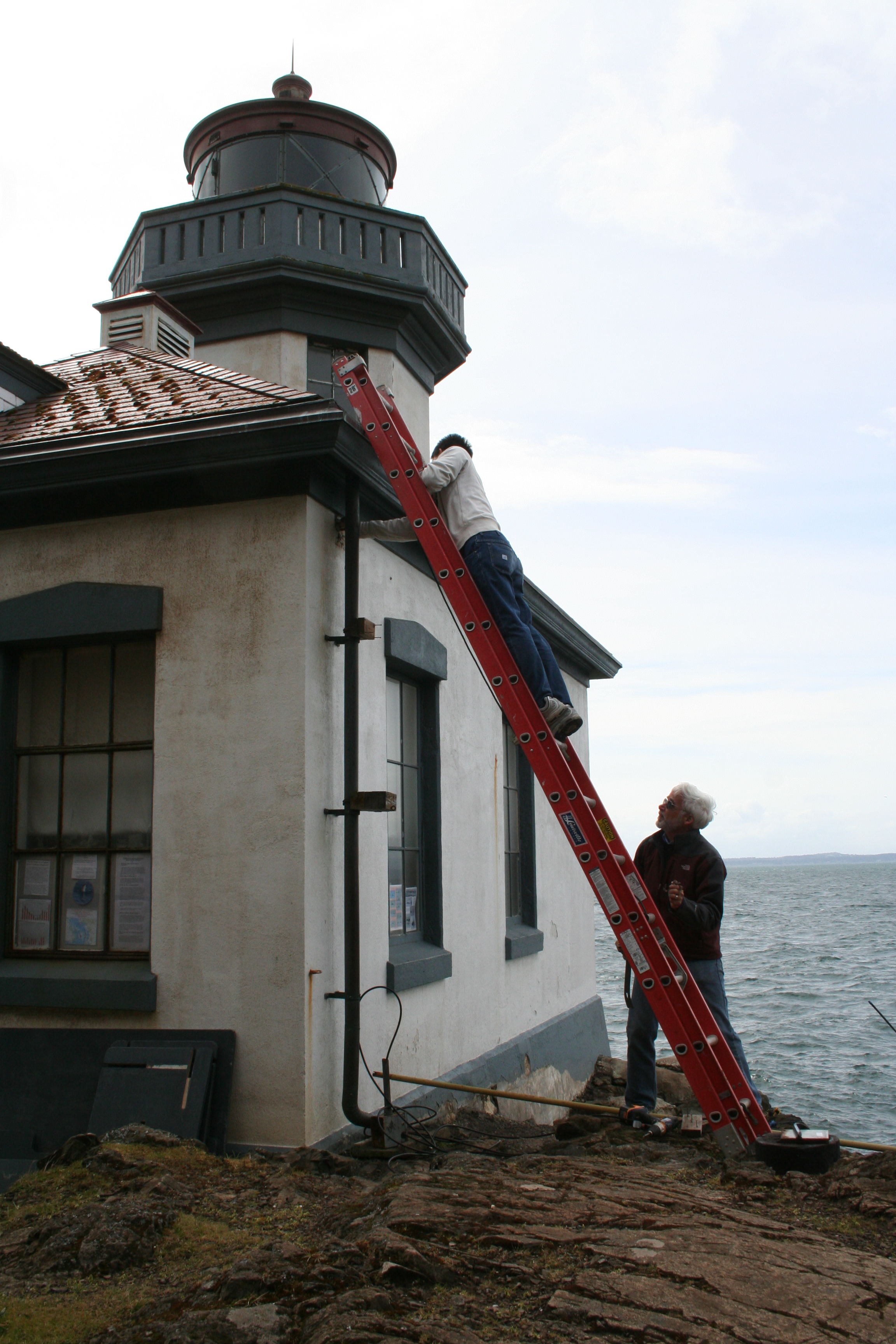
On Tuesday afternoon, we went back to the Lime Kiln Lighthouse to do some cleaning! It felt very refreshing to just contribute to the status of the lighthouse itself. I helped Val move the lighthouse antenna to the top of a tall post nearby. It was a hassle to get through those feisty tree branches, for me and Val had an interesting time maneuvering through the branches with the ladder and our bodies. Once we got it up there though, we felt really accomplished with our task. Better yet, before we even got the antenna attached to the pole, Val climbed up the ladder to dismantle the older satellite dish. And guess what? It was supposed to come crashing down like we predicted, but those branches supported it. Anticipation of a giant falling satellite dish was ruined. But the entire afternoon was sort of an adventure already.
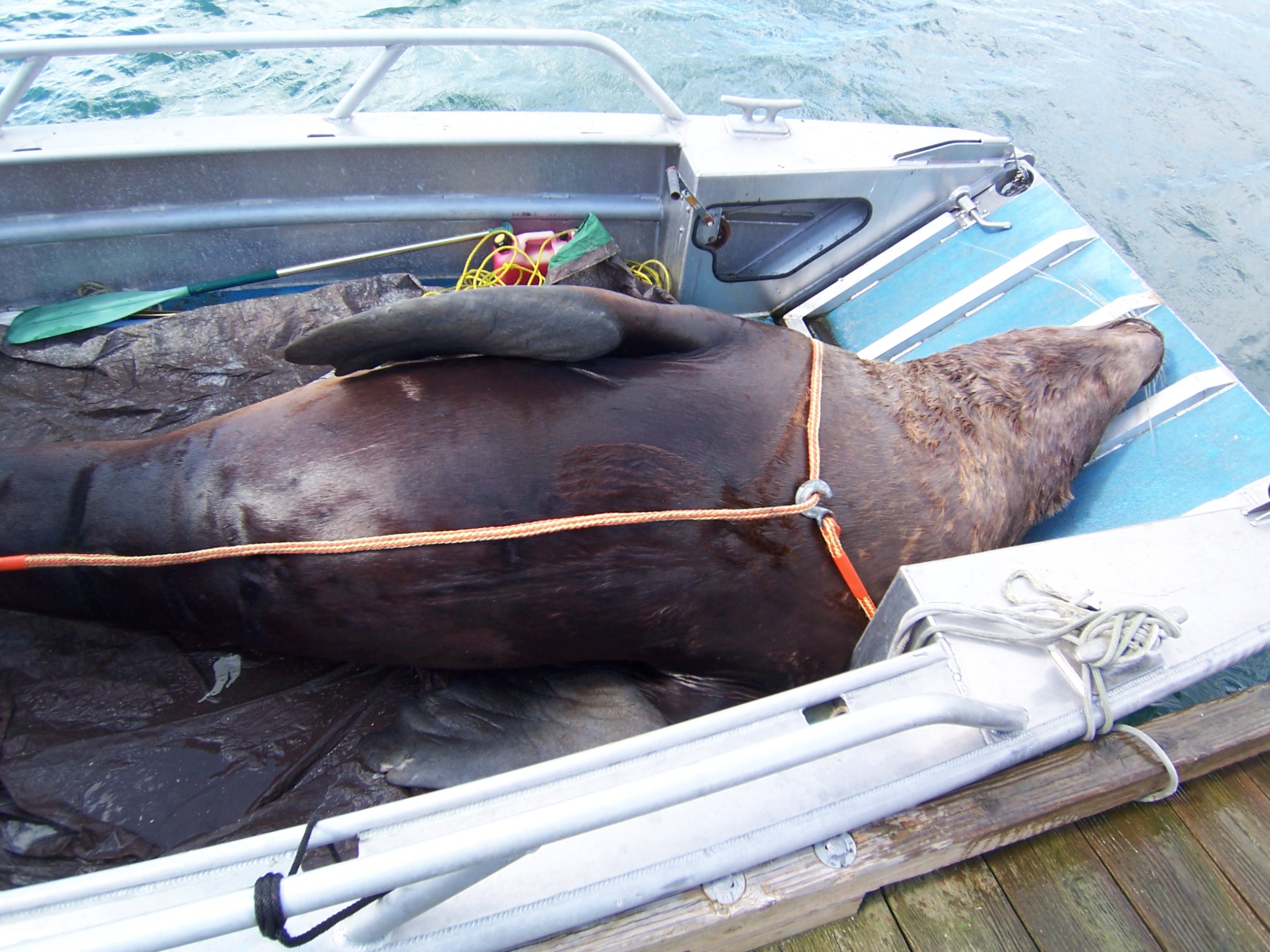
But the unexpected granted this week to be really adventurous indeed. Jason got a call to go pick up a Steller sea lion corpse off on one of the islands. And he called us to come along. So on Thursday, we needed out on the Buzzard, a small research vessel, to retrieve the corpse. It was a semi-windy afternoon when we left. We found it drifting alongside the shore of Lopez island. It was the first time I have ever seen such a humongous sea lion this close. It must have weighed over half a ton. After a tiresome couple of heaves, we got the humongous sea lion on board. However, the wind prevented us from going any further out in the open waters and thus, we had to leave it tied to the dock for the night. Even though we were not able to bring it back that exact moment, we began our trail back to the labs. The wind eventually grew much stronger, and water began to find its way into the boat. Because I sat on the front alongside Kathryn to balance the Buzzard, we ended up getting soaked from head to toe. But the whole journey was filled with nothing but jokes and laughter, even if we were getting pelted to the face by salt water. The next day, we set our course towards Lopez Island once more to retrieve that sea lion. This time, the sun was out with the least amount of wind that I have experienced here on the islands. Once we brought it back after an hour long boat ride, we contacted the people to perform a necropsy on the sea lion. I have never been so intrigued about anatomy in my life, after seeing a grown male Steller get dissected in front of my eyes. And to top the morning off, we were taught how to sail by Val in the afternoon! Nora and I made a couple of 360 degree turns out in the waters as Val and the others laughed. We figured how to get back to the dock eventually.
We finally finished our research proposals on Thursday and just got them returned an hour ago. It is soon getting closer and closer to the day when we actually can sail out and do our research!
Read More
Wow. Things have really picked up around here.
Each class portion builds on the material from the one before it, so I feel like I am becoming an expert in a variety of fields very quickly. This also means that the workload is starting to pull my brain in various directions as I try absorb each piece and appreciate the overall meaning of it.
We had a guest lecturer of particular interest to me named Anna Kagley visit our classroom yesterday to talk about the tracking of salmon populations throughout the shoreline. NOAA is expanding her study to the bays of San Juan Island, so there will soon be high frequency receivers strategically placed throughout the inner waters here. On a personal level, I was eager to distract her from this lecture (although that was also informative) to talk about a recent brain-trust type of seminar which labeled possible impacts of hydropower turbines around the world and at variable distribution levels. Oh how I would love to be even a fly on the wall at one of those meetings. Even if I were squished by the end, I think I would be satisfied to be a part of such meaningful and applied science. My imagination seems to thrive on the possibilities of what could happen, although my core also strives for practicality. This seems to be a perfect combination to draw me towards topics such as hydropower and establishing MPA’s on the west coast of San Juan Island. The scientist in me is slowly being satisfied and intensely awakened after being dormant in my realtor’s assistant body for so long. However, I must add that I am more technically savvy and better at solving problems than my college self. My heart is content to be on this current path. Anna said they are working with the County a lot, here is their website: http://www.snopud.com/PowerSupply/tidal.ashx?p=1155. Click on the “OpenHydro Technology†link to the right.
Typically, when there is a large piece of writing due (as was this morning), my body begins to yearn for the outdoors. Luckily, we are living in a biological preserve with great running trails. Just before dinner, I decided to take advantage of our surroundings and go for a jog. Once I realized that I forgot my camera, I knew it would be a memorable experience. First of all, the trail is sloped towards the middle and is therefore never really dry in this climate. A jog on this trail looks more like a dance with the Lost Boys (Peter Pan) than a form of exercise, which I must say, is where the 10 year old in me excels. I explored a little further than normal and discovered a cove along the beach that is quite protected from other visitors. There are huge mushrooms sprouting just inland of the coast, and even a bright purple seastar rigidly stuffed between rocks of the estuary-type environment. Clearly, if a girl from MN decided to take a nap on these rocks and forgot about the tides, you could be in for a rude awakening. Here is a typical outdoor photo from a different hike: 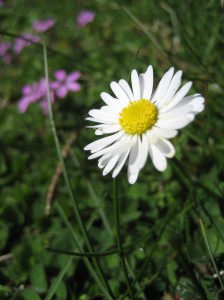
The jog was not complete without almost twisting an ankle, getting my foot completely sucked into a mud puddle, and scaring the snot out of an oblivious deer. Today, the sun is shining and it is bright enough to make cloud figures from the sky. Apparently it is supposed to snow for our sailing excursion tomorrow. Figures.
So, we were finishing lunch today (mac & cheese and tomato soup) when Jason found us with a gleam in his eye. He had just gotten a call about a floating (dead) stranded sea lion just off the coast of Lopez Island, and asked if we wanted to help retrieve it. Yea!! All four of us ran back to the house and threw on some warm clothes and rain gear, then headed out on “The Buzzard†across the Straight. Although they call it island hopping, we were not exactly hopping, or even skimming/fluttering – more like skuttering. Laughter filled the salty air as we set off on our adventure with the sun in the sky and the sea in our veins. The bumps and bruises didn’t matter because we were on the water again.
We arrived at the north end of Lopez Island and found a huge male Stellar sea lion with no indication of trauma, just death. It was quite a production for one instructor and four students to maneuver this guy against the will of gravity, the waves, and the wind but we were rewarded with eventual success. During the muscle-aching portion of our endeavor it began to snow/hail for about 8 minutes. My boots were already full of brisk salty sea so by that time I hardly noticed except to see the humor in it. The photo is of Jason and I trying to get the rope around the shoulders to haul it in the boat. 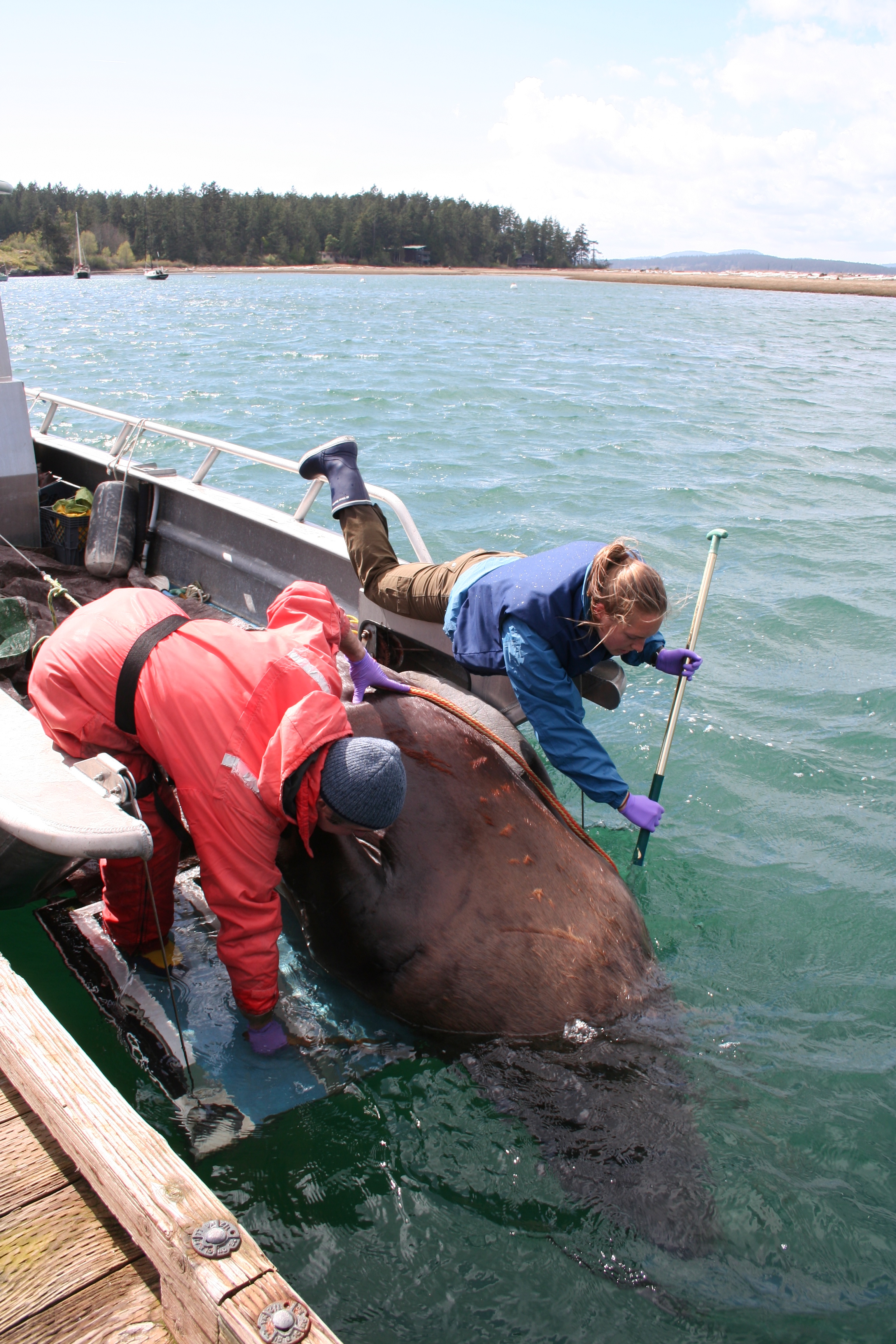 The sea lion filled the boat – making it look like merely a dingy with it’s massive flippers, torso, and head (length is 3.5 meters). I had never been so close to such a huge (and not moving) marine creature before and was able to let the scientist and the ten year old go free at the same time. The front four teeth are ground down to almost nothing, and the bottom ones that match them are about the same. They should really consider renaming the canine teeth, because the size on the ones in this guy’s mouth could out-bite pretty much any canine I know.
The ride home was cold, bumpy, and overall a drenching experience. The weather picked up and tried to mangle us to pieces, but the shower at our house has never been as appreciated as it was tonight.
The sea lion will be examined by real scientists tomorrow, and I am trying to finagle my way into the experience. Once again, I would love to be a fly on that wall.
Make the most of your day!
~libby
Read More
A week has gone by since I first set foot on the San Juan Islands. Coming from San Francisco, my body has not fully assimilated to the colder temperatures here up in the northwest. Arriving via the ferry from Anacortes, this is my first time on the San Juan Islands. My very first impression of the Friday Harbor Labs was a good one. There was this sense of a small family community here, much like my old high school back two years ago.  It is very different from being in a large lecture hall filled with nothing but hundreds of students. This year in Beam Reach’s spring 2010 program, including myself, there are only four students. I feel this is a great opportunity for us to get to know all the instructors one-on-one, enabling a much more in depth relationship towards each other. Personally, I think a small teaching environment is very rigorous and demanding, but yet again, the experience grants one more friends, support, and encouragement to do better.
On the first week, we were able to learn a lot of the basics of acoustics and how sound works. I learned a lot of new things that I have never been taught before, and things were revisited that I should have remembered back long ago. Being the youngest one of the Beam Reach group and a second year undergraduate at UC Davis, I have never had much experience in dealing with loads of reading on a “close to graduate level†expectation level. The first week dealt with plenty of article reading that we discussed later on during the days in class. The discussions went well, delving into topics about the southern resident killer whales’ endangerment status, to the influences of boat noises underwater. Our instructors, Dr. Jason Wood, Dr. Val Veirs, and Dr. Scott Veirs, provided us with a general background to the southern resident killer whales’ world in the northwest. Acoustics, involving graphs, physics, and noise, really blew my mind. Even though it might take a while for me to personally adjust to this hard-working environment, I will try my best to keep up with the pace. Moreover, I would love to take the lead sometimes in the group and help others out as I anticipate the amount of help I shall receive.
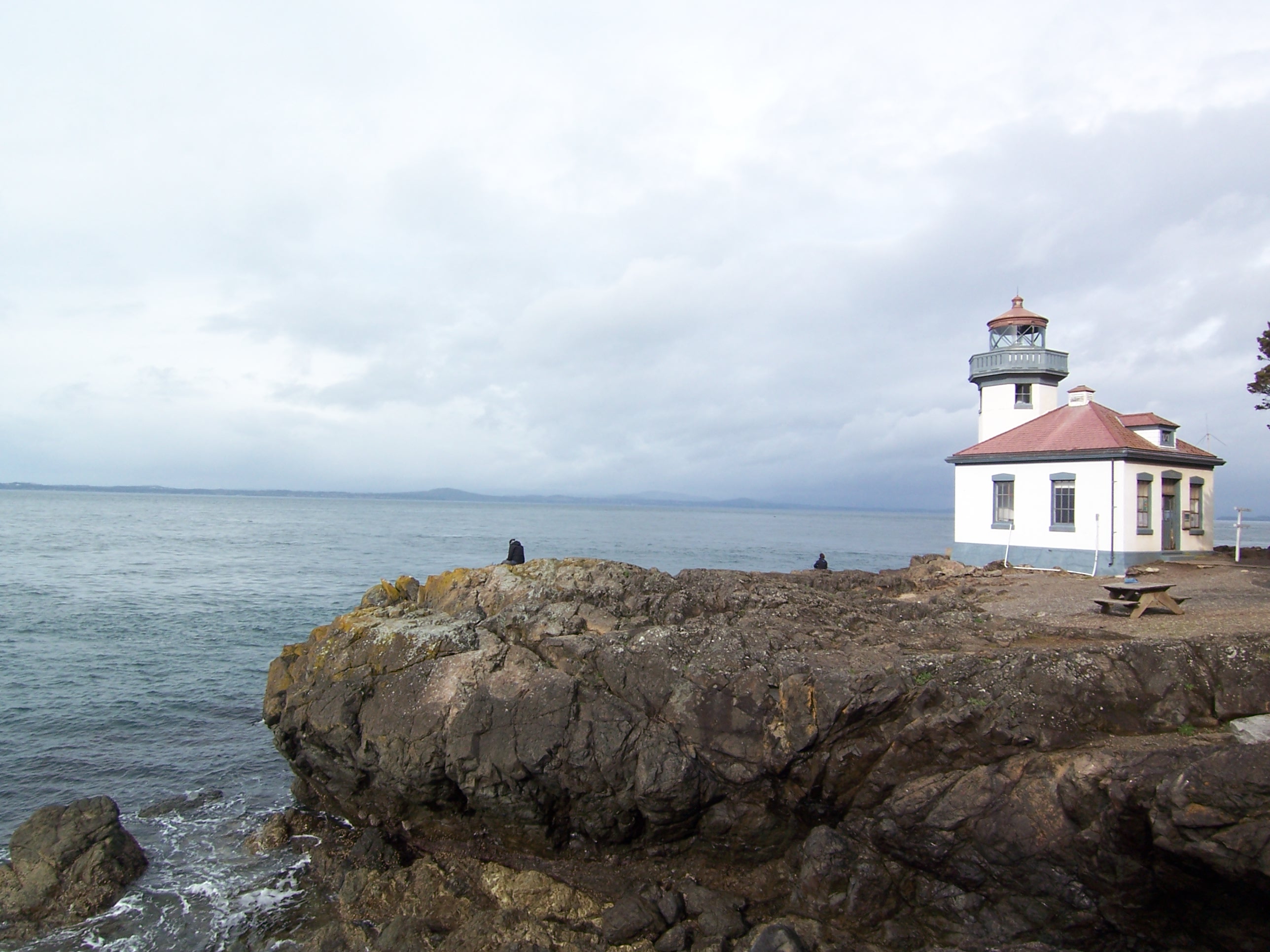
We visited the Lime Kiln Lighthouse on the second day of the week, where we formulated our five initial questions to help narrow our thoughts to a potential research question that we will be answering over the course of these ten weeks.  From the photo, the lighthouse can be seen with my two fellow classmates in the background, Kathryn and Nora. When the weather permitted, we strolled by the docks.
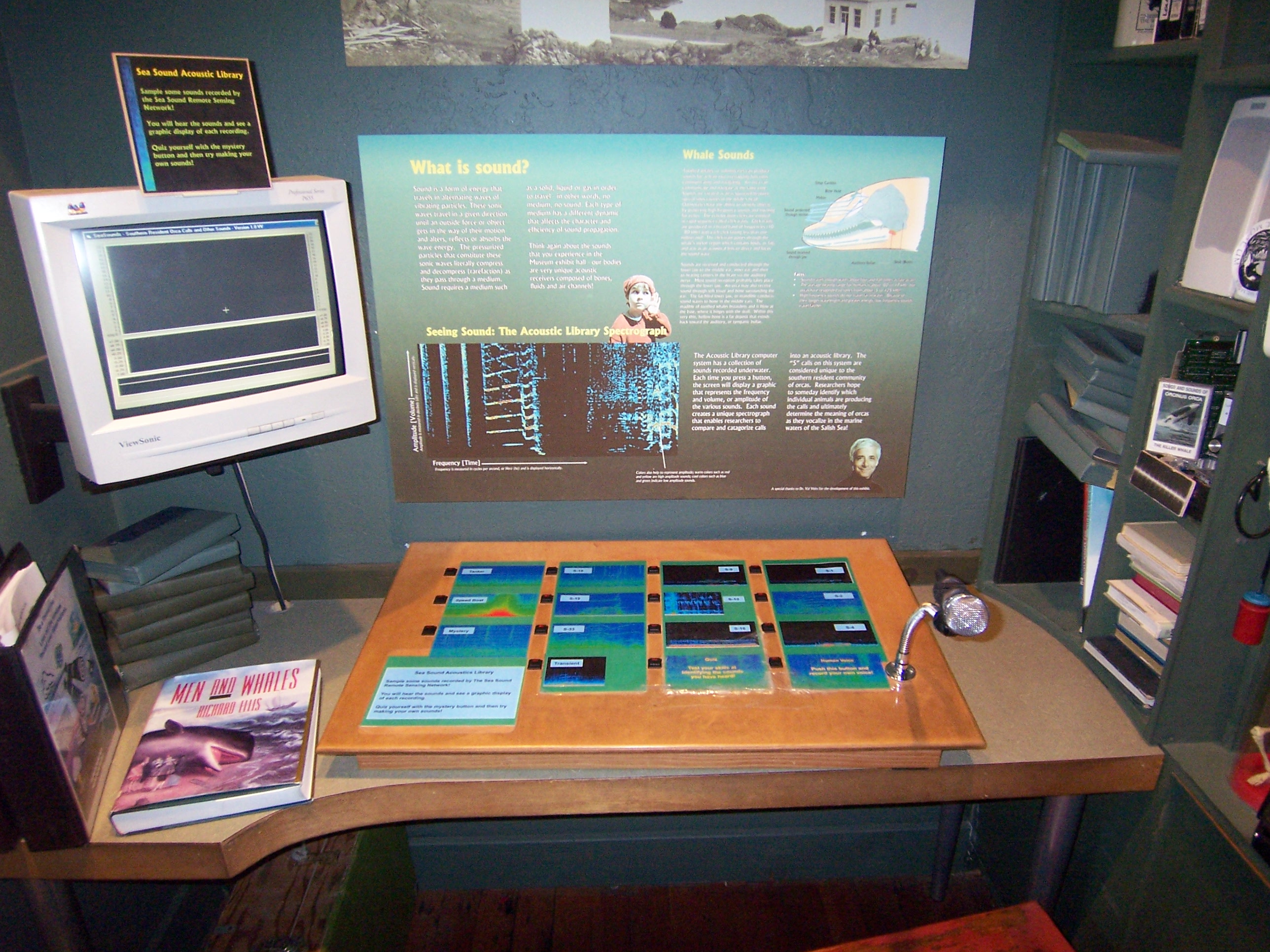
But the most interesting place that we went to was indeed the Whale Museum in town. Walking there took about half an hour, but that time was worth it. Although small, I felt that this museum really emphasized that sense of specification with the southern killer whales and other marine species in this particular northwest area. The exhibits really portrayed what are affecting the species and how we can protect them. One exhibit that really stuck out to me though, was the acoustic exhibit, created by Dr. Val Veirs himself. I thought that this exhibit can give the public a general idea of the effects of fluctuating noise levels in the ocean that can cause an irritation to the killer whales. I had so much fun twiddling around with the different sounds and buttons on the dashboard, quizzing myself to the various calls of the southern resident killer whales out there.
Weather was decent the first week, with much sun, with a gale on Friday and Saturday. :]
Read More
Greetings,
Today we walked through names of machines that look fragile and are minimally $1,000 a piece. Apparently if the word “acoustic†is used in the device name, you can assume at least a grand was put into it. Needless to say, I was not sticking my fingers on each button or playing around like I usually would, but I feel like my time will come. Cross your fingers for me that I don’t accidentally knock a particular orange or blue box into the Salish sea somewhere along our journey. I think one of the forms that we signed said that they replace those boxes with our first born child. So….none of that.
I am starting to wish that I still had my notes (or that fancy Iphone application) to help identify the birds in the area. I am familiar with Midwest ornithology, but have to admit that I would love to know the names of the annoying screeching birds in the tree just above the back deck. I also should know the names of several beautiful singers outside my window in the morning. It is now that I wish I could pull my ornithology professor out of my pocket and have an opportunity to expand on what I know. Luckily, the professors keep bringing books for our own personal Beam Reach library to the duplex and I think there is a bird identification guide there. We did discover that the loud ringing noise every early morning is a Northern Red Shafted Flicker marking it’s territory. Here’s all about it: http://www.allaboutbirds.org/guide/Northern_Flicker/sounds
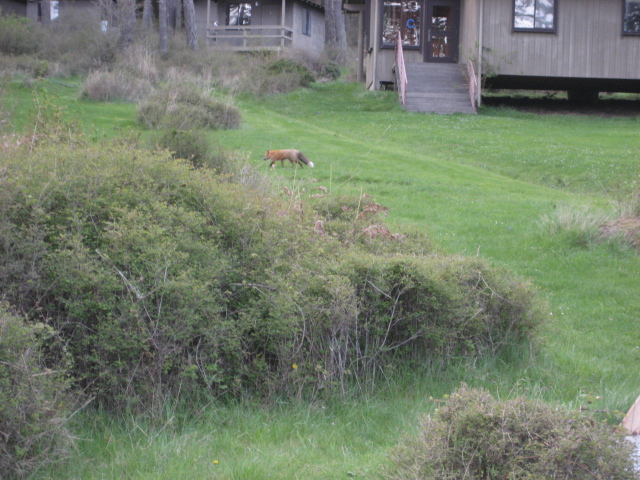
One of the coolest things I was able to see today was not an ocean organism at all, but a charming red fox crossing my path on the way to the dining hall. I was able to snap a few pictures, and although it looks like the animal was far away, I assure you that it was a close and personal encounter. I wonder if this is the only one in the area? What does it feed on? Has anyone done a population survey of the red foxes on the island? I also will expand my wondering to how they got here in the first place? I don’t seem to know enough about the natural history of San Juan Island to know when the last glacial period has been. However, I can easily inform you that the worm population in Northern Wisconsin is mostly invasive and were brought to the land from England accidentally as soil supplements in plants or have been released by recreational fishers.
Anyways, my class spent another portion of the day exploring research topics from past Beam Reach students. When I was first thinking about joining the program I read through the titles and abstracts of most of past student papers, but it was refreshing to start thinking about how to connect those projects to my peak interests. As a biologist, it is clear that regardless of the sweat and tears put into the research topic, there will be a statistical challenge at the end of the program when you find the challenges of making anything statistically significant given the sample size. Anyone the publishes findings and are respected for their research have done experiments over and over again to find true conclusions. With this in mind, I will attempt to connect my research to a dataset from one of a past student. I am interested in the human impacts (aka boat noise) on the behavior of the Southern Residents. There has been increased attention on regulation in the area since NOAA is debating making a significant portion of the West side of the island a Marine Protected Area. Basically, this would mean that any vessel (including canoes and kayaks) cannot enter the water in the MPA. I am not sure if this is according to a particular season, but I believe that it would be in effect year round. I am excited to take part in the process from this point forward. I have been in tune with the changes in regulation and will work on gaining experience on how an MPA is created and what that means for all parties involved. I think that this is the right time to ask around and make observations of various opinions on the proposed changes. This is where the Anthropologist in my wants to run free.
The other thing that peaked my interest today was expanding my ideas about hydropower. I am usually in full support of alternative energy technology and was a bit surprised that I hadn’t thought about the details of how the ecosystem might be impacted. It seems like no one really has an answer to this question, even though there is a tidal generator newly installed in Puget Sound. I can only imagine the impacts that filtering water into a spinning system would have on all of the micro-organisms floating in that same water. Maybe it won’t impact the quality of life at all…..I just wonder what is being done to verify that. Jason also said that in Britain they have developed technology that slows the propulsion blades when whales are present, but that the technology hosted a frequency that caused hemorrhaging in sea lion brains to do so. I think that it might be important to realize that while implementing alternative energy technology is very important, we also need to learn from historical environmental errors and observe all potential impacts before declaring that something is safe and installing technologies around the world. Let’s take our time on this one and make sure that it’s done right. Scientists may not have all the answers now, but we will have them once things start happening. It’s best if those things happen in a controlled, single environment instead of around the whole world. Slow and steady may win the race here.
We keep getting to hear recordings of the orcas. Some transients were even recorded off of Lime Kiln State Park last night. Hopefully we will catch a live feed from a hydrophone soon. I am starting to catch whale fever so it would really be nice to at least hear proof that they exist.
Attached is the campus red fox. I haven’t lost my camera yet… see?
Have a wonderful day : )
Read More
Hello!
I am alive and settled;
My first two days at Friday Harbor have been very exciting and I will share as much with you as you are willing to read. It is beautiful, green , spacious, laid back, quiet (except for the bobcat in front of our cabin at the moment), and basically unreal on all levels.
I met the other members of Beam Reach at the Seattle Aquarium on Saturday morning, for an eye-opening experience. The aquarium is much bigger than I had first anticipated and includes a neat exhibit that was designed to educate the general public about comparing whales to humans both anatomically and socially. There is also a sonar display where you can compare the different sounds of several animals, boats, harbors, and even create your own sonogram. We went to the back where a hydrophone picks up and records sounds of downtown Seattle. The port is notoriously noisy and (not surprisingly) the orca resident pod has not really been seen in the port for a long time. You can listen live here:Â orcasound.net
The sun and rain have been taking turns on and off as seemingly regular as the ferry schedule since I’ve been here. I packed my bag in preparation as we ventured to Lime Kiln State Park, also known as Whale Watch State Park. One of the signs says that on any given day in the summer, there is a 30% chance of seeing a whale during that day. We were able to spot a few Stellar sea lions bobbing around and quite a number of sailboats, but no orcas. We were briefed by Scott Veirs and Jason Wood (who are two of the mentors for the program) on various types of sound data analysis programs and listened to recorded orca calls. We were sent out to the rocks during one of the sunny periods to think of questions about the whales and ecosystem in general. Of course, my questions spun in circles towards hydropower impacts, the logistics of developing marine protected areas, and wondering where the San Francisco sea lions are now….

The dining hall staff seems wonderful and very organized. I am impressed by the accommodations (and patience) that they seem to have for strange allergies and food preferences. Although I was concerned about my preference to not eat or smell seafood, they don’t give it a second thought.
It seems that most of the homework is going to be reading scholar papers about various marine/ecosystem topics, which should be really good for me. As the days get longer I have a feeling that the time I start reading will get later and later, at least until we get on the boat. I will be venturing out on a bike and taking hikes as frequently as possible. These things tend to turn into epic tales, so be sure to stay tuned.
Take care! Enjoy the day!!
Read More
I have been waiting to return to San Juan Island for 5 years. The first time I came to Friday Harbor, I was 15 years old. I arrived in Washington with the hopes of seeing a wild orca, and I began my hunt on the ferry to the island. I stood on the chilling bow, wind-whipped and shivering in 4 layers of clothing, scanning the horizon for black dorsal fins and telltale plumes of mist suspended in the air. I knew the chances of seeing whales before I had even reached San Juan Island were slim, but I simply could not contain my excitement. About halfway through the ferry ride, I noticed a zodiac idling a mile or so away. The people on the boat were obviously looking at something, and I squinted my eyes to get a better look. Moments later, a black shape rose out of the water, and my heart skipped a beat – orcas. Somehow my father managed to snap a photo of me at this exact moment, and I can only describe the expression on my face as one of pure, unadulterated joy. In suburban Ohio where I grew up, the closest thing to wild orcas are captive animals who lead sad half-lives at Sea World; it was an absolute thrill to see these animals swimming freely in the Salish Sea. This unexpected encounter set the trend for the remainder of my trip – I saw orcas nearly every day. I watched whales cruise by the lighthouse at Lime Kiln State Park and I followed them through the fog on a whale watch. The only way I managed to leave the island without dissolving into tears was to promise myself that I would return someday.
As I boarded the Anacortes ferry one week ago, I was overcome with the same child-like excitement I felt during my first ferry ride. I had waited so long to be reunited with this thick, fragrant air, the ethereal cathedrals of tall, leaning trees, and, most of all, the whales. After seven days on the island, I have still yet to see an orca, but my disappointment has been tempered by a multitude of other wildlife experiences. Friday Harbor Labs is situated within a biological preserve, and the area is bursting with life. I have had close encounters with deer, sea lions, slugs, foxes, and river otters, temporarily satiating my desire for animal contact. I have started to use our Sibley’s bird guide to identify the birds around our duplex (including a Red-Shafted Northern Flicker that has been drilling noisily on a metal lamp outside our window for the past few days) in an effort to hone my observational skills. While these experiences have been fulfilling, there is still part of me impatient to get out on the water – I listen to the hydrophone network daily, ears tweaked for sweeping killer whale calls, and even though I know they don’t frequent the east side of the island, I keep an ear out for the gunshot ring of whales coming up for air. We’ll be out at sea in two short weeks; in the meantime I will enjoy the company of other creatures and bask in the knowledge that I am finally back in this wonderful place.
Read More
3/29
Today we went on a field trip to Lime Kiln State Park on the west coast of San Juan Island. The weather was typical PNW spring weather when we arrived at the lighthouse, sunny and breezy. It was chilly but nice. We were tasked with thinking of 21 questions, which captured our interest, to do with orca and the environment they live in.
When time was up and we were heading back to the lighthouse from our various inspirational areas, we saw a sea lion. It was very cool. We couldn’t tell what type it was, mainly because we only saw a bit of its head once or twice, but Kathryn thought it was a stellar or California sea lion.
In the lighthouse we eat lunch as a group and talked a bit about our interests, which in turn sparked some discussion about what kind of research has been done and was being investigated currently. That was pretty interesting and allowed us to get a better idea of what were feasible topics for our areas of study.
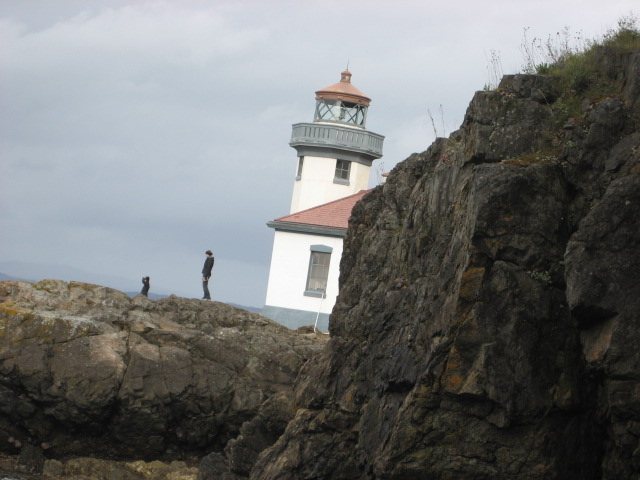
The lighthouse at Lime Kiln State Park
3/31
Today we did acoustics. It was awesome. Val showed us how to use some of the sound recording and analyzing equipment. Then we did our own experiments to figure out what we were seeing on the computer and how to change the amount of reflected sound the microphone was receiving from the wall behind it. Â We used a pillow and a glass bowl! We were also able to work out some of the basic calculations to find the speed of sound, which we managed to get very wrong. It was a lot of fun to see how every thing worked from the ground up.
After Val left Jason taught us more about the technical and mathematical side of acoustics so we would understand more of the jargon as well as the equations and parts of sound, like amplitude (volume) and frequency (pitch). We also got to see how sound waves canceled each other out and made each other louder with a very cool computer program he used. Â It was fascinating to first use a hands-on approach to figure out how the simple stuff worked so when we learned about how the more complex things worked it all made sense and fit together.
After lunch we got to meet with Jason to discuss our questions that we want to focus on for our research topics, which was cool. I am finding it very difficult to hone my interests into one narrow researchable field.
4/1
Today we got a great talk from a lady named Lynn. She is a beacon of hope for all people, like me, who struggle with writing. I have never, before today, been excited to write something or understood what was really expected of me. She was very good at explaining what was expected for both our research proposals as well as our final papers in a very no-nonsense and explicit manner. It was delightful!
After Lynn left we discussed a paper about the effects of sound exposure on the southern resident killer whale community. It never ceases to amaze me that for every decision, action or lifestyle choice we make there are hundreds of other living creatures strongly, and most of the time adversely, effected.
I am excited about the service project. I am still trying to decide between volunteering at a wildlife rehabilitation shelter called Wolf Hollow or at the whale museum working as an educational helper.
For the last few days we have been plagued by a strange and very fast metallic hammering noise, the source of which remained a great mystery. Today we finally found who was responsible, through the enthusiastic sleuth work of Kathryn! It turns out that it was a Red-shafted Northern Flicker (a type of woodpecker), which was pecking on a metal streetlight cover. I looked it up and found that many woodpeckers peck on metal during seasons when they want to establish territories and attract mates. It is kind of amusing watching the little guy peck on the light.
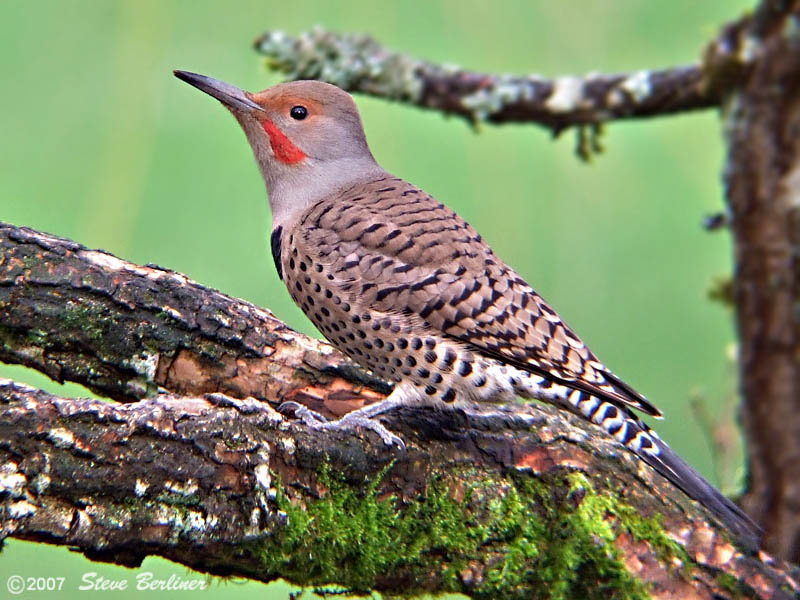
Red-shafted Northern Flicker
4/2
Today was blustery to say the least. We had gusts up to 45 mph!
Upon our return from breakfast, we discussed a really cool paper about some of the concerns the AEI (Acoustic Ecology Institute) has as well as some of the new technologies that were being utilized and invented last year. During the discussion the power went out, so after we finished we went down to the computer lab, as it was one of the only buildings with power and internet, to acquire the applications that will help us analyze our eventual sound data. My favorite is a program called RavenLight. The programs we got allow us to look at sounds. It’s really fun!
It was still really windy when we were walking to lunch. Val and Jason mentioned that they should probably check on the state of the ‘Buzzard’, a boat whose purpose is to collect dead samples, to make sure the wind hadn’t blown it away. When we got down to the dock we realized that the winds were so strong that the waves were washing over the dock. The boat was moving around pretty good causing the mooring rubbing against the dock lines to fray. They fixed the lines pretty fast and we went to lunch.
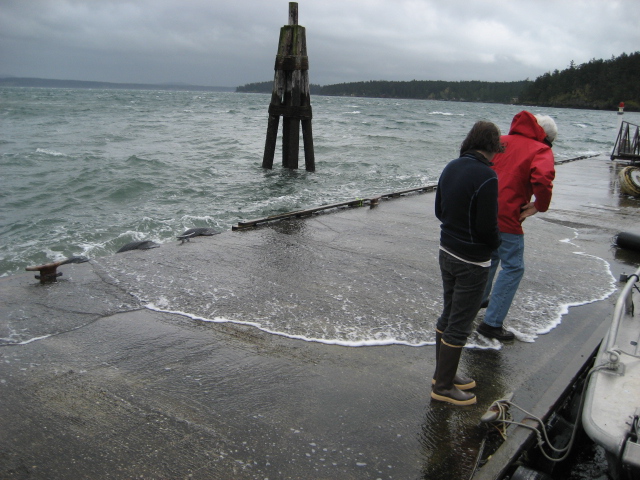
Me and Val on the dock next to the “Buzzard” as the waves wash over.
After lunch we finished our lecture on acoustics, which was really awesome because we got to listen to a bunch of different animal calls and see them on the spectrogram (the thing that lets you see the sound). We could see the amplitude modulation as well as the frequency modulation (change in volume and pitch).
During our lecture we saw two river otters running down towards the water and I managed to get a few good shots.
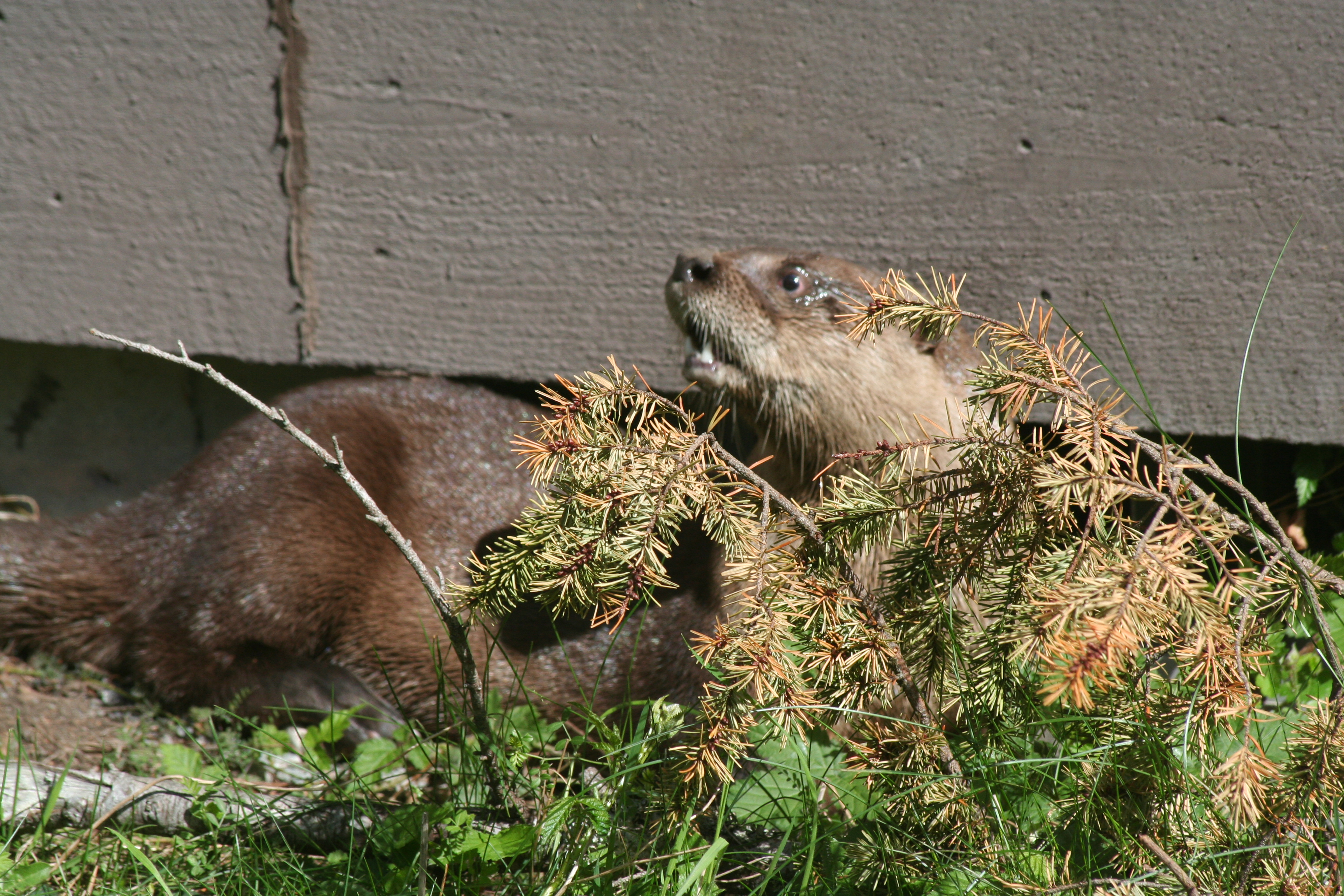
Tomorrow we have our first day off and are planning to go to the whale museum. Everyone is really excited.
4/3
Today we went to the Whale Museum! It was really cool. They had a lot of different exhibits including some very fun ones for kids. There were also a few skeletons, which really showed the incredible size of the animals!
When we left the museum it had been hailing like crazy. The ice balls were huge, about the size of small peas! It was pretty wild to come out of the museum and see the ground covered in white with small rivers of water running hear and there.
We walked around town for a bit and had lunch at a really good Syrian restaurant. Overall it was a good relaxing day after a fun but hard first week.
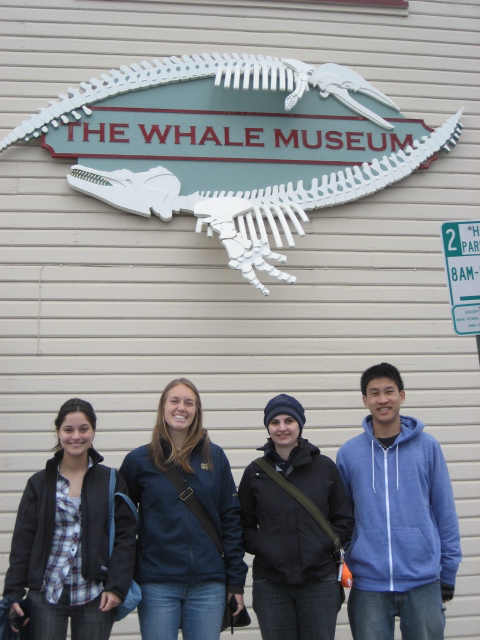
Kathryn, Libby, Me and Horace
Read More

Juvenile rockfish at the Seattle Aquarium
It was a great pleasure to meet the four incoming students for the spring 2010 program last Sunday (3/29). Libby, Kathryn, Horace, and Nora all arrived safely in Seattle in time for a 10:30 tour of the Seattle Aquarium. We saw Pacific salmon and rock fish in the new big outer coast tank, noticed a drift wood log snagged on the cable when viewing the hydrophone station behind the scenes, and listened to underwater sounds and John Ford videos down in the orca exhibit.
After a quick lunch of crumpets and salmon jerky and a brisk walk through Pike Place Market, we drove northward in a caravan just after 13:00. We dodged Seattle traffic detours and light rain to make the 14:45 ferry with just 5 minutes to spare. Amazed that both of our cars got the final two center lane (first off) spots on the ferry, I declared it an auspicious entry into the Archipelago!
Here is a link to the spring 2101 class home page. There you will find more information about the new students, their instructors, and the adventures upon which they are embarking.
Read More



 Twitter
 LinkedIn
 Facebook